The best meal prep salads for summer are sturdy, produce-forward salads with the dressing stored separately, like bean salads, grain bowls, and chopped vegetable salads that hold their texture in the fridge for four to five days instead of wilting by day two.
I learned this the hard way after years of dressing an entire batch of salad on Sunday night and watching it turn into a sad, watery mess by Wednesday. It wasn’t the recipe’s fault. It was how I was storing it, and once I figured that out, meal prep salads went from a chore I dreaded to the thing that actually gets me through a hot week.
Summer is when this matters most. The heat makes greens wilt faster, dressing goes limp on contact, and nobody wants to turn the oven on just to make lunch. Below are eight salads I make on repeat between June and September, plus the actual storage rules that keep them from going downhill by day three.
Table of Contents
Key Takeaways
- Sturdy vegetables, grains, and legumes hold up far better in the fridge than delicate lettuce once the temperature climbs
- Keeping the dressing in its own jar and adding it right before you eat is the single biggest fix for a soggy salad by Wednesday
- Once it’s over 90°F outside, food shouldn’t sit out more than an hour, half the usual two-hour window
- A few of these are genuinely no-cook. The rest need one active cooking step you do once at the start of the week, not every day
- Avocado, berries, and fresh herbs go in right before eating, never mixed into the whole batch on day one
- Two ice packs and an insulated bag matter more than people think once a salad sits in a hot car or on a desk all afternoon
The 8 Salads at a Glance
| Salad | Type | Active Cook Time | How Long It Holds (stored right) |
| Cowboy Caviar | Bean salad, no-cook | 0 minutes | 3 to 4 days |
| Southwest Quinoa Salad | Grain salad | About 20 minutes | 4 to 5 days |
| Crunchy Detox Salad | Chopped vegetable salad | 0 minutes, just chopping | 3 to 4 days |
| Viral Carrot Ribbon Salad | Root vegetable salad, no-cook | 0 minutes | 3 to 4 days |
| Hot Honey Caesar Pasta Salad | Pasta salad | About 15 minutes | 4 days |
| Marry Me Chicken Salad | Chopped chicken salad | 0 minutes with rotisserie chicken | Components 4 to 5 days |
| Strawberry Poppyseed Salad | Fruit salad | 0 minutes | Components a few days, dress same-day |
| Garlic Butter Salmon Bowl | Protein bowl | About 15 minutes | A few days, reheat gently |
The 8 Salads
1. Cowboy Caviar
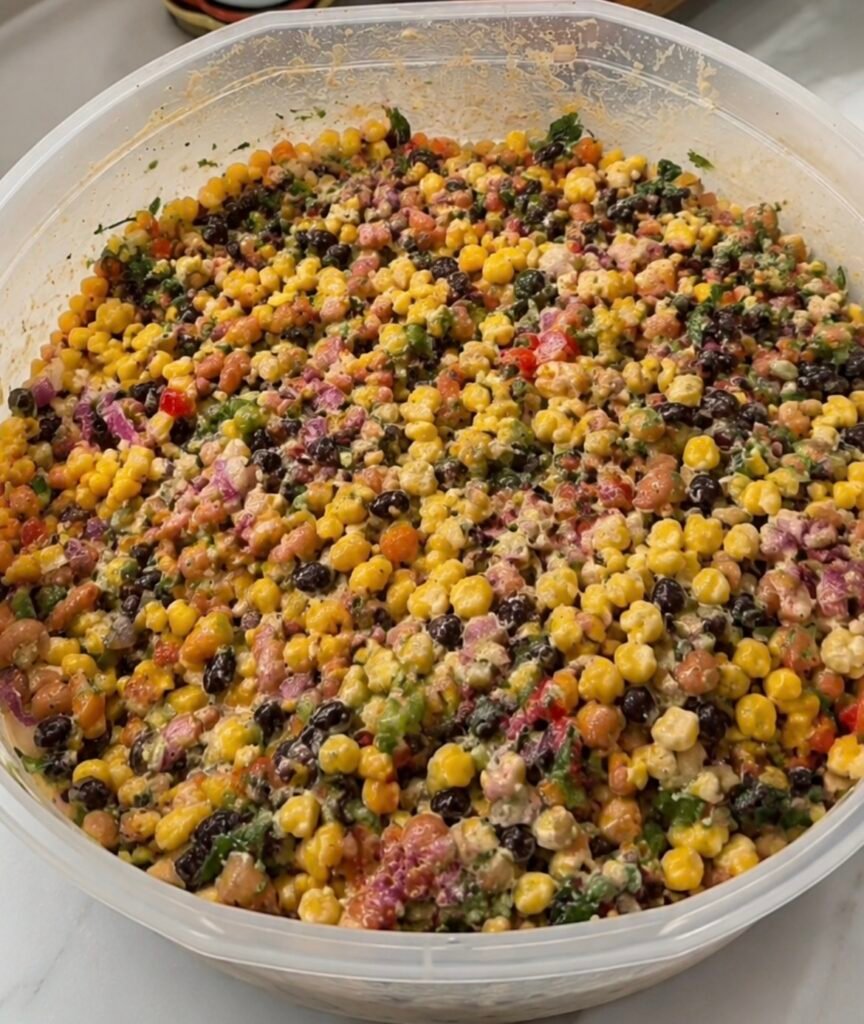
I make this more than anything else once it’s warm out, mostly because it needs zero oven time and costs me less than ten dollars for close to ten cups. It’s canned black-eyed peas and black beans, corn, cherry tomatoes, bell pepper, red onion, and jalapeño in a homemade olive oil vinaigrette instead of bottled dressing.
My first batch turned into soup because I mixed everything together, avocado included, the night before. Now I drain and blot every can dry before it goes in the bowl, and I hold the avocado back until right before serving. The base keeps for three to four days in a sealed container, which makes it an easy grab for a week of lunches or a last-minute cookout.
Get the full cowboy caviar recipe. For the dressing, I use extra virgin olive oil and red wine vinegar, and I keep Bush’s Best black-eyed peas stocked so I can throw this together without a grocery run.
2. Southwest Quinoa Salad
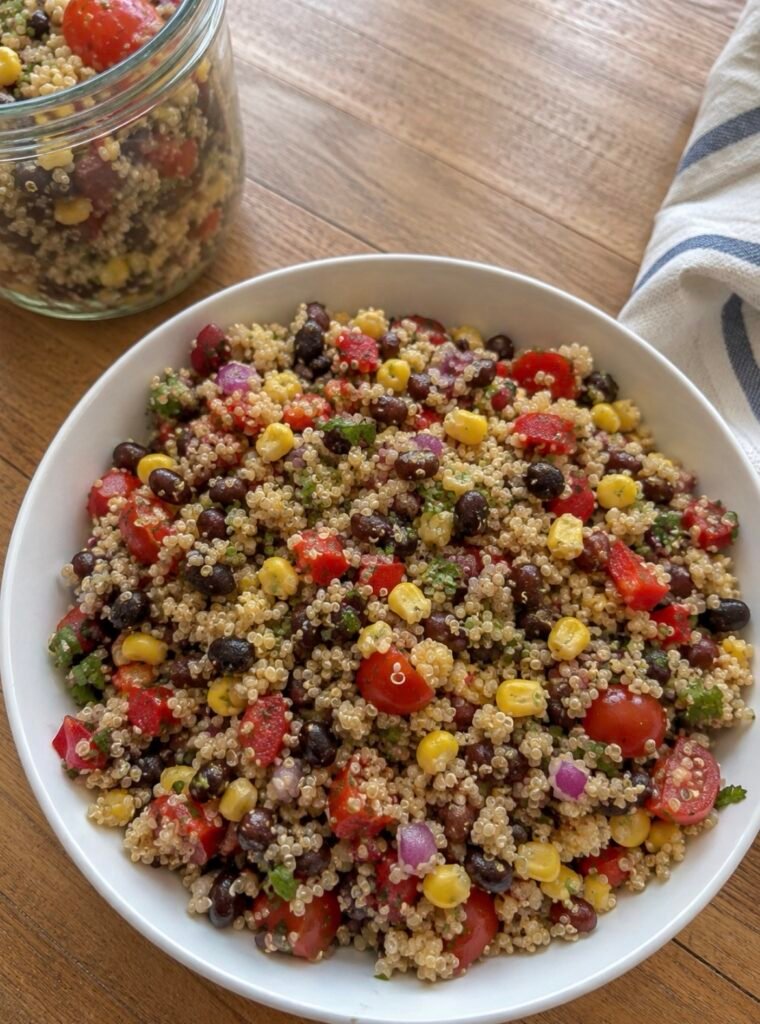
Quinoa salads get a bad reputation for turning into a mushy, one-note bowl by day three, and honestly, mine did too for the first year I made this. The fix wasn’t the recipe. It was storing the lime-cumin vinaigrette separately and only dressing what I’m actually eating that meal.
The undressed base of quinoa, black beans, corn, bell pepper, and red onion holds for four to five days in the fridge, and the dressing keeps up to a week on its own. Cilantro and avocado go on fresh each time, never mixed in ahead, or they turn dark and mushy before Wednesday even shows up.
Get the full southwest quinoa salad recipe. I cook the quinoa in a 3-quart saucepan using Bob’s Red Mill, and I keep the dressing in a mini mason jar so it never accidentally soaks the whole batch.
3. Crunchy Detox Salad
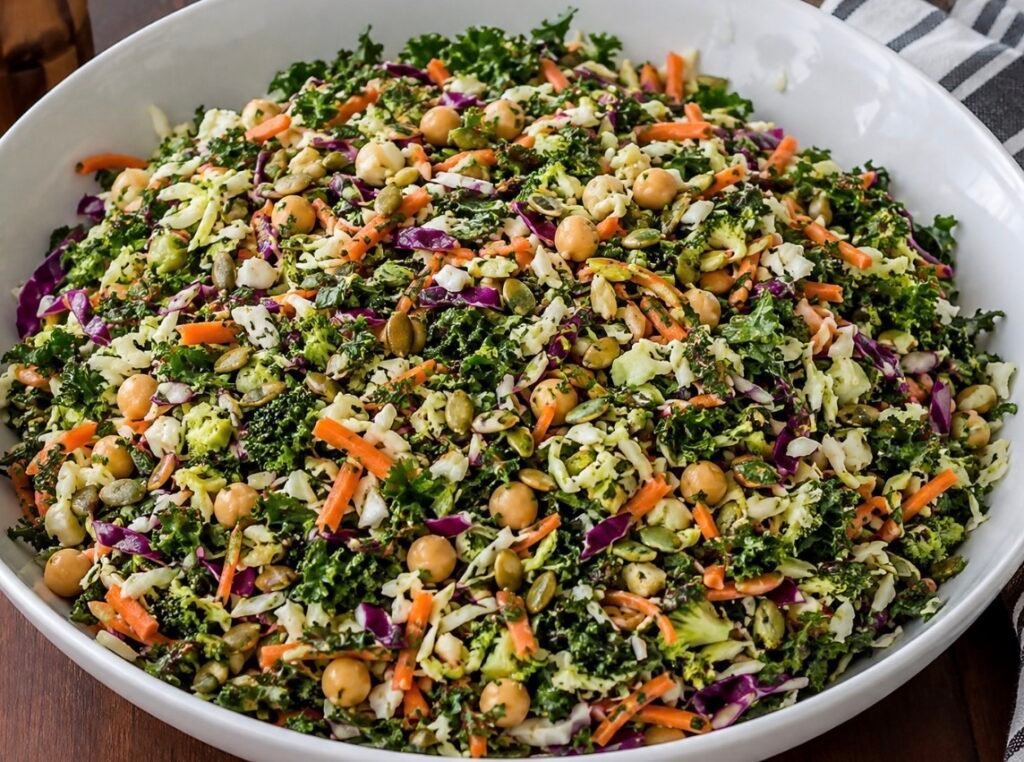
I used to think a detox salad meant raw kale and a squeeze of lemon, and I was hungry again within the hour every single time. What actually works is chopping everything small, almost minced, and adding a real protein source like chickpeas so every bite has substance instead of three forkfuls of plain kale.
Kale and cabbage are sturdy enough that this salad actually gets better after sitting a few hours in the fridge, and it holds for a solid three to four days without turning limp. That’s rare for anything with greens in it, which is exactly why it earned a spot on this list.
Get the full crunchy detox salad recipe. I do all my chopping on one large plastic cutting board with a Victorinox Fibrox chef’s knife, then toss everything together in a large glass mixing bowl. For the pepitas, I buy raw pumpkin seeds and toast them myself instead of paying more for the pre-toasted bags.
4. Viral Carrot Ribbon Salad
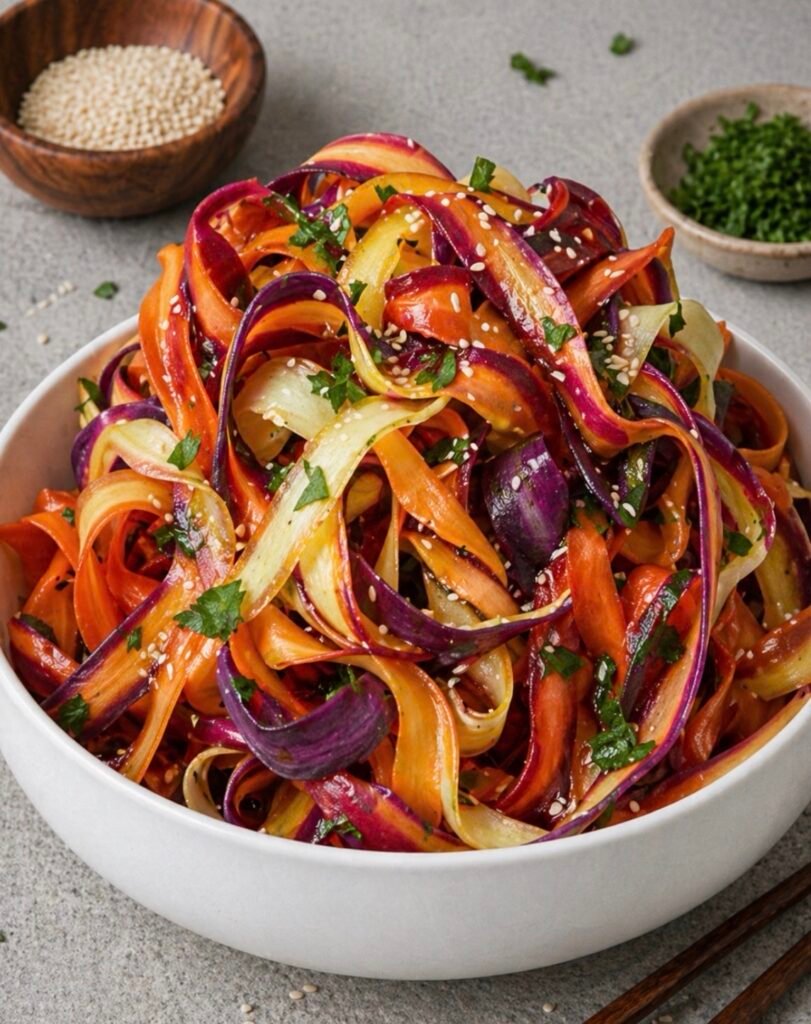
Carrots are one of the sturdiest vegetables you can put in a meal prep container, and peeling them into long ribbons with an OXO Good Grips Y-Peeler instead of shredding them changes the whole texture. I soak the ribbons in ice water for ten minutes right after peeling, which is what gives them their curl and their crunch, and skipping that step is the difference between a salad that holds up for hours and one that goes limp in twenty minutes.
Fully dressed, this keeps for up to three days in the fridge, and by day two the texture actually reminds me of cold sesame noodles, which I think is just as good as day one. If you want it to hold even longer, store the ribbons, dressing, and garnishes separately and toss right before eating.
Get the full carrot ribbon salad recipe. The dressing is built on Fly By Jing Xtra Spicy Sichuan Chili Crisp, stirred well before every scoop so the crispy bits don’t stay stuck at the bottom of the jar.
5. Hot Honey Caesar Pasta Salad
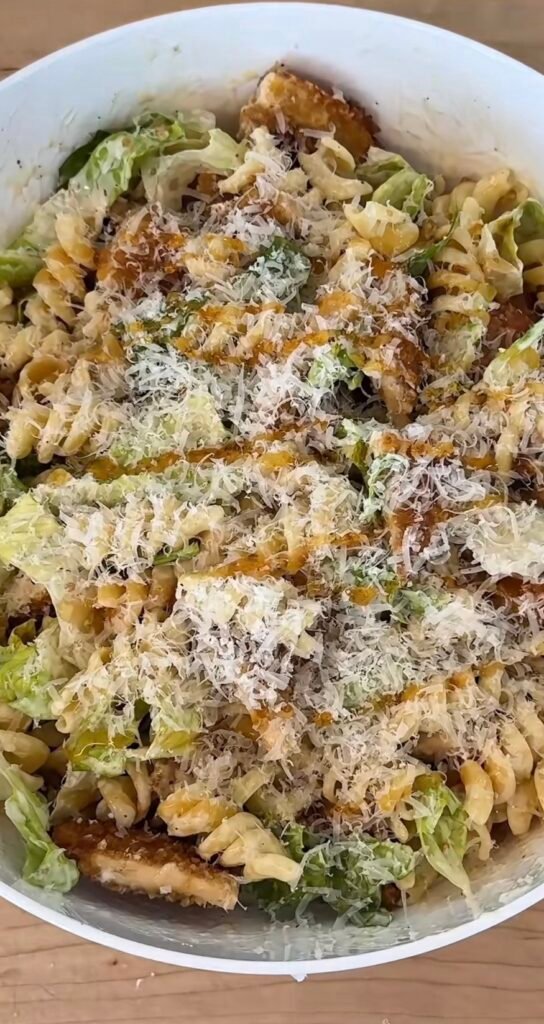
Pasta salad holds up better in heat than almost anything on this list, which is part of why it disappears first at every cookout I bring it to. Cavatappi grips a creamy dressing better than most shapes because of its ridged, hollow shape, and the dressed pasta and chicken keep in the fridge for up to four days.
The trick is rinsing the pasta under cold water right after draining so it doesn’t clump, and keeping the romaine and tomatoes separate until you’re ready to eat. Once assembled, this holds up for hours at room temperature, which makes it one of the few salads on this list I’d actually trust in a cooler at a park for an afternoon.
Get the full hot honey Caesar pasta salad recipe. I whisk Dijon mustard into the dressing base along with the hot honey and lemon.
6. Marry Me Chicken Salad
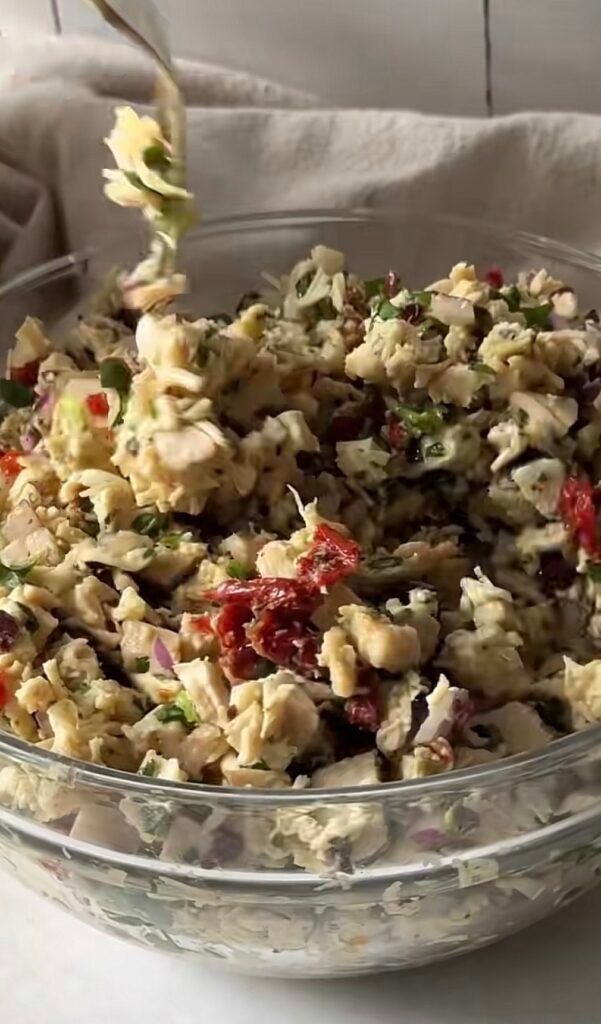
It’s a chopped salad, not the mayo-based sandwich kind, built around rotisserie chicken, sun-dried tomatoes, romaine, basil, and Parmesan in a creamy dressing with a little Calabrian chili heat. It’s one of the fastest things on this list since the rotisserie chicken means there’s no active cooking at all.
The parts hold up well separately. Chopped chicken and the dressing both keep for four to five days in the fridge. Once it’s actually tossed together, though, I eat it within an hour or two, since dressed romaine softens fast and this one’s too good to eat wilted.
Get the full marry me chicken salad recipe. It’s the item on this list I’d call a “prep the pieces, toss it fresh” salad rather than a true make-and-forget one, which is worth knowing before you build a whole week around it.
7. Strawberry Poppyseed Salad
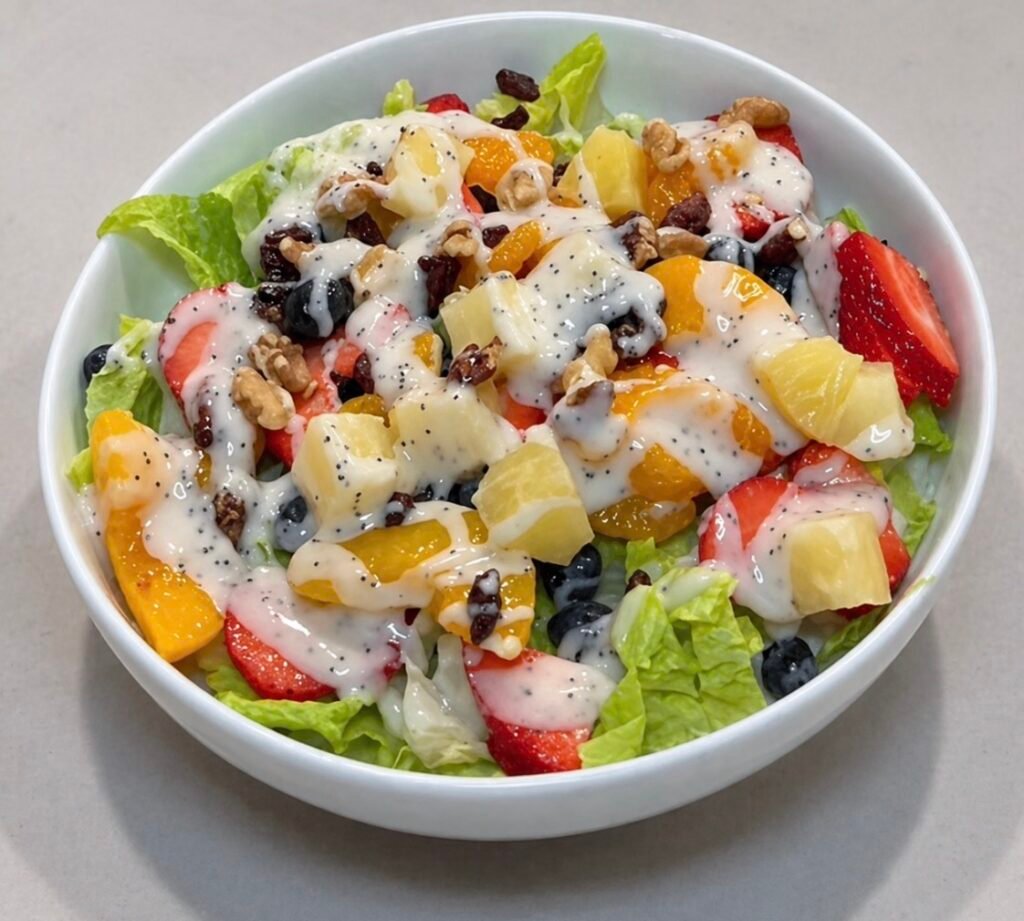
Strawberries and blueberries peak right in the middle of summer, which makes this the most seasonal thing on the whole list. It’s romaine, fresh strawberries, blueberries, mandarin oranges, pineapple, and candied pecans in a creamy poppyseed dressing, and every component keeps well on its own in the fridge.
The one rule that actually matters here is never dressing it in advance. Sliced strawberries release liquid fast, and the pecans go soft within about an hour of hitting the dressing. I slice the berries the morning I’m eating, not the night before, and keep everything else in separate containers until it’s time to build the bowl.
Get the full strawberry poppyseed salad recipe. This is also the easiest one on this list to make kid-friendly or take to a summer potluck since there’s nothing spicy or unfamiliar in it.
8. Garlic Butter Salmon Bowl
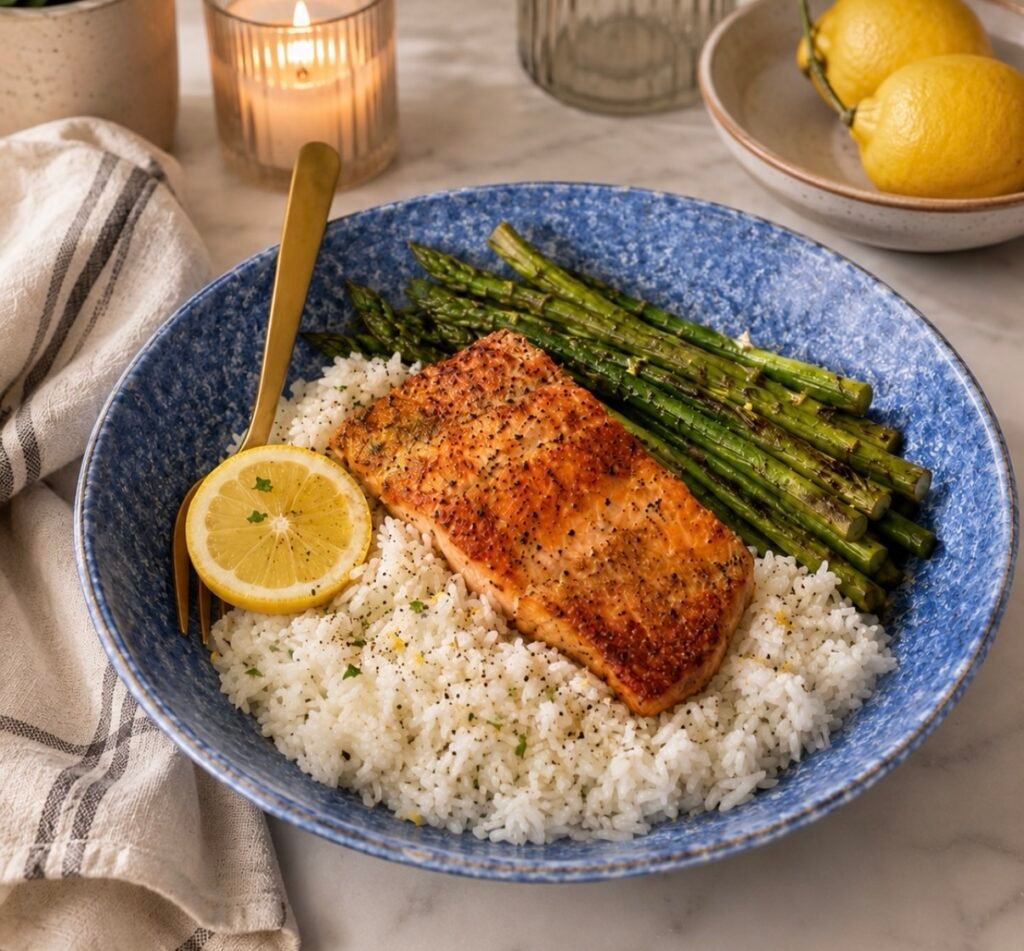
This one isn’t no-cook, and I still count it as a summer meal prep option because the active time is about fifteen minutes and it folds easily into a Sunday batch-cook. Pan-seared salmon in garlic butter goes over rice or greens with whatever quick-cooking vegetable is in the fridge, like snap peas or shredded carrots.
The trick for reheating is keeping the sauce separate and adding it back in when you reheat, since the salmon turns rubbery if it sits in sauce in the microwave. I build the bowl over greens instead of rice on the hottest days, since it skips reheating almost entirely.
Get the full garlic butter salmon bowl recipe. A 12-inch cast iron skillet holds heat evenly for a real sear, and an OXO fish turner slides under the fillet without tearing it. I mince the garlic with a garlic press and lean on a microwave rice pouch to keep the whole thing under fifteen minutes, then finish with a sprinkle of furikake seasoning.
How to Keep Meal Prep Salads Fresh and Safe Once It’s Actually Hot Out
The rules change once the temperature climbs, and it’s not just about taste. According to the USDA, perishable food shouldn’t sit out for more than two hours at room temperature, and that window drops to just one hour once it’s above 90°F outside. That’s the actual danger zone for bacteria, not just a texture problem, so a salad that sat on a picnic table through a July afternoon is a different situation than one that sat out in a mild spring kitchen.
A few habits fix most of the problems I used to run into. Keeping the dressing separate until you eat is the single change that made the biggest difference across every salad on this list, since oil and acid don’t spoil fast on their own and a jar of it can sit in the fridge for days while the undressed base stays crisp. Anything delicate, like avocado, berries, and fresh herbs, goes in right before serving instead of getting portioned out with the rest on Sunday.
The bag itself matters less than what’s inside it. An insulated lunch bag alone isn’t enough once it sits in a hot car or on a desk all afternoon, so I keep a couple of these on hand:
- Fit & Fresh Cool Coolers ice packs, kept in the freezer at all times, for anything traveling more than twenty minutes from a fridge
- A PackIt Freezable Classic Lunch Box, which has its own built-in cold panels so I’m not relying on a separate ice pack fitting right
- Rubbermaid Brilliance meal prep containers for the week’s base, plus something small and leakproof for dressing, like an OXO Prep & Go snack and dip container or a wide mouth mason jar
- An Arctic Zone Titan 30-can cooler tote instead of a lunch bag when I’m bringing enough for a group to a park or a game, since it holds ice for up to three days
If you want to build your own combination instead of sticking to the eight above, the safest bet is layering it like a jar salad. Dressing goes on the bottom, hard vegetables like carrots and beans go next, protein goes above that, and anything soft or leafy sits on top untouched until you shake or dump the jar right before eating.
Washing your produce properly matters more in summer too, since warm weather is when produce-related outbreaks tend to spike. My guide to produce safety habits covers the washing routine I actually follow now, not just a quick rinse under the tap.
Pick Two and Build the Rest of Your Week Around Them
I don’t rotate through all eight of these in a single week. Realistically I pick two, usually one bean or grain salad and one protein-forward one, and build the rest of my meals around whatever’s already prepped in the fridge.
If Sunday batch cooking is new to you, my guide to the easiest way to meal prep for busy weeks covers the basics that make the rest of this actually stick. And if you’re looking for the cold-weather version of this same batch-cook mindset, I’ve got a whole winter meal prep guide built around ground beef swaps that uses the same “prep once, dress or reheat later” logic, just built for soup and casserole season instead of salad season.
Extra portions of the grain and bean-based salads here freeze reasonably well too, if you make a double batch and want a head start on next week. My guide to freezing 14 different foods gets into which components actually hold up in the freezer and which ones don’t.
FAQ
How long do meal prep salads actually last in the fridge in summer?
Most undressed bases hold for three to five days if you store them properly. Once a salad is fully dressed and mixed together, plan on eating it within one to two days, and sooner if it has lettuce in it.
Is it safe to bring a meal prep salad to work without a fridge?
Yes, as long as you pack it with at least two ice sources in an insulated bag. Once the temperature is above 90°F, food shouldn’t sit out more than an hour, so a bag with no cold source isn’t enough for a full workday.
What’s the best way to keep salad dressing from making everything soggy?
Store the dressing in its own small jar or container and only pour it over what you’re eating that meal. This single habit is what fixed nearly every soggy salad problem I used to have.
Can I meal prep salads with lettuce, or do they always go bad fast?
You can, but keep the lettuce stored dry and separate from everything else, and add it right before eating. Sturdier greens like romaine and kale hold up noticeably longer than delicate greens like spring mix or butter lettuce.
What summer produce works best for meal prep salads?
Firm vegetables like carrots, bell peppers, corn, and cucumbers hold their texture well, and beans and grains barely change over a week. Save anything soft or juicy, like tomatoes, berries, and avocado, for the day you’re actually eating it.

Cynthia Odenu-Odenu is the founder of Cyanne Eats. A registered nurse with a passion for food, she brings the same attention to detail from her professional life into the kitchen. From chain restaurant rankings to grocery finds and easy recipes, Cynthia covers it all and helps everyday food lovers eat better and spend smarter.