
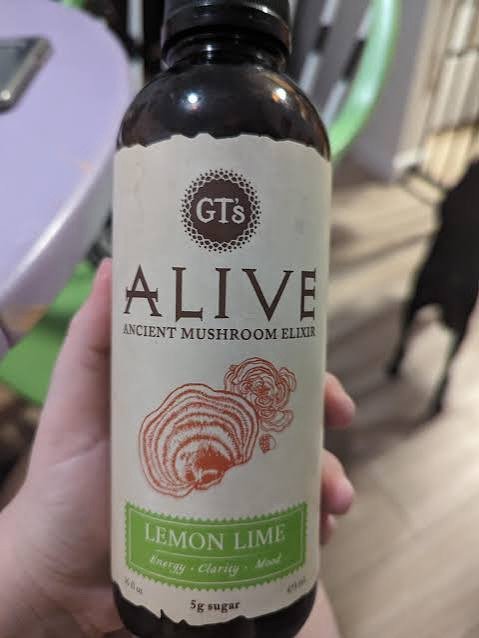
The easiest way to make mushroom coffee at home is to stir a spoonful of dried mushroom extract powder, like chaga, lion’s mane, or reishi, into a mug of coffee you’ve already brewed, the same way you’d stir in creamer.
That’s genuinely it. No special machine, no subscription box, no trip to a coffee shop with a chalkboard menu. You buy a jar of mushroom extract powder once, and it lasts through weeks of mornings.
I got curious about all this after I watched a barista hand someone a “focus latte” and ring it up at thirteen dollars and change. It was oat milk, a shot of espresso, and a scoop of something out of a labeled tin behind the counter, and I remember thinking that tin was doing a lot of the price justifying. I went home, bought the same kind of powder online for less than what one of those drinks costs, and started testing versions in my own kitchen that fall.
Below are the seven mushroom drinks I kept coming back to, from the basic coffee stir-in to a few options if coffee isn’t really your thing. I’ll walk through how I make each one, what actually worked, and the mistakes that taught me to fix my technique.
Table of Contents
Key Takeaways
- Mushroom powder is a stir-in for drinks you’re already making, not a coffee substitute, unless you’re buying a blend that already has instant coffee mixed in
- Lion’s mane has almost no flavor of its own, which makes it the easiest one to start with if you’re not sure you’ll like any of this
- Reishi and turkey tail are the most bitter of the bunch and do better paired with chocolate, honey, or a strong sweetener than on their own
- A cheap milk frother fixes most of the gritty, clumpy texture that turns people off mushroom drinks the first time they try one
- These are wellness and flavor picks, not medical treatments. I’m talking about taste, texture, and routine here, not making health claims about what any of these mushrooms do inside your body
Quick Reference: Which Mushroom Drink Fits Your Mood
| Drink | Mushroom | Flavor | Best For |
|---|---|---|---|
| Mushroom Coffee | Chaga or cordyceps | Earthy, close to regular coffee | Morning routine, coffee drinkers |
| Lion’s Mane Latte | Lion’s mane | Mild, almost flavorless | Skeptics and first-timers |
| Reishi Hot Chocolate | Reishi | Bitter, balanced by cacao | Evening wind-down |
| Chaga Tea | Chaga | Woodsy, mild vanilla note | Slow weekend mornings |
| Cordyceps Golden Milk | Cordyceps | Warm, spiced, earthy | Afternoon reset |
| Mushroom Matcha Latte | Lion’s mane | Grassy, mild, creamy | Matcha drinkers wanting a swap |
| Turkey Tail Tea | Turkey tail | Savory, mushroomy | Adventurous tea drinkers |
7 DIY Mushroom Drinks Worth Making at Home
These are the seven I keep making, roughly in the order I’d recommend trying them if you’re new to all of this.
1. Mushroom Coffee
This is the one that started the whole trend, and it’s also the simplest. You brew coffee the normal way, however you normally do it, and stir a scoop of mushroom extract powder into the cup once it’s ready. Chaga and cordyceps are the two most common mushrooms for this because they’re mild enough to sit alongside coffee’s flavor instead of fighting it.
The first time I tried this, I dumped the powder straight into a hot cup and ended up with a thin film of grit floating on top that never fully mixed in. What actually works is stirring the powder into a small splash of hot water first to make a loose paste, then adding that paste to the rest of the coffee. It takes an extra fifteen seconds and it’s the difference between a smooth cup and one with sediment at the bottom.
I’ve also started using an electric gooseneck kettle for this, mostly because I already had it for pour-over, but it makes it easy to control exactly how much hot water goes into that paste without flooding the mug. It’s one of the picks on my gifts for coffee lovers list too, if you’re shopping for someone who’d get more use out of it than I originally expected to.
Good for: anyone who already drinks coffee daily and just wants to add mushrooms to the routine they already have.
2. Lion’s Mane Latte
Lion’s mane is the mushroom I’d hand to someone who’s on the fence about all of this, because on its own it barely tastes like anything. It’s mild and a little nutty at most, which means it takes on whatever flavor you pair it with instead of announcing itself.
I steam or heat up milk, pour it into a mug with the lion’s mane powder, and whisk in a splash of vanilla extract. Then I add a small drizzle of maple syrup before frothing.
That’s when a handheld milk frother earns its keep. Lion’s mane powder is one of the clumpier ones I’ve worked with, and whisking by hand never got it fully smooth for me.
Oat milk foams up nicer than regular dairy in my experience, though both work fine once the powder’s actually dissolved.
Good for: first-timers, and anyone who wants something that tastes closer to a regular vanilla latte than a “wellness drink.”
3. Reishi Hot Chocolate
Reishi is bitter. I’m not going to sugarcoat that, no pun intended, because the first batch I made using a regular hot cocoa mix tasted like someone dropped a vitamin into my drink. What changed everything was switching to real unsweetened cocoa powder instead of a pre-sweetened mix, along with full-fat milk and a heavier hand with the sweetener than I’d normally use.
I heat milk in a small saucepan over medium-low heat, then whisk in the cocoa powder, reishi powder, a pinch of salt, and maple syrup until everything’s dissolved and no lumps are left. The salt sounds like a weird addition for a chocolate drink, but it cuts the bitterness more than extra sugar does on its own.
This one’s become my evening drink instead of a morning one. It genuinely feels more like a treat than a swap for coffee, closer in spirit to my spiked hot chocolate recipe than to anything I’d drink at 7am.
Good for: the after-dinner hot chocolate crowd, or anyone who wants a mushroom drink that isn’t trying to replace their coffee.
4. Chaga Tea
Chaga is the one you can actually forage or buy in whole chunks instead of powder, and the chunks make a noticeably different tea than the instant powder version. Mine has a mild vanilla-and-wood kind of flavor that’s closer to a mellow black tea than anything mushroomy.
If you’re using powder, a teaspoon simmered gently in a few cups of water for about twenty minutes gets you a decent cup. If you’re using chunks, they need a real simmer, closer to an hour, and I run mine through a fine mesh strainer before drinking since bits of the chunk break off as it steeps.
The best part about chunks is you can reuse them. I’ve gotten two, sometimes three more pots of tea out of the same batch of chaga before it stops giving up any flavor, which makes the upfront cost feel a lot smaller once you do the math on how many cups you actually get.
Good for: slow mornings when you have time to let something simmer, or anyone who wants tea over coffee.
5. Cordyceps Golden Milk
Golden milk, the turmeric-and-warm-milk drink, was already a thing before mushrooms got added to it, and cordyceps is the one that shows up most often in the mushroom version. The flavor combination is warm and a little peppery from the turmeric and black pepper, with the cordyceps mostly just adding an earthy undertone underneath it.
I make this one in a blender rather than just whisking it, since turmeric powder clumps almost as badly as the mushroom powders do. It’s the same blender I reach for on my dorm and first-apartment kitchen essentials list, which tells you how often it actually gets used.
Warm milk, a teaspoon of turmeric, a pinch of black pepper, a little cinnamon, cordyceps powder, and a sweetener all go in together and blend for about fifteen seconds until it’s frothy and evenly colored instead of streaky.
This is the one I reach for in the afternoon rather than the morning, mostly because it doesn’t feel like a coffee drink at all. It feels more like a spiced tea that happens to be creamy.
Good for: an afternoon reset that isn’t coffee-flavored, or anyone who already likes golden milk and wants to try the mushroom version.
6. Mushroom Matcha Latte
If you already drink matcha, this is probably the easiest swap on the whole list. Lion’s mane is the mushroom that pairs best here again, since matcha already has a grassy, slightly bitter flavor of its own, and lion’s mane doesn’t fight with it the way a stronger mushroom would.
I whisk the matcha with a small amount of hot water first, the same way I would for a regular matcha, then stir the lion’s mane powder into that same paste before adding steamed milk. Doing the mushroom powder and matcha together in that first step keeps me from ending up with two separate layers of grit floating around in the milk.
Sweetened with a little maple syrup, this genuinely tastes closer to a regular matcha latte than I expected going in. The lion’s mane doesn’t add flavor so much as it just sort of disappears into the cup.
Good for: matcha drinkers who want to try functional mushrooms without changing the flavor they already like.
7. Turkey Tail Tea
Turkey tail is the most savory, most mushroom-forward drink on this entire list, and it’s the one I’d try last if you’re easing into all of this. It genuinely tastes like a mushroom broth more than a tea, earthy and a little woodsy, without much sweetness to it at all on its own.
I simmer turkey tail powder in water for about twenty to thirty minutes, longer than most of the other teas here, then strain it through the same fine mesh strainer I use for chaga. A spoonful of raw honey and a few thin slices of fresh ginger make a real difference here, since the ginger’s spice distracts from how mushroomy the base flavor actually is.
I won’t pretend this is my favorite of the seven, but it’s the one that surprised me the most once I stopped trying to make it taste like a latte and just let it be its own thing.
Good for: people who already like earthy teas like genmaicha or a strong green tea, and don’t need everything to taste like dessert.
What I’d Actually Tell You Before You Start
If you’re only going to try one of these, start with the lion’s mane latte. It’s the least polarizing, the easiest to mess up and still enjoy, and it gives you a real sense of whether the texture and routine of these drinks are for you before you commit to a jar of anything more bitter.
The single biggest thing that changed how I felt about all of this was buying a cheap frother. My first few batches of everything on this list turned out gritty enough that I almost gave up on the whole category, and it took me longer than I’d like to admit to realize it was a mixing problem, not a powder problem.
Once you’ve bought one jar of extract powder, the cost per cup drops fast. A thirteen or fourteen dollar drink from a coffee shop stops feeling like a reasonable habit pretty quickly once you know what the same scoop of powder costs you at home.
If this kind of math scratches an itch for you, my Starbucks hacks that actually save you money roundup works the same way. Small swaps add up a lot faster than one dramatic change ever does.
FAQ
Does mushroom coffee have caffeine?
Mushroom coffee only has caffeine if it’s actually blended with real coffee or instant coffee, since the mushrooms themselves don’t contain any. If you’re stirring mushroom powder into a regular cup of coffee, you’re getting the same caffeine you’d get from that cup on its own.
What does mushroom coffee taste like?
It tastes mostly like coffee with a mild, earthy edge underneath it, closer to a nutty or woodsy note than anything resembling raw mushrooms. Chaga and cordyceps are the two mildest options if you’re worried about the mushroom flavor standing out.
Can you use mushroom powder in regular coffee?
Yes, that’s essentially what mushroom coffee is. Stirring a scoop of extract powder into coffee you’ve already brewed works fine, as long as you mix it into a small amount of hot liquid first so it doesn’t clump.
Is DIY mushroom coffee cheaper than store-bought blends?
Buying a jar of extract powder and adding it to coffee you already brew works out to a lot less per cup than either a pre-made mushroom coffee blend or a coffee shop drink, since one jar stretches across weeks of servings. The upfront cost of the jar is the only real expense.
Which mushroom drink is best for beginners?
Lion’s mane is the easiest starting point because it has almost no flavor of its own and blends into a latte, matcha, or hot chocolate without changing the taste much. Reishi and turkey tail have stronger, more bitter flavors that are easier to appreciate once you’re already used to the category.

Cynthia Odenu-Odenu is the founder of Cyanne Eats. A registered nurse with a passion for food, she brings the same attention to detail from her professional life into the kitchen. From chain restaurant rankings to grocery finds and easy recipes, Cynthia covers it all and helps everyday food lovers eat better and spend smarter.