
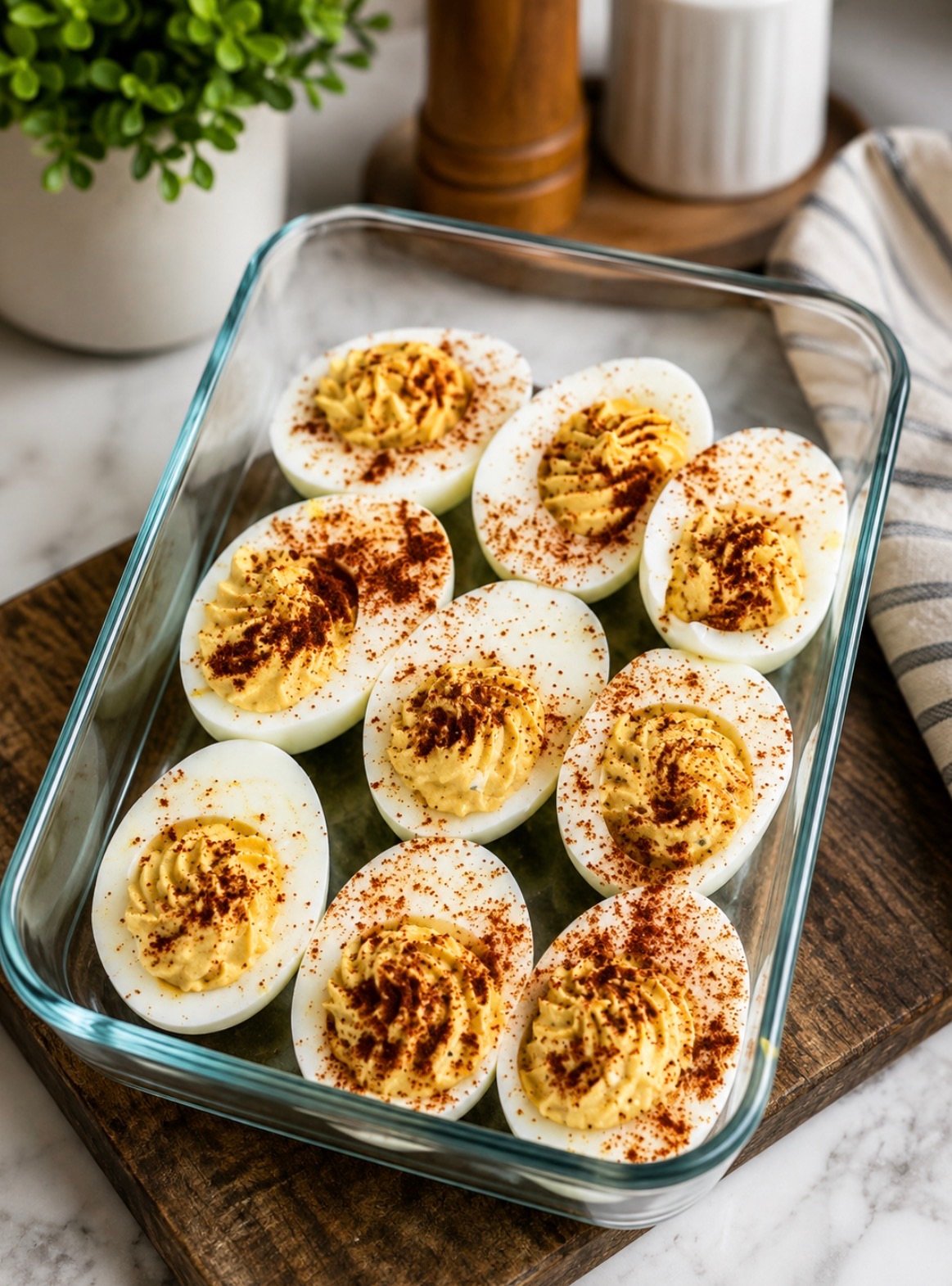
Yes, you can make deviled eggs up to two days ahead of time, as long as you store the hard-boiled whites and the yolk filling separately and don’t pipe them together until an hour or so before serving.
I learned this the embarrassing way. I once assembled a full tray of deviled eggs the night before a party, patted myself on the back for being so organized, and opened the fridge the next afternoon to find a puddle of thin, yellowish liquid pooling around every single egg. The filling had gone loose and the whites looked like they’d been sitting in a shallow bath. It was not a good look for a party appetizer.
That puddle is called weeping, and it happens because the filling and the egg whites are both still losing moisture even after they’re fully cooked. Mayo-heavy fillings hold onto water they eventually release, and the whites themselves sweat a little in the fridge. Put them together too early and gravity does the rest.
The good news is you don’t have to choose between convenience and a dry, presentable tray. Below, I’ll get into why the weeping happens, the storage method I use now, and how far ahead each part of the process can go. There’s also a full recipe card at the end with quantities and timing.
Key Takeaways
- Deviled eggs can be made up to two days ahead if the whites and filling are stored separately and combined right before serving
- Fully assembled deviled eggs, filling piped into whites, only hold their texture for about 24 hours before they start to weep
- A filling with less mayo and more Dijon mustard or vinegar stays firmer and less prone to going watery
- Patting the egg whites completely dry before filling them makes a bigger difference than most recipes let on
- Piping the filling fresh, even just an hour before guests arrive, is worth the extra five minutes
Table of Contents
Why deviled eggs weep in the first place
I used to think weeping was just bad luck, like the eggs had a mind of their own. Turns out it’s pretty predictable once you know what’s happening inside the bowl.
Mayonnaise is an emulsion, which is a fancy way of saying it’s fat and water held together in a fragile balance. Refrigeration and time both stress that balance, and eventually some of the water separates back out. The more mayo a filling has relative to yolk, the more water it’s holding and the more it has to lose.
The egg whites add to the problem on their own. Even a well-cooked hard-boiled egg keeps a small amount of moisture, and that moisture beads up on the surface of the white as it sits in a cold fridge. Once that surface moisture meets a mayo-based filling that’s already thinning out, you get the pooled, watery mess I found in my own fridge that morning.
My mistake, and the fix I use now
The first time it happened, I blamed the recipe. I switched brands of mayo, I tried adding an extra hard-boiled yolk to thicken things up, and I still ended up with a soggy tray a few Easters later when I got impatient and assembled everything a full day out again.
What fixed it wasn’t a different ingredient: it was timing.
Now I boil and peel the eggs, make the filling, and store the two completely apart, in separate airtight containers, up to two days before the event. I don’t pipe anything until an hour or two before people show up. The difference is not subtle. The whites stay dry and firm, and the filling stays thick enough to hold a clean swirl instead of slumping into a puddle.
The separate-storage method, step by step
- Boil and peel the eggs as far as two days ahead. Store the whole peeled eggs in an airtight container in the fridge, not cut in half yet.
- Make the yolk filling the same day you peel the eggs, and store it in a separate airtight container or a zip-top bag with the air pressed out.
- About an hour or two before serving, halve the eggs with an egg slicer for even cuts, then lay the whites cut-side down on a paper towel for a few minutes to pull out surface moisture.
- Pat the whites dry with another paper towel if they still look damp.
- Pipe or spoon the filling into the whites just before you set the tray out.
This spreads the work across two days without ever letting the finished, assembled eggs sit around long enough to weep. It’s the part most recipes skip, and it’s the part that matters most.
Mayo, mustard, and vinegar: getting the ratio right
A filling that leans too hard on mayonnaise is softer, wetter, and more likely to separate over time. Cutting back on mayo and adding a bit more mustard or vinegar in its place gives you a filling that’s more flavorful and holds its shape better too.
Too much mayo: filling is loose, shiny, and slumps when piped, and it’s the first thing to weep once it hits the fridge.
Balanced with mustard and vinegar: filling holds sharp piped lines, has more tang, and stays firmer for longer because mustard and vinegar don’t carry the same free water that mayo does.
My working ratio: about a third of a cup of mayonnaise per dozen egg yolks, with a tablespoon of Dijon and a small splash of white vinegar or pickle brine added to taste, the same trick that gives our pickle dip its tang. I started here after one particularly runny batch and haven’t gone back.
How far ahead each part can go
| Component | How far ahead | Storage method |
| Hard-boiled, peeled whole eggs | Up to 2 days | Airtight container in the fridge, uncut |
| Yolk filling | Up to 2 days | Separate airtight container, pressed flat to limit air |
| Halved whites, unfilled | Up to 4 hours | Loosely covered, cut-side down on paper towel |
| Fully assembled, piped eggs | Best within 1-2 hours | Loosely covered, not sealed tight |
I keep the yolk filling in a zip-top bag with a corner snipped off later for piping, which saves a step and one less bowl to wash. A cheap set of disposable piping bags like this Weetiee tipless piping bag set works just as well and gives you a cleaner swirl than a plastic bag ever will.
A few more things that help
Cold ingredients pipe more cleanly than room-temperature ones, so I keep the filling chilled until right before I fill the whites. If you’re transporting the tray anywhere, a container built for the job keeps things from sliding around and saves the finish from getting smudged. I’ve been using a stackable deviled egg carrier with a lid for potlucks and it also happens to double as fridge storage for the unfilled whites.
One more small thing that made a real difference for me: don’t skip drying the whites. It feels like an unnecessary step when you’re in a hurry, but a damp egg white is exactly what turns a good filling into a watery one within a couple of hours.
A light dusting of paprika right before serving is worth doing even when you’re pressed for time. It’s the one garnish that makes a plain tray look finished.
The bottom line for party day
Deviled eggs are one of those dishes that reward a little planning without punishing you for it. Do the boiling, peeling, and filling prep two days out, and save the actual assembly for the last hour before your guests arrive.
That one small shift, keeping the components apart until the very end, is the difference between a tray that looks fresh at hour five of a party and one that’s swimming by hour two. I don’t make deviled eggs any other way now.
They also fit right into a bigger spread. I usually set them out alongside a whipped feta with hot honey or some prosciutto-wrapped asparagus, so there’s something creamy and something warm on the table besides eggs.
Frequently Asked Questions
Can I make deviled eggs the night before a party?
You can prep the whites and filling separately the night before, but I’d wait to pipe them together until an hour or two before guests arrive to avoid weeping.
Why do my deviled eggs get watery in the fridge?
The mayo in the filling releases water over time, and moisture from the egg whites adds to it once they’re assembled and chilled together.
How long do assembled deviled eggs last in the fridge?
Fully piped deviled eggs are best eaten within 24 hours, though the texture starts to soften and weep noticeably after just a few hours.
Can I freeze deviled eggs to save time?
I wouldn’t recommend it. Freezing changes the texture of both the egg white and the filling, and they turn rubbery and grainy once thawed.
Does adding mustard or vinegar really change the texture?
Yes, in my experience swapping some of the mayo for mustard or a splash of vinegar makes the filling noticeably firmer and less prone to going watery over time.
Make-Ahead Deviled Eggs
Ingredients
- 12 large eggs
- ⅓ cup mayonnaise
- 1 tbsp Dijon mustard
- 1 tsp white vinegar or pickle brine
- ¼ tsp salt
- ⅛ tsp black pepper
- Paprika,for garnish
Instructions
- Place eggs in a single layer in a saucepan and cover with cold water by an inch. Bring to a boil, then cover, remove from heat, and let sit for 11 minutes.
- Transfer the eggs to an ice bath for 10 minutes, then peel. Store peeled whole eggs in an airtight container in the fridge for up to 2 days if not serving right away.
- When ready to make the filling, halve the eggs and scoop the yolks into a bowl, keeping the whites separate.
- Mash the yolks with mayonnaise, Dijon mustard, vinegar or pickle brine, salt, and pepper until smooth.
- Store the filling in an airtight container or zip-top bag, and store unfilled whites separately, cut-side down on a paper towel, for up to 4 hours before serving.
- About an hour before serving, pat the whites dry again, then pipe or spoon the filling into each half.
- Sprinkle with paprika and serve chilled.

Cynthia Odenu-Odenu is the founder of Cyanne Eats. A registered nurse with a passion for food, she brings the same attention to detail from her professional life into the kitchen. From chain restaurant rankings to grocery finds and easy recipes, Cynthia covers it all and helps everyday food lovers eat better and spend smarter.