
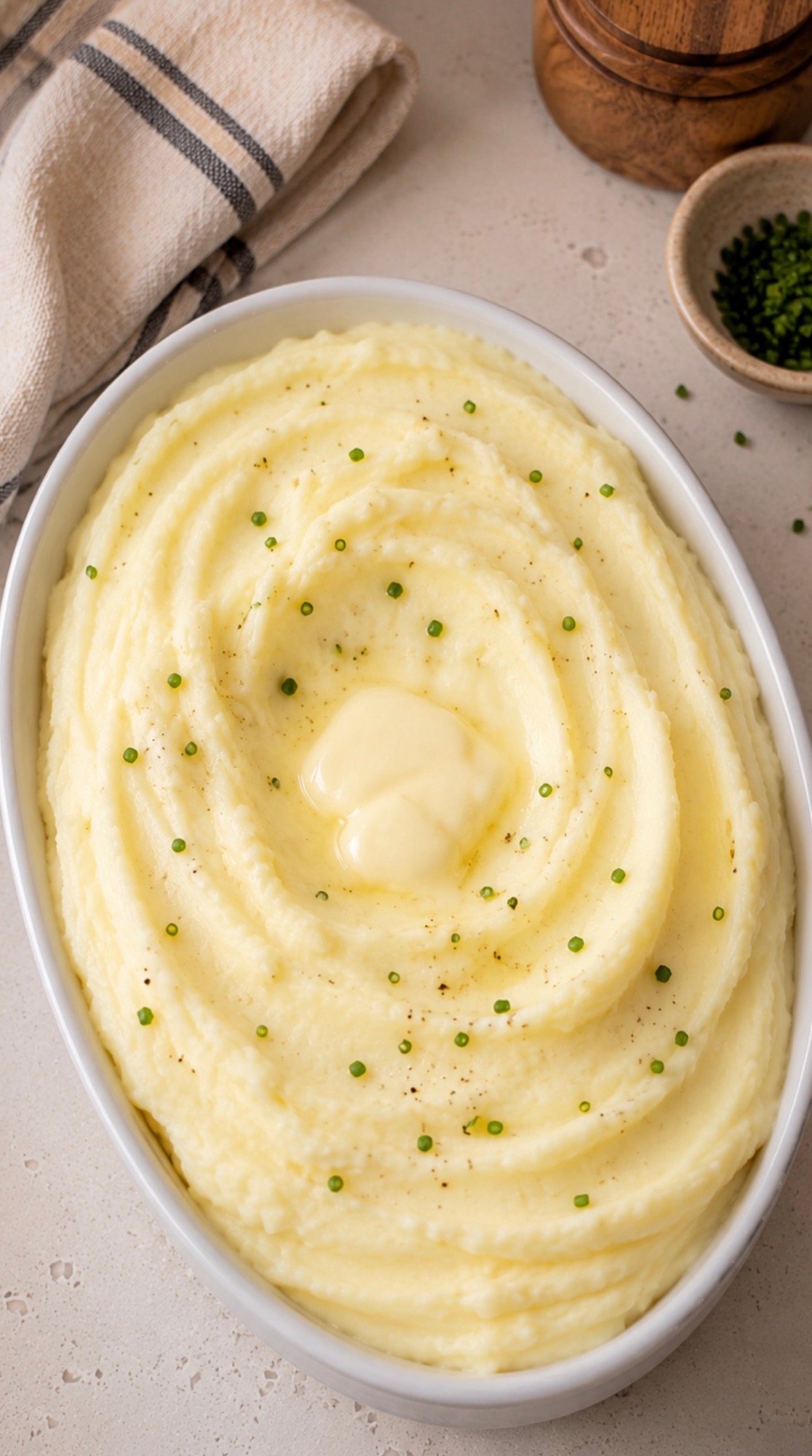
Goat cheese mashed potatoes are made by mashing boiled Yukon Gold potatoes with warm butter and cream, then folding in softened goat cheese off the heat, using about 4 ounces of cheese per 2 pounds of potatoes so the tang stays in the background instead of taking over.
I love goat cheese, but the first time I put it in mashed potatoes, I used way more than I should have and ended up with something that tasted like a cheese log with a potato problem. It was still edible, my husband still ate it, but it wasn’t the creamy, savory side dish I was picturing.
Once I dialed back the amount and started paying attention to a couple of small technique things, this became one of my favorite ways to dress up mashed potatoes without much extra effort. It’s the kind of side that makes people ask what you did differently, even though the ingredient list barely changes.
This article covers the potato variety that holds up best, exactly how much goat cheese to use, and the two mistakes I made before I got the method right. I’m also including a garlic version, since that’s the variation I make most often now.
Key takeaways
- Yukon Gold potatoes are the right call here. They have less starch than russets, so they hold up to mixing without turning gummy.
- Stick to around 4 ounces of goat cheese per 2 pounds of potatoes. More than that and the tang stops tasting like a nice accent and starts tasting like the whole dish.
- Warm your butter and cream before adding them to the hot potatoes. Cold dairy shocks the starches and the potatoes never get quite as silky.
- Fold the goat cheese in off the heat, after the butter and cream are already mixed in: cooking it directly over heat can cause it to break and turn grainy instead of melting in smoothly.
- Skip the electric mixer. A ricer or a hand masher keeps the potatoes from getting overworked and gluey.
Table of Contents
Why Yukon Gold potatoes
I’ve made this with russets and I’ve made it with Yukon Golds, and it’s not close.
Russets are great for a fluffy, classic mash, but they’re higher in starch, so they turn pasty fast if you stir them too much. Since goat cheese needs a bit of folding and mixing to distribute evenly, that extra stirring time is exactly where russets start to go wrong.
Yukon Golds hold more moisture and less starch, so they stay smooth and dense even after a few extra minutes of mixing. That gives you more room to work the goat cheese in properly without wrecking the texture.
How much goat cheese to use
This is the part I got wrong the first time, so I want to be specific about it.
For 2 pounds of potatoes, which is about 4 to 6 medium potatoes, I use 4 ounces of goat cheese. That’s half of a standard log, and it gives the potatoes a noticeable tang and creaminess without turning into the main flavor.
The first time I made this, I used a full 8-ounce log because I figured more cheese meant more flavor. Instead, the tang took over everything else on the plate, and the potatoes lost that comforting, buttery quality that makes mashed potatoes what they are. Cutting the amount in half fixed it completely.
If you’re using a garlic and herb goat cheese instead of plain, you can go a little lighter, closer to 3 ounces, since the herbs add flavor without adding more tang.
How I make them
- Peel and cube the potatoes. Cut them into roughly 1.5-inch chunks so they cook evenly. I keep them all close to the same size to avoid some pieces turning mushy while others are still firm.
- Boil until fork-tender. Start the potatoes in cold, salted water in a large stockpot and bring them to a boil, then simmer for 15 to 20 minutes. They’re ready when a fork slides in with almost no resistance.
- Warm the butter and cream while the potatoes cook. I do this in a small saucepan over low heat, just until the butter melts and the cream is warm to the touch, not boiling. Adding cold dairy to hot potatoes is what makes them clump up instead of turning smooth.
- Drain and mash the potatoes. Once drained, I run them through a potato ricer back into the warm pot. A ricer keeps the potatoes light and avoids the overworking that leads to a gluey texture.
- Stir in the warm butter and cream. Add it gradually, folding gently, and let the potatoes absorb it before adding more. Rushing this step is how you end up with soupy potatoes that never fully come together.
- Take the pot off the heat, then fold in the goat cheese. This is the step people skip, and it matters: adding goat cheese while the pot is still over direct heat can cause it to break and turn slightly grainy instead of melting smoothly into the mash.
- Season and taste. Add salt and pepper, then taste before adding more of anything. Goat cheese already brings a lot of flavor, so I usually need less salt than I expect.
The gluey batch that taught me to put the mixer away
Before I owned a ricer, I made this with a hand mixer because I wanted it extra smooth. Big mistake.
The mixer beat the potatoes so long that the starches broke down and the whole pot turned dense and slightly sticky, almost like paste. Adding more butter helped mask it a little, but the texture never fully recovered.
Switching to a ricer, and folding the goat cheese in by hand afterward, solved the problem completely. If you don’t have a ricer, a regular hand masher works fine too, as long as you stop mashing once the lumps are gone instead of continuing to smooth it out.
Garlic goat cheese mashed potatoes
I make this version more than the plain one these days, and it’s the one I’d bring if I were feeding a crowd for a holiday dinner, right alongside my cranberry sauce and candied yams.
Roast a whole head of garlic in a garlic roaster at 400°F for about 40 minutes until the cloves are soft and golden, then squeeze them into the pot along with the butter and cream. The roasted garlic mellows out and adds a sweetness that balances the tang of the goat cheese even further, so you can use the full 4 ounces without anyone commenting on the cheese being too strong.
A finishing sprinkle of flaky Maldon sea salt right before serving is a small touch, but it makes a noticeable difference against the creaminess of the potatoes.
Storage and reheating
Goat cheese mashed potatoes keep in an airtight container in the fridge for up to 4 days. I don’t recommend freezing them, since the texture gets grainy once the dairy thaws.
To reheat, warm them in a saucepan over low heat with a splash of milk or cream, stirring often. The microwave works too, just cover it loosely and stir halfway through so the goat cheese redistributes evenly.
What I’d tell anyone making this for the first time
Goat cheese mashed potatoes are an easy way to make a familiar side dish feel a little more special without much extra work. The technique is almost identical to regular mashed potatoes, just with two small adjustments that matter more than they seem like they should.
Get the ratio right, warm your dairy, and fold the cheese in off the heat. Do those three things and this becomes one of those sides people ask you to bring again.
Frequently asked questions
Does goat cheese make mashed potatoes taste sour?
Not if you use the right amount. Around 4 ounces per 2 pounds of potatoes gives you a mild tang, while using more than that is usually what makes people describe it as sour or overpowering.
Can I use goat cheese instead of sour cream in mashed potatoes?
Yes, and it actually gives a similar tangy creaminess. Use it in the same amount you’d normally use sour cream, then adjust to taste since goat cheese is a bit stronger.
Why did my goat cheese mashed potatoes turn out grainy?
This usually happens when the goat cheese is added while the pot is still over direct heat, which can cause it to break. Take the pot off the heat before folding the cheese in and it should stay smooth.
What potatoes work best for this recipe?
Yukon Golds are my first choice, since they hold up to the extra mixing goat cheese requires without turning gummy. Russets work in a pinch but need a lighter hand when mashing.
Can I make goat cheese mashed potatoes ahead of time?
Yes, they reheat well on the stovetop with a splash of milk or cream. I wouldn’t recommend freezing them, since the texture gets noticeably grainier after thawing.
Goat Cheese Mashed Potatoes
Ingredients
- 2 lbs Yukon Gold potatoes, peeled and cut into1.5-inch chunks
- 1 tbsp salt (for the boiling water)
- 6 tbsp butter
- ¾ cup heavy cream
- 4 ounces goat cheese, softened
- Saltand black pepper, to taste
Instructions
- Place the potatoes in a large pot, cover with cold water, and add 1 tablespoon salt. Bring to a boil, then simmer for 15-20 minutes until fork-tender.
- While the potatoes cook, warm the butter and cream together in a small saucepan over low heat until the butter melts. Do not let it boil.
- Drain the potatoes and run them through a ricer back into the warm pot, or mash with a hand masher.
- Gradually fold in the warm butter and cream mixture, letting the potatoes absorb it before adding more.
- Remove the pot from the heat, then fold in the softened goat cheese until fully incorporated with no visible streaks.
- Season with salt and pepper to taste and serve warm.
Notes

Cynthia Odenu-Odenu is the founder of Cyanne Eats. A registered nurse with a passion for food, she brings the same attention to detail from her professional life into the kitchen. From chain restaurant rankings to grocery finds and easy recipes, Cynthia covers it all and helps everyday food lovers eat better and spend smarter.