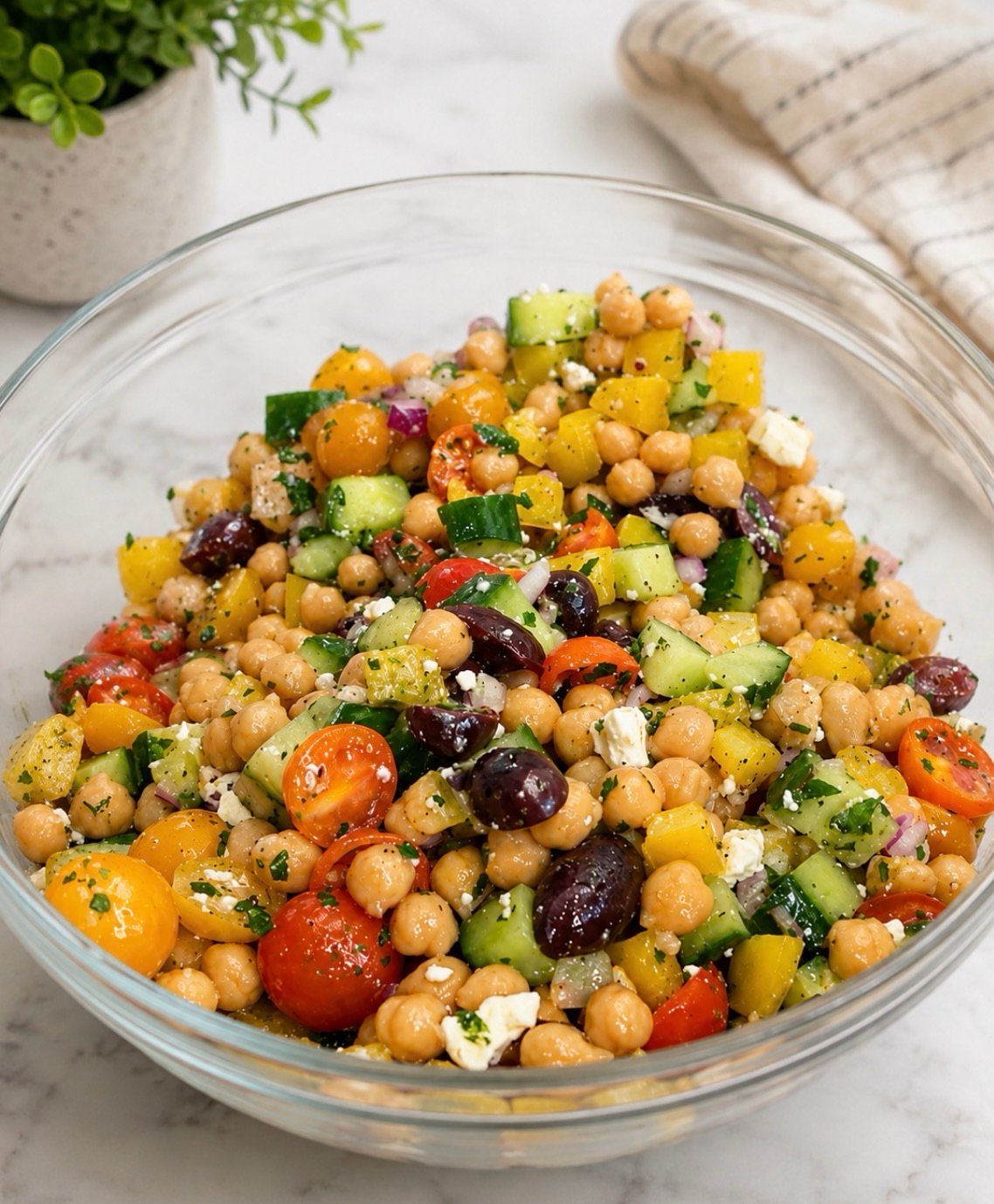
A Greek bean salad recipe is chickpeas tossed with cucumber, tomato, red onion, kalamata olives, and feta in a red wine vinegar and olive oil dressing, and it actually tastes better after it sits in the fridge for a while.
I’ve been making some version of this since long before anyone called it a dense bean salad. It’s just the salad my mom threw together whenever there were chickpeas in the pantry and a cucumber going soft in the crisper drawer. Now it has a name and half of TikTok is making it, which honestly just means I have more people to argue with about how much feta is too much feta.
This one is chickpea-first and deliberately close to a classic Greek salad, cucumber, tomato, red onion, kalamata olives, feta, and oregano, all built around the chickpeas instead of around lettuce. It’s not the same as a mixed bean version with cannellini thrown in. I’ll walk through exactly what goes in mine, the dressing ratio I use every time, and the two mistakes that used to wreck my texture before I figured out what was going wrong.
Key takeaways
- A Greek chickpea bean salad is built on canned or cooked chickpeas, not a bean blend, dressed like a classic Greek salad with red wine vinegar and olive oil.
- It gets better after a few hours in the fridge and tastes best the next day, which is the whole appeal of the dense bean salad trend.
- Salting and draining the cucumber before it goes in the bowl is the single biggest fix for a salad that turns watery.
- Canned chickpeas work fine here as long as you rinse them well and give the dressing time to soak in.
- It holds for three to four days in a sealed container, making it one of the easier meal-prep lunches I make on repeat.
Table of Contents
What actually goes into it
This salad stays close to a traditional Greek salad, just with chickpeas doing the heavy lifting instead of lettuce. I start with two 15-ounce cans of chickpeas, drained and rinsed well, or about 3 cups if I’ve cooked them from dried. One English cucumber, or two Persian cucumbers if that’s what the store has, gets diced, and a full pint of cherry or grape tomatoes gets halved.
Half a medium red onion goes in thinly sliced, along with about a cup of pitted kalamata olives, halved. Feta is the one ingredient I try to buy as a block instead of pre-crumbled, since cubing about 6 ounces myself gives bigger, better bites than the pre-crumbled kind. A tablespoon of fresh oregano rounds it out, or a teaspoon of dried oregano if that’s what I’ve got on hand.
The dressing itself is a quarter cup of extra virgin olive oil, three tablespoons of red wine vinegar, and one minced garlic clove. I like extra virgin olive oil here specifically because the flavor actually comes through once everything is tossed together, unlike in a dish where it gets cooked off. The same goes for the red wine vinegar. A cheap bottle works, but a decent one changes the whole dressing.
Is this the same as a Greek garbanzo bean salad?
Garbanzo bean and chickpea are the same thing, so if you’ve searched for a Greek garbanzo bean salad, you’ve landed on the right recipe. I’ve seen the name used more in older cookbooks and by home cooks whose families called it that first, while chickpea has become the more common term online. Either way, it’s the same bowl: canned garbanzo beans dressed like a Greek salad instead of tossed into hummus.
The dressing that actually makes it taste like something
Whisk the olive oil, red wine vinegar, minced garlic, oregano, salt, and pepper together in a small bowl or jar. A dressing shaker with a tight lid makes this even easier, since you can dump everything in, shake it hard for ten seconds, and skip the whisk entirely. I keep a large glass mixing bowl around specifically for salads like this, since it’s big enough to toss everything without dressing sloshing over the sides.
Pour the dressing over the chickpeas, cucumber, tomatoes, onion, and olives before the feta goes in. Toss gently so the tomatoes don’t get crushed, then fold in half the feta and save the rest for right before serving.
How I put it together
- Drain and rinse the chickpeas, then pat them dry with a clean towel so the dressing doesn’t get watered down.
- Dice the cucumber and halve the tomatoes, then add both to a large bowl.
- Thinly slice the red onion and add it in along with the kalamata olives.
- Add the chickpeas and half the feta to the bowl.
- Whisk the olive oil, red wine vinegar, garlic, oregano, salt, and pepper together in a separate bowl.
- Pour the dressing over everything and toss gently to coat.
- Refrigerate for at least 30 minutes, though overnight is better if you can plan ahead.
- Top with the remaining feta right before you serve it.
Canned versus dried chickpeas, and why I still reach for canned
I’ve made this both ways more times than I can count. Dried chickpeas that I cook myself do have a slightly firmer bite and a cleaner flavor, no argument there.
But canned chickpeas work genuinely well once you rinse them properly and let them sit in the dressing. That tinny canned taste mostly comes from not rinsing long enough, and a solid soak in vinegar and oil covers up whatever’s left. On a normal weeknight I’m reaching for the cans every time, and I only bother cooking dried chickpeas from scratch when I’m making a bigger batch to freeze.
Getting the texture right, and the mistake I kept making
My first few batches of this always turned watery by the second day, and I finally figured out it was the cucumber’s fault. Cucumbers hold a lot of water, and once they’re sitting in an acidic dressing, that water starts leaching out into the bowl.
Now I salt the diced cucumber and let it sit in a colander for 10 minutes before adding it to the salad, then pat it dry with a paper towel. It sounds like an extra step for nothing, but it’s the difference between a salad that’s still crisp on day three and one that’s swimming by day two. If you’re short on time, cutting the cucumber into slightly bigger pieces instead of a fine dice also slows down how fast it releases liquid.
How long it keeps, and why it’s better the next day
This salad genuinely tastes better after a night in the fridge than it does the moment you make it. The chickpeas keep absorbing the dressing, the onion mellows out, and the olives and feta start seasoning everything around them instead of sitting on top.
It keeps well in a sealed container for three to four days. I store mine in the same glass containers with airtight lids I use for most of my meal prep, since they don’t hold onto vinegar smell the way plastic sometimes does.
Ways I switch it up
- Swap the oregano for fresh dill when I want something a little softer and grassier instead of sharp and herby.
- Add half a diced bell pepper for more crunch on weeks when I want the salad to stretch further.
- Skip the feta entirely for a dairy-free version and add a little extra salt to make up for what the cheese was doing.
- Toss in chopped fresh parsley along with the oregano for more green and a slightly peppery bite.
Where this fits if you’re already deep into dense bean salads
If you’ve made cowboy caviar or a southwest quinoa salad recently, this one runs on the exact same logic, protein and vegetables marinating together in a homemade dressing instead of getting drowned in something bottled. It’s just dressed Greek instead of Tex-Mex. I also lean on chickpeas the same way in my crunchy detox salad when I want something that fills me up without feeling heavy.
Why this one stays in my rotation
I make a batch of this most Sundays now, and it’s rarely gone by Wednesday because I keep eating other things too. It works as a side next to grilled chicken, gets scooped onto pita, or just gets eaten straight out of the container standing at the counter, which happens more than I’d like to admit.
It’s cheap, it holds up, and it tastes like something I actually planned instead of something I threw together out of guilt about the produce drawer.
Frequently asked questions
Is this the same as a regular chickpea salad with feta?
It’s close, but this version leans specifically Greek with kalamata olives, red onion, and oregano in the mix, not just chickpeas and feta on their own. A plain chickpea salad with feta can skip the olives and lean more lemon-forward instead of vinegar-forward.
What’s a good greek chickpea recipe substitution if I don’t have kalamata olives?
Any brined black olive works in a pinch, though the flavor won’t be quite as sharp. I’d rather leave the olives out entirely than swap in canned black olives, since the flavor is pretty different.
Can I use dried oregano instead of fresh?
Yes, and it works well here since dried oregano actually holds up better than a lot of dried herbs. Use about a third of the amount you’d use fresh, so a teaspoon dried in place of a tablespoon fresh.
Does this salad work as a main dish instead of a side?
Yes, I eat it as a main more often than as a side these days. Adding a boiled egg or some grilled chicken on top makes it more filling without changing the dressing at all.
How long should I marinate it before eating?
Thirty minutes in the fridge is the minimum before the chickpeas really pick up the dressing. If you have the time, letting it sit overnight gets you the best flavor, and it holds well for several days after that.
Greek Chickpea Bean Salad
Ingredients
- 2 15 oz cans chickpeas, drained and rinsed (or 3 cups cooked chickpeas)
- 1 English cucumber diced (or 2 Persian cucumbers)
- 1 pint cherry or grape tomatoes halved
- 1/2 medium red onion thinly sliced
- 1 cup kalamata olives pitted and halved
- 6 oz feta cheese cubed or crumbled, divided
- 1 tablespoon fresh oregano chopped (or 1 teaspoon dried)
- 1/4 cup extra virgin olive oil
- 3 tablespoons red wine vinegar
- 1 clove garlic minced
- 1/2 teaspoon salt plus more to taste
- 1/4 teaspoon black pepper
Instructions
- Drain and rinse the chickpeas well, then pat them dry with a clean towel.
- Salt the diced cucumber and let it sit in a colander for 10 minutes, then pat dry.
- Halve the tomatoes and thinly slice the red onion; add both to a large bowl along with the cucumber.
- Add the chickpeas, kalamata olives, and half the feta to the bowl.
- In a separate small bowl, whisk together the olive oil, red wine vinegar, garlic, oregano, salt, and pepper.
- Pour the dressing over the salad and toss gently to coat everything evenly.
- Refrigerate for at least 30 minutes, or up to overnight for the best flavor.
- Top with the remaining feta right before serving.
Notes

Cynthia Odenu-Odenu is the founder of Cyanne Eats. A registered nurse with a passion for food, she brings the same attention to detail from her professional life into the kitchen. From chain restaurant rankings to grocery finds and easy recipes, Cynthia covers it all and helps everyday food lovers eat better and spend smarter.