
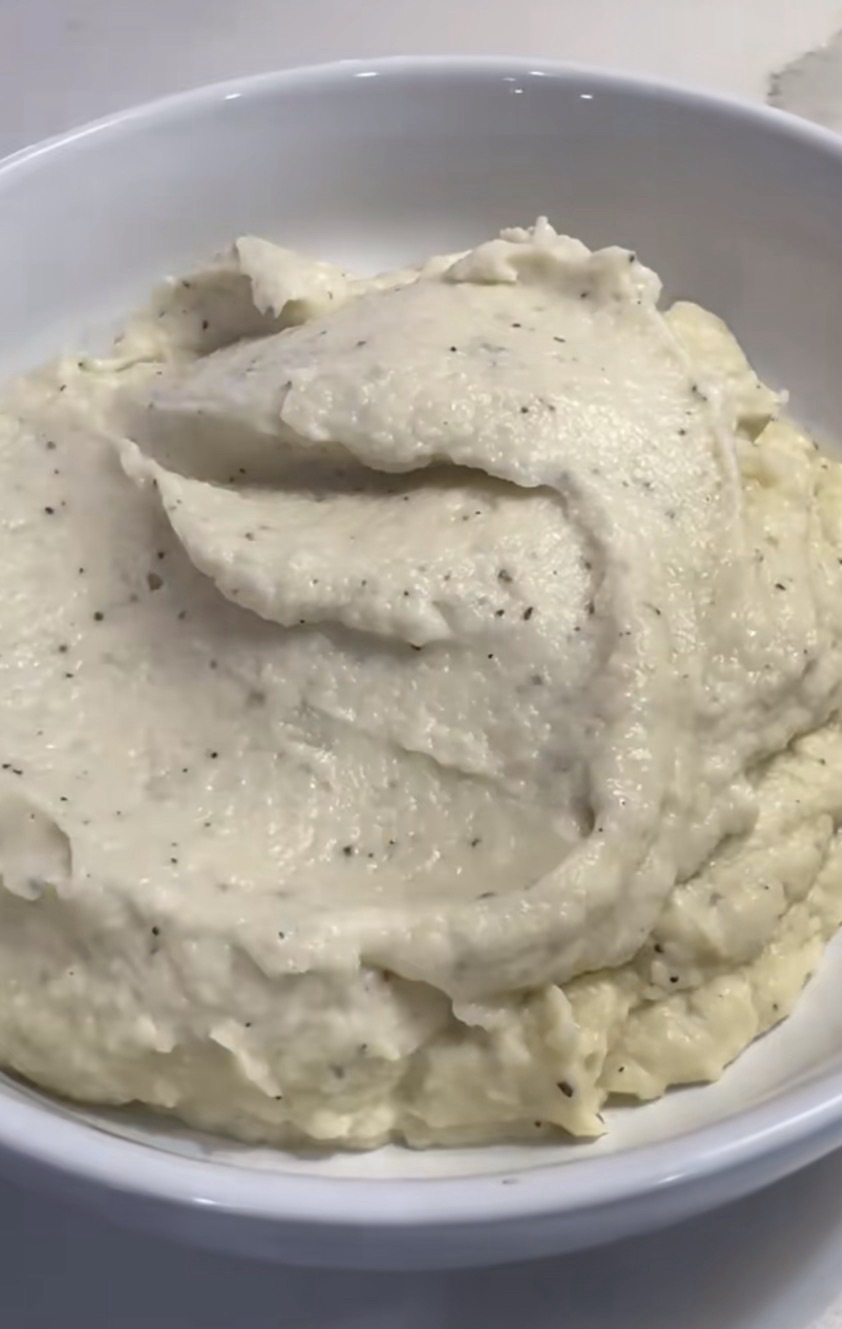
Garlic cauliflower mash is a low-carb mashed potato swap made by steaming cauliflower until fork-tender, draining and drying it thoroughly, then blending it with roasted garlic, butter, and a little cream cheese until smooth.
I used to roll my eyes at cauliflower mash. My first attempt came out of the food processor looking more like soup than a side dish, and I figured the whole “you can’t tell it’s not potatoes” thing was just marketing.
Turns out I was skipping the one step that actually matters, which is drying the cauliflower properly before it ever hits the blender. Once I fixed that, plus swapped raw garlic for roasted, this became one of the sides I make more than actual mashed potatoes now.
This article walks through my exact method, the two mistakes that used to wreck the texture, and how to season it so it doesn’t taste like plain steamed vegetables. I’m also covering roasted garlic versus raw, what to do if yours turns out grainy, and how to store leftovers so they don’t go watery again in the fridge.
Key takeaways
- Draining alone isn’t enough. Steaming off the extra moisture and wringing the florets in a towel is what stops the mash from turning watery, not the draining step by itself.
- Roasted garlic gives a mellow, sweet flavor that blends into the mash. Raw garlic can overpower it and make the cauliflower taste more noticeable, not less.
- A food processor gets it smoother than a hand masher, which tends to leave a grainy texture behind.
- Full-fat cream cheese plus butter is what gets you closest to real mashed potato richness.
- Let the mash rest for a few minutes after cooking before you season it, since cauliflower keeps releasing water even after you’ve drained it.
Table of Contents
What you’ll need
- 1 large head of cauliflower (about 2 pounds), cut into florets
- 1 whole head of garlic, roasted (or 3-4 cloves sautéed if you’re short on time)
- 3 tablespoons butter
- 2 ounces full-fat cream cheese, softened
- 1/4 cup grated parmesan (optional, but I almost always add it — grating it fresh off a parmesan wedge melts in smoother than the pre-shredded kind)
- Salt and black pepper to taste
- A splash of milk or cream, only if needed to loosen it
I roast a couple of extra heads of garlic whenever I’m already using the oven, since it keeps well and I use it in half my weeknight cooking (my fridge currently has three jars of it, so don’t judge). A cheap terracotta garlic roaster makes this almost foolproof, since it holds the head upright and traps steam so the cloves turn soft instead of drying out.
How to make garlic cauliflower mash
- Roast the garlic first. Slice the top off a whole head, drizzle with olive oil, wrap it in foil, and roast at 400°F for 35 to 40 minutes until the cloves are soft and golden. Do this while you prep everything else.
- Steam the cauliflower florets. I steam mine instead of boiling, using a steamer basket set over about an inch of water in the bottom of the pot, for 10 to 12 minutes until a fork slides in easily but the florets haven’t turned to mush.
- Drain and dry it thoroughly. Tip the cauliflower into a fine-mesh colander and let it sit for a couple of minutes. A stainless colander works just as well if you’d rather not use mesh. Then return it to the dry, empty pot over low heat for another minute or two, shaking the pot, to steam off any remaining moisture.
- Wring out the extra water. Once it’s cool enough to handle, I dump the florets onto a clean kitchen towel, gather the corners, and give it a firm twist to squeeze out anything left. A square of cheesecloth works even better than a towel, since it wrings tighter without soaking the liquid back in. This is the step that makes or breaks the texture.
- Blend it smooth. Add the dried cauliflower to a food processor with the roasted garlic cloves (squeezed out of their skins), butter, and cream cheese. Blend until smooth, scraping down the sides once or twice.
- Season and finish. Stir in the parmesan if using, then salt and pepper generously. Cauliflower needs more salt than potatoes do to taste like something, so don’t be shy here.
- Loosen if needed. If it’s still thicker than you’d like, add a splash of warm milk or cream, a tablespoon at a time, until it’s the consistency you want.
My watery first attempt (and what actually fixed it)
The first time I made this, I boiled the cauliflower, drained it in a colander, and blended it right away. It came out thin and soupy, more like a cauliflower soup than a mash, and I ended up adding a spoonful of flour just to salvage dinner.
The problem wasn’t the recipe. It was that boiling cauliflower waterlogs it, and a quick drain doesn’t get that water back out. Switching to steaming cut down how much water it absorbed in the first place, and the towel-wringing step got out the rest.
I also learned the hard way that letting it sit for a few minutes after draining matters. Cauliflower keeps leeching liquid even after you think it’s dry, so if you season and blend it too fast, you’ll end up chasing a watery texture all over again.
Roasted garlic vs. raw garlic
I went back and forth on this for a while before landing on roasted garlic as the clear winner for this recipe.
| Roasted Garlic | Raw Garlic | |
| Flavor | Mellow, sweet, almost buttery | Sharp, pungent, can overpower the dish |
| Texture | Soft enough to blend in completely | Needs to be minced fine or it stays gritty |
| Best for | A side that tastes rich, not vegetal | A quicker version when you’re short on time |
| Time | 35-40 minutes roasting | 2-3 minutes sautéed, or added raw |
The first time I tried this with raw garlic, it was fine, but the cauliflower flavor came through more, not less. Roasting mellows the garlic so much that it stops competing with the cauliflower and instead just makes the whole thing taste richer. If you’re in a rush, sautéing minced garlic in the butter for two or three minutes before it goes into the food processor is a decent shortcut.
Why mine turned out grainy the first couple of tries
Before I owned a food processor, I made this with a hand masher, and it never got fully smooth. There were always little bits of cauliflower that wouldn’t break down no matter how long I mashed.
A food processor solved that completely. If you don’t have one, a blender works, but you’ll need to stop and scrape the sides more often, and you may need an extra splash of liquid to help it move.
One more thing that causes grainy texture: the thick membrane on the outer stem of the cauliflower. If your florets still have a lot of stem attached, peel it with a paring knife before cooking, since that fibrous part doesn’t break down the same way the florets do.
Variations worth trying
- Cheesy garlic mash: stir in a half cup of shredded cheddar along with the parmesan.
- Herb version: fold in a tablespoon of chopped chives or fresh thyme right before serving.
- Dairy-free: swap the butter and cream cheese for olive oil and a spoonful of tahini, which adds richness without dairy.
- Loaded: top with crumbled bacon and a dollop of sour cream, the same way you’d dress up regular mashed potatoes.
Storage and reheating
Garlic cauliflower mash keeps in an airtight container in the fridge for up to 4 days. I don’t recommend freezing it, since cauliflower releases even more water as it thaws and the texture gets watery again no matter how well you dried it the first time.
To reheat, warm it in a saucepan over low heat, stirring often, and add a small splash of milk if it’s tightened up in the fridge. The microwave works too, just stir halfway through so it heats evenly.
A side that earns its spot on the table
I don’t make this because I’m trying to trick anyone into thinking it’s potatoes. I make it because, done right, it’s genuinely good on its own terms, rich and garlicky and satisfying in the same way a good side should be.
The texture fixes matter more than any specific ingredient swap. Get the moisture out properly and roast your garlic, and the rest of the recipe pretty much takes care of itself.
Frequently asked questions
Does garlic cauliflower mash taste like cauliflower?
Once it’s properly drained, dried, and seasoned with roasted garlic and butter, the cauliflower flavor fades into the background. Skipping those steps is usually why people say it still tastes vegetal.
Can I make this ahead of time?
Yes, it keeps well in the fridge for up to 4 days. Reheat it gently on the stove with a splash of milk to bring the texture back.
Why is my cauliflower mash watery?
It’s almost always moisture left over from cooking. Steaming instead of boiling, draining thoroughly, and wringing the florets in a towel before blending fixes it.
Can I use frozen cauliflower instead of fresh?
You can, but frozen cauliflower holds even more water, so drain and dry it extra thoroughly, ideally with an additional towel-wringing step after steaming.
What can I use instead of a food processor?
A blender works if you scrape the sides often, and a hand masher works in a pinch, though the texture will be noticeably more grainy than blended versions.
Garlic Cauliflower Mash
Ingredients
- 1 large head cauliflower (about 2 lbs), cut into florets
- 1 whole head garlicnces
- 1 tbsp olive oil (for roasting garlic)
- 3 tbsp butter
- 2 ounces full-fat cream cheese, softened
- ¼ cup grated parmesan (optional)
- Salt and black pepper, to taste
- Milk or cream, as needed to loosen
Instructions
- Preheat oven to 400°F. Slice the top off the head of garlic, drizzle with olive oil, wrap in foil, and roast for 35-40 minutes until soft and golden. Set aside to cool.
- Steam the cauliflower florets in about an inch of water for 10-12 minutes, until fork-tender but not mushy.
- Drain the cauliflower in a colander, then return it to the dry pot over low heat for 1-2 minutes to steam off remaining moisture.
- Once cool enough to handle, transfer the cauliflower to a clean kitchen towel and wring firmly to squeeze out excess water.
- Add the dried cauliflower to a food processor with the roasted garlic cloves (squeezed from their skins), butter, and cream cheese. Blend until smooth.
- Stir in parmesan if using, then season generously with salt and pepper.
- If the mash is thicker than desired, add milk or cream a tablespoon at a time until it reaches the consistency you want.
Notes

Cynthia Odenu-Odenu is the founder of Cyanne Eats. A registered nurse with a passion for food, she brings the same attention to detail from her professional life into the kitchen. From chain restaurant rankings to grocery finds and easy recipes, Cynthia covers it all and helps everyday food lovers eat better and spend smarter.