
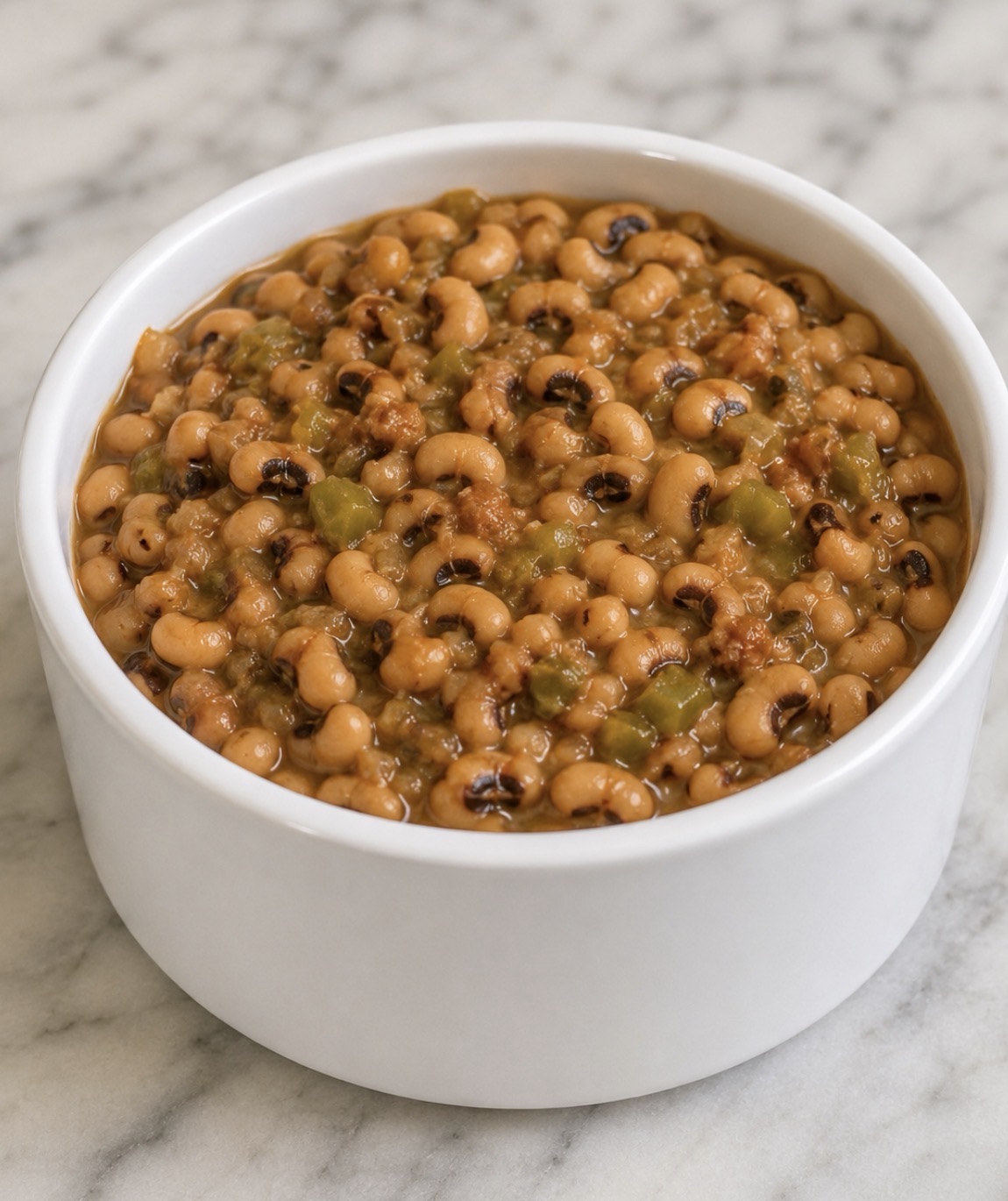
Black-eyed peas are eaten on New Year’s Day because they’re believed to bring luck and money for the year ahead, a tradition that traces back to West African cooking and enslaved communities in the American South, usually served with collard greens for cash and cornbread for gold.
I grew up thinking this was just something my family did because my grandmother said so. It wasn’t until I was in my twenties, standing in her kitchen on December 31st with a pot of peas on the stove, that she actually explained why. Every part of the plate means something, and once you know it, you can’t unknow it.
I’ve made this same pot of peas every January 1st for the last several years, and I’ve messed it up more than once along the way. The first time I tried it on my own, I ended up with something closer to gray soup than a proper Hoppin’ John. This article covers the real story behind the tradition, what actually goes wrong when you cook these at home, and the method I use now that finally gets it right.
Key Takeaways
- Black-eyed peas symbolize coins and luck, collard greens symbolize dollar bills, and cornbread symbolizes gold, all eaten together for a prosperous new year.
- The tradition has roots in West African cowpea cooking, carried into the South through enslaved communities and documented in cookbooks as far back as the 1840s.
- Canned peas work fine for this dish, but only if you build flavor around them instead of just heating them up.
- Overcooking or over-stirring is what turns peas to mush, not the peas themselves.
- A ham hock or a few strips of bacon does more for this dish than any spice blend I’ve tried.
Table of Contents
What Each Dish on the Plate Actually Means
Southern New Year’s tables tend to look the same from house to house, even if the recipes don’t. There’s a reason for that.
- Black-eyed peas: they swell up round and pale when cooked, close enough to coins that they came to represent money or luck.
- Collard greens (sometimes mustard or turnip greens): the green color stands in for paper money, so the more you eat, the more prosperity you’re supposedly inviting.
- Cornbread: its golden color is meant to represent gold.
- Pork: it symbolizes moving forward, since pigs root forward when they dig instead of backward.
Some people I know insist you need to eat exactly 365 peas, one for every day of the year. I’ve never actually counted mine, and I don’t plan to start.
Where the Tradition Actually Comes From
The dish most people associate with this meal is called Hoppin’ John, black-eyed peas cooked down with rice and usually some kind of smoked pork. The earliest written recipes for it show up in cookbooks from the 1840s, but the dish itself is much older than that.
It comes from West African cowpea cooking, brought to the Lowcountry South by enslaved people long before it ever got written down. Civil War stories and Charleston street vendor legends got layered on top of that history over time, but the roots of the dish are African, not Southern in origin. That’s worth knowing, because it’s the part most casual retellings skip entirely.
Canned vs. Dried Peas: What I Actually Use
I used to think dried peas were the “real” way to do this and canned was cutting corners. I don’t think that anymore.
Dried peas have a firmer bite and a slightly deeper flavor once they’re cooked down, but they need an overnight soak and close to two hours of simmering to get tender. Canned peas are already cooked, so all you’re doing is warming them through and building flavor around them, which takes a fraction of the time.
| Dried Peas | Canned Peas | |
| Prep needed | Soak overnight | None |
| Cook time | About 1.5 to 2 hours | About 25 to 30 minutes |
| Texture | Firmer, holds shape well | Softer, needs gentle handling |
| Best for | New Year’s Day if you’re planning ahead | A weeknight version or a last-minute New Year’s meal |
On New Year’s Day itself, when I’m juggling collards, cornbread, and everything else, I reach for canned, and canned black-eyed peas with bacon already built in is an easy shortcut if you want to skip a step. If I’ve got a lazy afternoon a day or two before, I’ll do dried instead, usually dried black-eyed peas since they cook up consistently.
The Mistake I Made the First Time
My first solo attempt at this dish was rough. I drained a can of black-eyed peas, dumped them in a pot with some water, heated it up, and salted it at the very end.
It tasted like almost nothing. The peas themselves have a mild, earthy flavor, and canned peas come sitting in a pretty bland liquid, so if you don’t build flavor into the pot before the peas go in, you’re left with watery beans and not much else.
The next year I overcorrected in the opposite direction. I let the pot simmer way too long trying to “develop flavor,” and the peas broke down into a mush that barely held its shape on the plate.
What fixed both problems was the same fix: cook the aromatics and the pork first, in their own fat, before the peas ever touch the pot. Onion and garlic need a few real minutes in bacon fat or rendered ham hock fat to actually taste like something, and the peas only need about 20 to 25 minutes of gentle simmering once they go in, not a full simmer session on their own.
How I Make Mine
This is the Hoppin’ John style version I actually cook every January 1st, built around canned peas.
- Cook two or three strips of chopped bacon in a Dutch oven until the fat renders out, then remove the bacon and set it aside.
- Add a diced onion, a diced bell pepper, and a couple minced garlic cloves to the bacon fat, and cook until the onion softens and turns a little golden.
- Stir in a smoked ham hock or a cup of diced smoked ham, along with a bay leaf, a pinch of smoked paprika, and a few dashes of hot sauce.
- Pour in two 15-ounce cans of black-eyed peas, undrained, plus about a cup of chicken broth.
- Bring it to a gentle simmer, not a hard boil, and let it cook uncovered for 20 to 25 minutes, stirring only once or twice.
- Taste and adjust the salt at the end, since the ham and bacon already bring a lot of it.
- Serve over rice, with the crispy bacon crumbled back on top.
A good heavy-bottomed Dutch oven makes a real difference here since it holds heat evenly and keeps the peas from scorching on the bottom.
Add-Ins Worth Trying
- Ham hock: gives the deepest, smokiest flavor, but needs longer cooking time to render.
- Bacon: faster than ham hock and still delivers real smoky flavor.
- Andouille sausage: a spicier, more Cajun-leaning direction if that’s your thing.
- No meat at all: smoked paprika, a splash of liquid smoke, and vegetable broth get you most of the way there for a vegetarian version.
- Rice: technically optional, but it’s what turns black-eyed peas into actual Hoppin’ John.
I keep a can of Bush’s Best black-eyed peas in the pantry pretty much year-round now, not just for New Year’s, because this dish has become a regular weeknight thing in my house too.
The Dish That Keeps Me Coming Back
I don’t put much stock in luck as a concept, honestly. But there’s something about sitting down to the same plate my grandmother made, that her mother made before her, that feels like more than superstition.
Whether or not the peas actually bring good fortune, the tradition itself is worth keeping. Some years are better than others no matter what’s on the table, but this meal is the one constant I go back to every January 1st.
Frequently Asked Questions
Why do Southerners eat black-eyed peas on New Year’s Day?
Black-eyed peas are eaten for luck and prosperity, a tradition that goes back to West African cowpea cooking brought to the South by enslaved people. The peas resemble coins, which is where the money symbolism comes from.
Do black-eyed peas have to be eaten with collard greens?
They don’t have to be, but the two are traditionally paired because collards represent money and peas represent luck. Together they’re meant to cover both bases for the year ahead.
Can I use canned black-eyed peas instead of dried?
Yes, canned peas work well and cut the cooking time down to about 25 to 30 minutes. Just build flavor into the pot with aromatics and pork before the peas go in, since canned peas on their own taste fairly bland.
How do I keep black-eyed peas from turning mushy?
Simmer them gently instead of boiling hard, and avoid stirring them constantly. Canned peas only need about 20 to 25 minutes once they hit the pot, so pulling them off heat on time matters more than anything else.
What’s the difference between black-eyed peas and Hoppin’ John?
Black-eyed peas are the ingredient, and Hoppin’ John is the finished dish, which combines the peas with rice and usually some form of smoked pork. You can eat plain seasoned peas on New Year’s Day, but Hoppin’ John is the traditional full version.
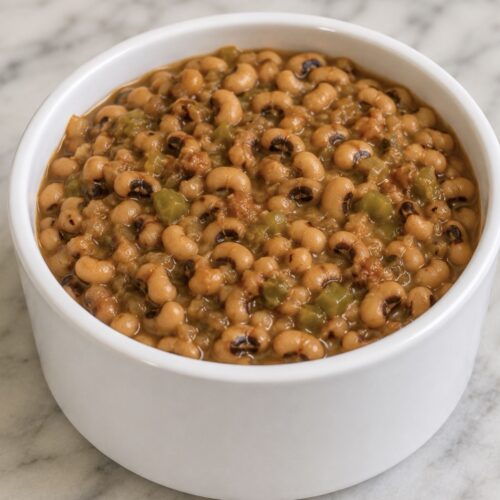
Cynthia’s New Year’s Black-Eyed Peas (Hoppin’ John Style)
Ingredients
- 3 strips bacon, chopped
- 1 small onion, diced
- 1 small green bell pepper, diced
- 2 cloves garlic, minced
- 1 smoked ham hock (or 1 cup diced smoked ham)
- 1 bay leaf
- ½ tsp smoked paprika
- A few dashes hot sauce
- 2 cans (15 oz) black-eyed peas, undrained
- 1 cup chicken broth
- Salt and pepper, to taste
- Cooked rice, for serving
Instructions
- In a Dutch oven over medium heat, cook the bacon until the fat renders out. Remove the bacon and set it aside.
- Add the onion, bell pepper, and garlic to the bacon fat. Cook until the onion softens and turns slightly golden, about 5 minutes.
- Stir in the ham hock, bay leaf, smoked paprika, and hot sauce.
- Pour in the black-eyed peas with their liquid and the chicken broth. Bring to a gentle simmer.
- Simmer uncovered for 20 to 25 minutes, stirring only once or twice, until the ham hock is warmed through and the flavors have come together.
- Remove the bay leaf and ham hock. Shred any meat off the hock and stir it back into the pot.
- Taste and adjust salt and pepper. Serve over rice with the crispy bacon crumbled on top.
Notes

Cynthia Odenu-Odenu is the founder of Cyanne Eats. A registered nurse with a passion for food, she brings the same attention to detail from her professional life into the kitchen. From chain restaurant rankings to grocery finds and easy recipes, Cynthia covers it all and helps everyday food lovers eat better and spend smarter.