

Yes, you can freeze both turkey and stuffing after Thanksgiving, but turkey holds up in the freezer a lot better than stuffing does.
I learned that the hard way a few years back when I froze a full container of leftover turkey and stuffing mixed together, thinking I was saving myself a step. Big mistake. The turkey came out fine, but the stuffing turned into a weird, gluey mess that I ended up scraping into the trash instead of eating.
Since then I’ve frozen turkey and stuffing separately every single year, and I’ve figured out what actually works for each one. It’s not complicated once you know the difference between how meat freezes and how bread-based stuffing freezes.
This guide covers how long each one lasts in the freezer, the right way to pack them, and how to reheat everything so it doesn’t come out dry, rubbery, or soggy. I’m also covering gravy, because that one has its own quirks depending on what’s in it.
Key Takeaways
- Turkey freezes well for up to 4 months and keeps decent texture if you pack it with some broth or gravy
- Stuffing freezes safely but the texture suffers, it tends to go soft in some spots and dry in others
- Broth-based gravy freezes fine, but cream or milk-based gravy will separate and turn grainy
- Refrigerate leftovers within 2 hours of cooking, and freeze within 3 to 4 days for the best quality
- Reheating low and slow with added moisture is the single biggest fix for rubbery turkey
Table of Contents
Turkey, Stuffing, and Gravy: How Each One Actually Freezes

Not all Thanksgiving leftovers are built the same, and that’s really the whole point of this article. Below is how each one holds up once it goes into the freezer.
Turkey: This is the one that freezes the best out of the three. The meat itself doesn’t change structure much when frozen, so as long as you protect it from drying out, it comes back close to how it started. White meat is a little more prone to drying out than dark meat, so I’m more careful with breast meat than with thighs.
Stuffing: This is where things get tricky. Stuffing is mostly bread, and bread doesn’t freeze and thaw evenly, so some parts turn soggy while others turn dry. It’s still safe to freeze, it just won’t taste like it did on day one.
Gravy: This one depends entirely on what’s in it. A basic broth or flour-thickened gravy freezes and reheats just fine. A cream-based or milk-based gravy is a different story, and I’ll get into exactly why below.
How Long Turkey, Stuffing, and Gravy Last in the Freezer
| Leftover | Fridge (before freezing) | Freezer (best quality) |
| Cooked turkey | 3 to 4 days | Up to 4 months |
| Stuffing | 3 to 4 days | Up to 4 months |
| Broth-based gravy | 3 to 4 days | Up to 3 months |
| Cream or milk-based gravy | 3 to 4 days | Not recommended |
These numbers come straight from USDA food safety guidance, and they’re about quality, not safety. Frozen food that stays at a steady 0°F doesn’t actually go unsafe, it just starts tasting worse the longer it sits. I try to use everything within 2 to 3 months anyway, because that’s about where I start noticing a real difference in flavor.
One thing I always do without fail: get leftovers into the fridge within 2 hours of the meal ending. If the room is warmer than usual, like a crowded kitchen after cooking all day, that window drops to 1 hour. I set a timer on my phone the second dinner starts, because it’s easy to lose track of time when everyone’s still eating and talking.
How to Freeze Turkey the Right Way
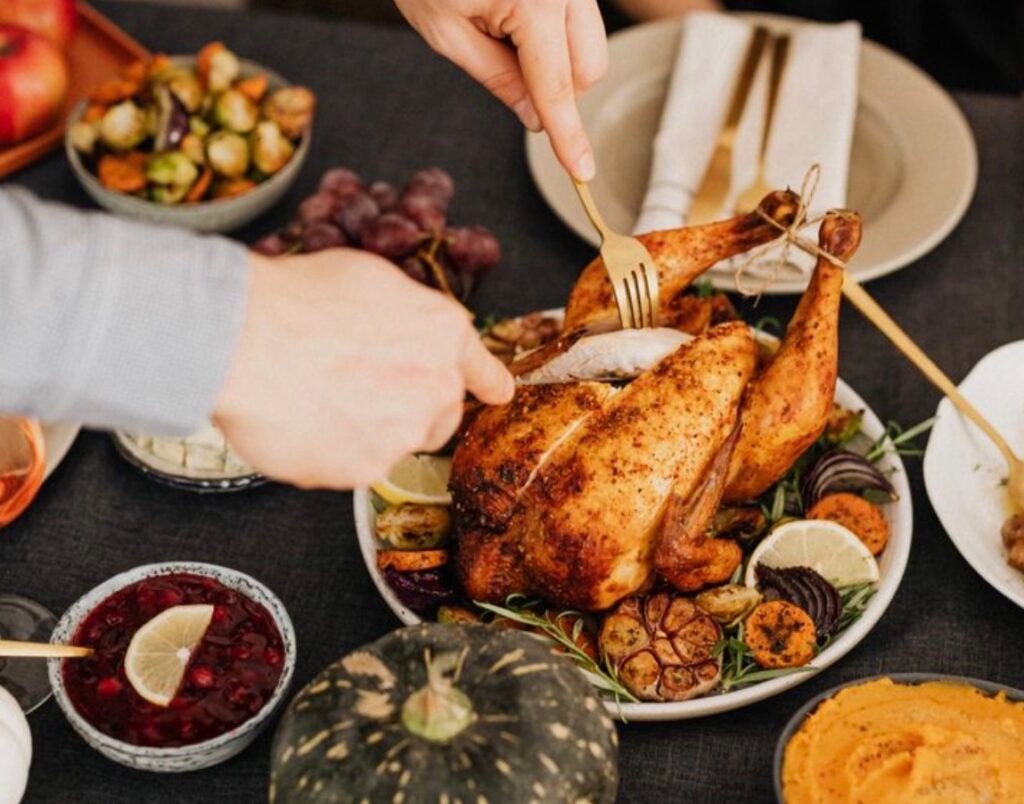
- Pull the meat off the bone and cut it into pieces or slices instead of freezing it whole. Smaller portions freeze faster and thaw more evenly.
- Pack the turkey into a shallow, airtight container or a freezer bag, and spoon a little broth or leftover gravy over it before sealing.
- Press the air out of the bag as much as you can, since air exposure is what causes freezer burn, not the freezing itself.
- Label the container with the date so you’re not guessing in February.
- Freeze flat if you’re using bags, so they stack and thaw faster later.
That splash of broth in step two is the one change that made the biggest difference for me. The first year I froze turkey completely dry, and reheating it turned the meat rubbery and stringy, especially the breast meat. Now I never skip that step, and the texture comes out noticeably better every time.
How to Freeze Stuffing Without Ruining It
Freezing stuffing works, but I’ve had the best luck treating it a little differently than turkey.
- Slightly underbake the stuffing on purpose if you know part of it is headed for the freezer. It’ll finish cooking when you reheat it, and that helps avoid the mushy texture that comes from reheating something that was already fully baked and moist.
- Pack it into a shallow container instead of one deep dish, so it freezes and thaws faster and more evenly.
- Skip mixing turkey into the same container as stuffing. I know it seems efficient, but the moisture from the meat makes the stuffing texture worse, not better.
Honestly, the best stuffing result I’ve ever gotten from the freezer was the one time I froze an unbaked batch instead of a cooked one. I mixed it, portioned it into a dish, wrapped it tight, and froze it raw. When I baked it straight from frozen a few weeks later, it tasted almost like it was made fresh, way better than any batch I’d frozen after baking.
Reheating Without Going Dry or Rubbery
This is where most people lose the leftovers, not in the freezing.
For turkey: Reheat low and slow, around 300°F to 325°F, with the meat covered in foil and a little broth or gravy poured over it. I check it around the 20 minute mark for smaller portions. Skip the microwave if you can, since it tends to cook the outside faster than the inside and that’s what gives you that rubbery bite.
For stuffing: Spread it out on a baking sheet instead of reheating it in a deep dish. The wider surface area lets moisture escape instead of trapping it, which helps fix the soggy spots and actually crisps up the top a little.
For gravy: Reheat it slowly in a saucepan over medium-low heat, whisking the whole time. If a broth-based gravy separates slightly after thawing, whisking it while it heats usually brings it back together. Cream-based gravy that’s separated and turned grainy is pretty much done, and at that point I just make a fresh batch instead of trying to save it.
If you’ve frozen other Thanksgiving sides before, the logic is pretty similar across the board. I ran into the same kind of texture trade-off when I tested freezing Bob Evans mashed potatoes, where the potatoes held up fine but needed a little extra butter and milk stirred back in after thawing to get the texture right again.
My Honest Take on Freezing Thanksgiving Leftovers
If I’m being straight with you, I freeze turkey every single year without hesitating, because it genuinely comes back close to how it started. Stuffing is the one I’m more careful with now.
I still freeze it, but I’ve stopped expecting it to taste exactly like it did fresh out of the oven on Thanksgiving Day. If you go in knowing that and you use the underbaked or unbaked trick, you’ll be a lot happier with the results than I was that first year with the gluey mixed container.
Frequently Asked Questions
Can you freeze turkey and stuffing together in the same container?
You can, but I don’t recommend it. The moisture from the turkey makes the stuffing soggier than it would be on its own, and it reheats less evenly.
How long can you freeze turkey leftovers before they go bad?
Frozen turkey stays safe indefinitely at a steady freezer temperature, but for the best taste and texture, use it within 4 months.
Does stuffing freeze as well as turkey?
No, stuffing loses more texture than turkey does. Bread doesn’t freeze and thaw as evenly as meat, so you’ll usually notice some dry or soggy spots after reheating.
Can you freeze gravy without it separating?
Broth-based or flour-thickened gravy freezes fine and can usually be whisked back together after thawing. Cream or milk-based gravy tends to separate and turn grainy, so it’s best to skip freezing that kind.
What’s the best way to reheat frozen turkey so it isn’t rubbery?
Reheat it low and slow in the oven around 300°F to 325°F with a little broth or gravy poured over it, covered in foil. Avoid the microwave if you can, since it tends to dry the meat out and make it rubbery.

Cynthia Odenu-Odenu is the founder of Cyanne Eats. A registered nurse with a passion for food, she brings the same attention to detail from her professional life into the kitchen. From chain restaurant rankings to grocery finds and easy recipes, Cynthia covers it all and helps everyday food lovers eat better and spend smarter.