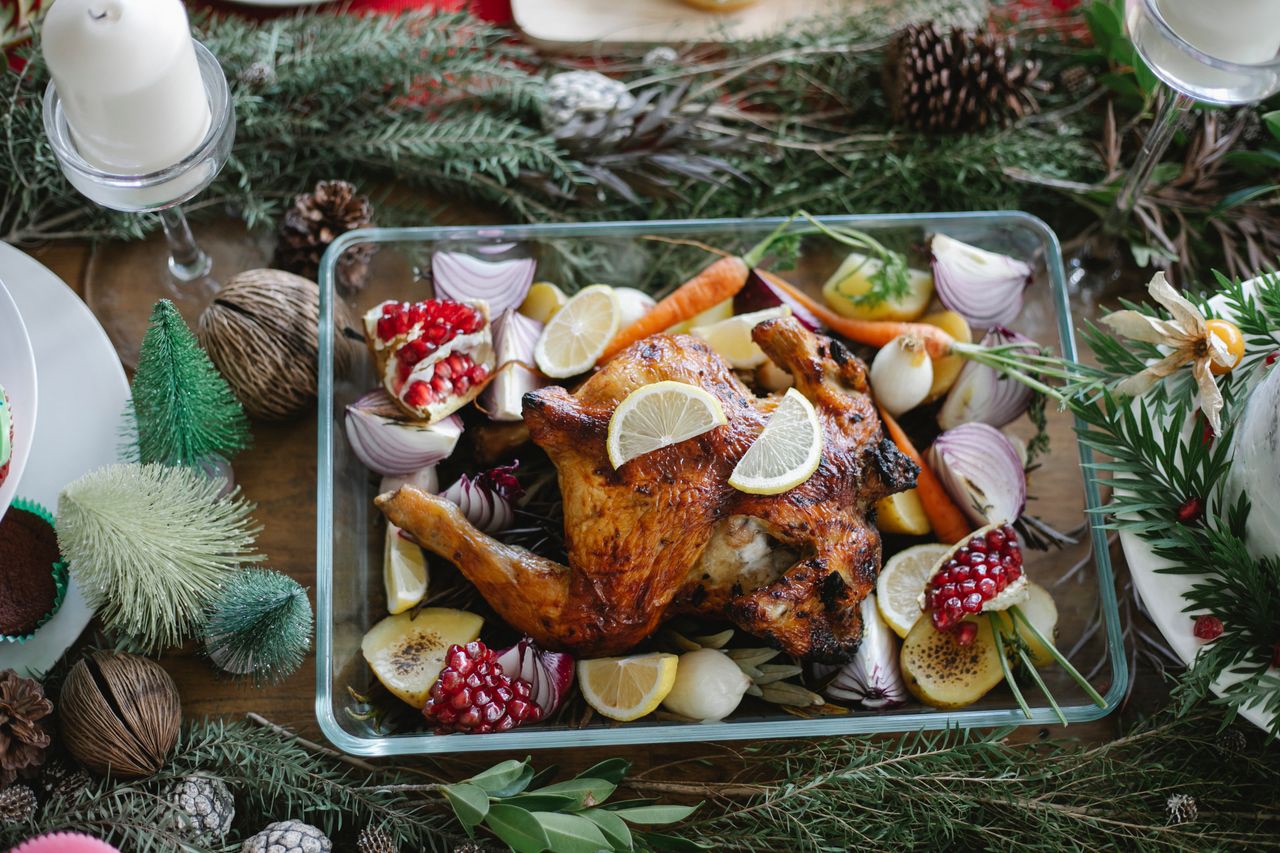
The best budget Christmas dinner idea is building your whole menu around brown sugar pork tenderloin instead of prime rib or ham, since it costs a fraction as much per serving but still looks like a restaurant plate when you slice it at the table.
I used to think a fancy Christmas dinner meant a fancy price tag, full stop. Then a few years ago money was tight in December and my husband and I had a full table of guests to feed without spending three hundred dollars on a roast that would be gone in twenty minutes. What I landed on turned into one of my favorite Christmas dinners I’ve ever put together, and it cost less than I used to spend on the meat alone.
This is that menu. One main, two sides, and a dessert, all picked because they punch way above their price tag and none of them scream “budget” on the plate. I’m walking through why each piece earns its spot, roughly what it costs, and how the whole thing comes together on one afternoon without you living in the kitchen all day.
A good carving knife and fork set makes that tableside slicing moment look a lot more polished than fighting the tenderloin with whatever knife is already in the block.
Key Takeaways
- A whole roasted pork tenderloin costs about a quarter of what prime rib costs per serving, and it still slices into that impressive medallion shape at the table.
- Goat cheese turns basic mashed potatoes into something that tastes like a steakhouse side for less than two dollars extra per batch.
- A from-scratch green bean casserole skips the canned soup can and actually costs about the same as the canned version once you price it out.
- A gingerbread trifle feeds a crowd from one bowl and costs less than a store-bought pie while looking far more festive.
- The full four-course menu below runs somewhere around seven to nine dollars a plate for eight people, compared to eighteen to forty dollars a plate for prime rib alone.
Table of Contents
The 4 Menu Items
1. Brown Sugar Pork Tenderloin
I switched to pork tenderloin the year I actually sat down and did the math on what prime rib costs per pound, and I haven’t looked back since. Prime rib at most grocery stores and butcher counters runs anywhere from eighteen to over forty dollars a serving depending on where you shop and how good a cut you’re after. Pork tenderloin sits around five to six dollars a pound, and because you only need about half a pound raw per person, you’re looking at closer to two to three dollars a serving for the same seat at the table.
The shape sold me on it just as much as the price did: a whole tenderloin roasts into a long, tapered log that you slice into thick medallions right in front of everyone, and that slicing moment is basically what makes prime rib feel special in the first place.
A quick read on an instant-read meat thermometer takes the guesswork out of pulling it at the right moment, since tenderloin goes from perfect to dry fast if you’re just eyeballing it.
A brown sugar glaze caramelizes into a dark, sticky crust that looks like it took way more effort than it actually did. I brush mine on with a silicone basting brush instead of a spoon, since it gets an even coat without dragging the glaze off in one spot. I go into the full method, including how to keep the glaze from burning before the inside is cooked through, in my brown sugar pork tenderloin recipe.
For a table of eight, plan on two tenderloins, which puts the meat cost for the whole main course around fifteen to eighteen dollars total.
2. Goat Cheese Mashed Potatoes
Mashed potatoes are already the cheapest thing on most Christmas tables, so I never understood why so many versions taste like an afterthought. The fix I keep coming back to is goat cheese instead of just butter and milk. A four ounce log runs about five or six dollars and it’s enough to work into a batch that serves eight, so you’re adding maybe a dollar fifty to two dollars total to a side that already costs almost nothing.
The tang cuts through the richness of the pork in a way plain mashed potatoes just don’t, and it reads as a deliberate, restaurant-style choice rather than a corner cut anywhere. I tested a few ratios before landing on the balance that doesn’t overpower the potato, and I wrote out the exact method in my goat cheese mashed potatoes recipe.
Three pounds of potatoes plus the goat cheese, butter, and cream puts this side around twelve to fourteen dollars total for eight servings. A sturdy stainless steel potato masher gets the goat cheese worked in evenly without turning the potatoes gluey, which is the easiest way to wreck this side. I mash straight in a Pyrex mixing bowl set, since having a few sizes on hand means one bowl for potatoes and another free for whatever side needs mixing next.
3. Green Bean Casserole, No Canned Soup
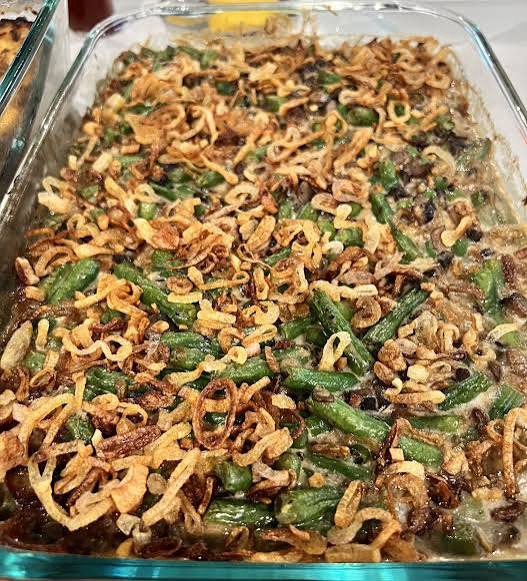
Every family has a canned cream of mushroom green bean casserole, and I’ll be honest, mine did too for years. The thing that finally got me to make it from scratch wasn’t even the taste, it was realizing that fresh green beans, mushrooms, and a real cream sauce cost about the same as the canned version once you add up a can of soup, a can of fried onions, and a bag of frozen beans anyway.
Making the sauce myself means I control the seasoning, and I stopped getting that gray, one-note flavor the canned stuff always had. It looks brighter on the plate too, which matters more than people think when half the meal is built around presentation. My full walkthrough, including how to keep the sauce from breaking, is in my green bean casserole, no canned soup recipe.
This side runs around twelve to fifteen dollars total for eight servings, roughly a dollar fifty to two dollars a plate. I make it in a deep 9×13 glass baking dish with a lid, which means I can assemble it ahead, keep it covered in the fridge, and go straight into the oven without dirtying another dish.
4. Gingerbread Trifle

I used to buy a pie every Christmas because I told myself baking one from scratch wasn’t worth the effort for one meal. A trifle changed my mind completely. You layer gingerbread pieces, spiced pudding or custard, and whipped cream in one big glass bowl, and it looks like a dessert from a magazine cover with almost no piping or decorating skill required.
Cost-wise it beats a bakery pie by a wide margin, since you’re working with boxed gingerbread or homemade cake scraps, pudding mix, and cream rather than a whole from-scratch pastry crust. It also serves a crowd from one dish, which matters when you’ve already got four other things on the stove. I share the layering order that keeps it from going soggy before dinner’s even done in my gingerbread trifle recipe.
A trifle big enough for eight to ten servings runs about fourteen to sixteen dollars total, so under two dollars a serving. A real footed glass trifle bowl makes the layers visible from the side, which is honestly half the reason this dessert reads as fancy in the first place.
What the Whole Menu Actually Costs
The four courses break down like this, next to what a single prime rib roast alone would cost for the same table.
| Course | Total Cost (serves 8) | Cost Per Serving |
| Brown Sugar Pork Tenderloin | $15-18 | $2.00-2.25 |
| Goat Cheese Mashed Potatoes | $12-14 | $1.50-1.75 |
| Green Bean Casserole | $12-15 | $1.50-1.90 |
| Gingerbread Trifle | $14-16 | $1.75-2.00 |
| Full menu total | $53-63 | $7-8 |
| Prime rib alone, for comparison | $150-320 | $18-40 |
I plan my timing backward from dinner. The trifle gets built the night before since it actually tastes better once it sits and the layers set. The morning of, I peel and par-boil the potatoes early so all that’s left is mashing and adding the goat cheese right before serving.
The green bean casserole goes together and into the oven about forty-five minutes before you want to eat, and the tenderloin roasts in the same window since it only needs twenty-five to thirty minutes at a high temperature. Everything lands on the table within about ten minutes of each other if you start the oven work around the same time.
If pricing out a whole holiday meal like this is new to you, my grocery budget tracker is the same tool I use to keep the rest of December’s shopping list from creeping past what this dinner saved.
Why This Menu Doesn’t Feel Like a Compromise
I’ve hosted the expensive version of Christmas dinner and I’ve hosted this one, and I genuinely don’t feel like anyone at my table noticed a difference except my bank account afterward. The anxiety around hosting on a tight budget is real, and I get why people feel weird even bringing up money before a holiday meal. But nobody at my table has ever once asked what the roast cost.
The effort shows up in whether the food looks intentional, not in the price of the protein. A sliced tenderloin with a glossy glaze, potatoes with visible herbs and a tang you can’t quite place, a casserole that isn’t gray, and a trifle in a glass bowl all do more visual work than a bigger price tag ever did for me. This menu scales down easily for a smaller group, and doubling the tenderloin for a bigger one is still cheaper than buying a second prime rib roast.
Frequently Asked Questions
Can I make this whole menu in one day?
Yes, and I do every year. The trifle is the only piece I make a day ahead, and everything else, including prep, fits into about three hours the day of.
Will pork tenderloin actually feed as many people as a bigger roast?
A standard tenderloin weighs about one to one and a half pounds and serves two to three people, so two tenderloins comfortably covers a table of six to eight with leftovers.
Can I swap any of these sides for something else and keep the budget?
Yes, the potatoes and green beans are both flexible enough to swap for whatever’s cheapest at your store that week without throwing off the overall cost.
Does this menu work for a smaller family gathering?
It scales down easily since one tenderloin and half batches of the sides comfortably cover four people for well under thirty dollars total.
What if I want to add a fifth dish without blowing the budget?
A simple green salad or a bread basket adds almost nothing to the total cost and rounds out the table without competing with the main courses for attention.

Cynthia Odenu-Odenu is the founder of Cyanne Eats. A registered nurse with a passion for food, she brings the same attention to detail from her professional life into the kitchen. From chain restaurant rankings to grocery finds and easy recipes, Cynthia covers it all and helps everyday food lovers eat better and spend smarter.