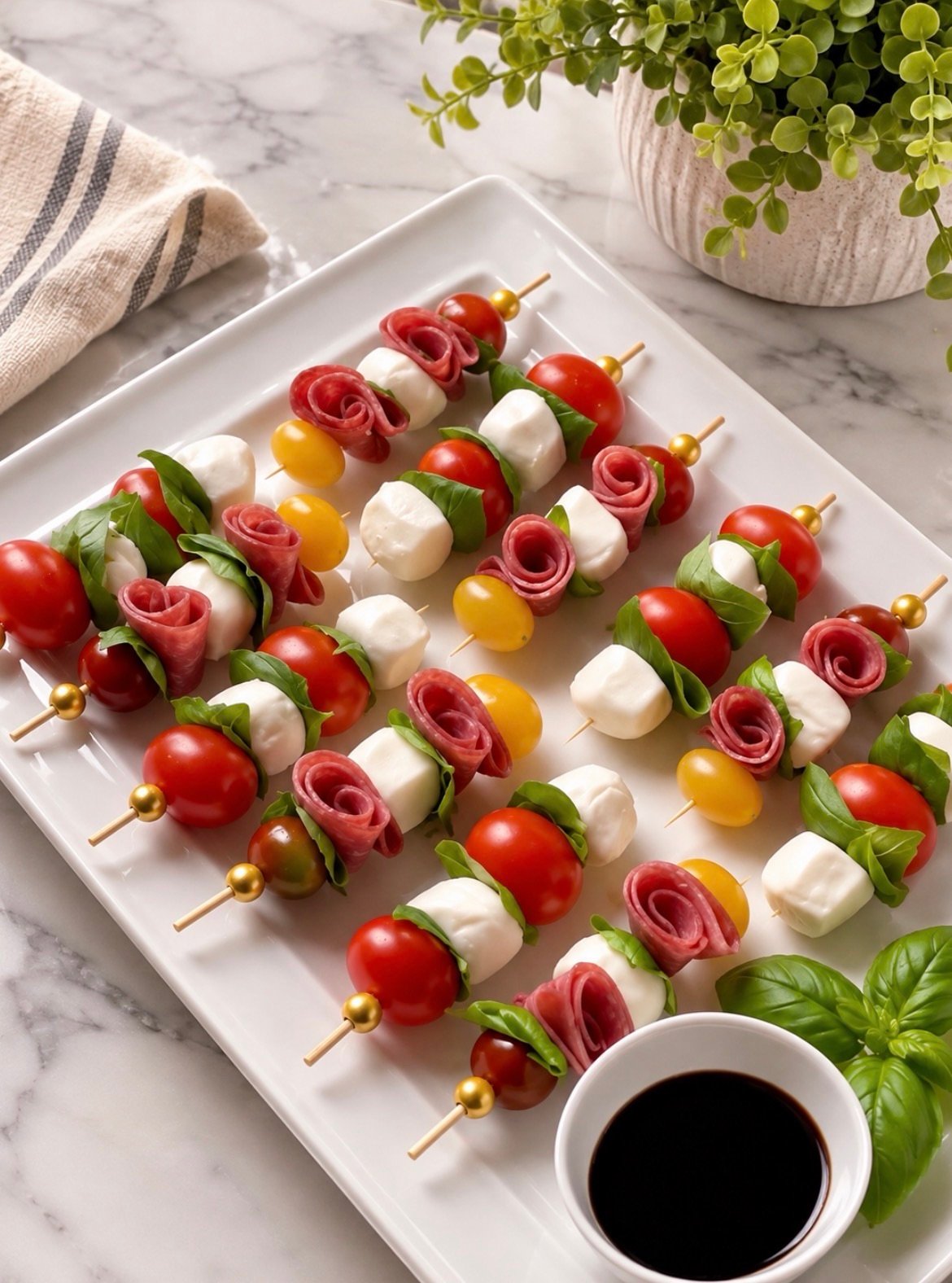
The best make ahead skewer appetizers use firm, well-dried ingredients threaded in an order that keeps the wettest piece, usually mozzarella, near the top and added last, with any dressing held back until right before serving.
I have brought soggy antipasto skewers to a party exactly once, and the memory still makes me wince a little. I’d assembled the whole tray the night before, patted myself on the back for being so organized, and pulled it out of the fridge the next evening to find a thin pool of pink-tinged water sitting under every single skewer. The tomatoes had gone soft, the mozzarella had turned slick, and the whole platter looked tired before anyone had touched it.
That mess taught me more about make-ahead appetizers than any recipe card ever did. Antipasto skewers are genuinely one of the easiest party foods you can build, no cooking required, but the timing and the order you thread them in matter more than people expect.
This is my version now, built around what actually holds up in the fridge for a few hours or overnight. I’ll walk through the classic combo, the order that keeps everything sturdy, and the exact fix for the watery tray problem.
Key Takeaways
- Pat every wet ingredient completely dry before it goes anywhere near a skewer, especially mozzarella pearls and cherry tomatoes.
- Thread the mozzarella last, or at least closest to serving time, since it releases the most moisture the longer it sits.
- Store finished skewers on a paper towel-lined tray instead of stacked in a sealed container, so any moisture has somewhere to go besides your platter.
- Keep the vinaigrette in a separate container and drizzle it on right before guests arrive.
- Denser items like olives and folded salami belong lower on the stick for a sturdier, less top-heavy skewer.
Table of Contents
What goes on a classic antipasto skewer
There’s a reason this combination shows up at basically every Italian-leaning party spread. Each piece brings something different, and none of them need a stove.
- Mozzarella pearls (ciliegine): the mild, creamy anchor of the skewer, and also the ingredient most likely to ruin your tray if you’re not careful with it
- Cherry or grape tomatoes: small, sweet, and the other big source of trapped moisture if they’re not dried first
- Salami or soppressata: folded into quarters so it holds its shape and doesn’t slide around on the stick
- Olives: I like a mix of Castelvetrano olives and kalamata for color, both pitted so nobody bites into a surprise
- Marinated artichoke hearts: drained and patted dry, halved if they’re on the larger side
I use a soppressata whenever I can find good soft salami, since the little bit of spice plays well against the mild mozzarella. Regular Genoa salami works fine too if that’s what your store has.
The order that actually holds together
I used to just thread things randomly, and the skewers looked messy and leaned sideways in the tray. Building them with intention fixes both the stability and the look.
- Start with an olive near the bottom. It’s dense enough to act as a stopper so nothing slides off the end.
- Fold a piece of salami into quarters and thread it next, pushing it down snugly against the olive.
- Add a marinated artichoke heart half.
- Thread a cherry tomato.
- Finish with the mozzarella pearl at the top, ideally right before the tray goes out to the table.
This order puts the heaviest, most stable pieces at the base and saves the ingredient with the shortest fridge life for last. It also just looks better, since the pale mozzarella catches the eye at the top of every skewer.
My mistake with watery trays
What I actually got wrong that first time comes down to two ingredients: mozzarella pearls hold water in the little pockets between the curds, and cherry tomatoes are basically small water balloons with skin.
When both of those sit assembled on a tray overnight, they slowly release moisture onto whatever they’re touching. Paper towels stop this from happening. I now blot the mozzarella and tomatoes dry with paper towels before they ever touch a skewer, and I line my storage tray with another layer of paper towel underneath the finished skewers.
I also stopped stacking skewers in a deep container. Laying them flat in a single layer on that lined tray, loosely covered with plastic wrap, keeps air moving instead of trapping condensation against the food. The difference between that tray and the sad one from my first attempt is honestly night and day.
How far ahead you can actually make these
Not every part of this recipe holds up the same length of time, so I break my prep into stages instead of doing it all at once.
The day before: I fold the salami, halve the artichoke hearts, and pit the olives. These pieces barely change overnight in the fridge.
Up to 24 hours ahead: I thread everything except the mozzarella, keeping the dried tomatoes in the mix since they hold up reasonably well once patted dry. I store this tray covered in the fridge.
Within an hour or two of serving: I thread the mozzarella pearls onto the top of each skewer and drizzle on the vinaigrette right before the platter goes out. This last step takes maybe ten minutes total.
If you’re short on time and need everything done the night before, dry every ingredient thoroughly and skip the dressing entirely until serving. It won’t be quite as fresh as the staged version, but it beats a watery tray every time.
A quick vinaigrette worth the extra step
I don’t skewer anything in dressing ahead of time, but I always keep a stash of small glass jars with lids around for a batch of vinaigrette ready to drizzle on right before serving. Whisk together olive oil, red wine vinegar, a small minced garlic clove, dried oregano, salt, and pepper.
A couple tablespoons is plenty for a full platter. Pour it over the finished skewers in the last few minutes before your guests arrive, then toss the empty jar in the fridge for the next round.
Storage do’s and don’ts
| Do | Don’t |
| Pat mozzarella and tomatoes dry with paper towels before threading | Skewer ingredients straight from their liquid or packaging |
| Store skewers flat, in a single layer, on a lined tray | Stack skewers in a deep sealed container |
| Cover loosely with plastic wrap | Wrap tightly, which traps condensation against the food |
| Add mozzarella and dressing close to serving time | Assemble the full skewer with dressing the night before |
I keep a stash of these 6 inch bamboo skewers in my pantry drawer specifically for this recipe, since the shorter length keeps each bite manageable and they’re cheap enough to buy in bulk. For the artichoke hearts, I’ve had good luck with a jarred marinated artichoke heart brand that doesn’t skimp on the marinade flavor, which matters since you’re draining most of that liquid off anyway. When it’s time to serve, I lay everything out on a rectangular ceramic platter instead of a flat plate, since the shallow rim keeps the vinaigrette from running off the edge.
Why these stay in my party rotation
Antipasto skewers earn their spot on my table because they require zero cooking and travel well if I’m bringing them somewhere else. Once I stopped fighting the moisture problem, they became one of the least stressful things I make for a crowd.
If you’d rather shortcut some of the shopping, our ranking of the best Trader Joe’s appetizers and party foods has a few picks that thread onto a skewer just as easily. And for a bigger holiday spread, these sit well next to a whipped feta with hot honey or some prosciutto-wrapped asparagus, so there’s a warm dish and a cold one on the table at the same time.
The staged prep means I’m never scrambling an hour before people show up. Everything is ready except two small steps, and those take less time than pouring drinks.
Frequently Asked Questions
Can I use fresh mozzarella balls instead of pearls?
Yes, just cut larger balls down to a similar bite-sized piece so they fit proportionally with the other ingredients. Pat them dry the same way you would the pearls.
How long do assembled antipasto skewers last in the fridge?
Skewers without mozzarella or dressing hold up well for about 24 hours. Once mozzarella and dressing are added, I try to serve within two to three hours for the best texture.
What can I use instead of salami if someone doesn’t eat pork?
Sliced turkey pepperoni or a folded piece of prosciutto both work well and thread the same way. Just fold thinner slices into quarters so they hold their shape on the stick.
Do I need to marinate the vegetables myself?
No, store-bought marinated artichoke hearts and olives already carry plenty of flavor. Draining and patting them dry is really the only extra step needed.
Can I make these skewers ahead for a large party?
Yes, this recipe scales easily since each skewer is assembled the same way regardless of quantity. Just keep trays in a single layer rather than stacking, since a stacked platter is much more likely to trap moisture.
Make-Ahead Antipasto Skewers
Ingredients
- 24 fresh mozzarella pearls (ciliegine), patted dry
- 24 cherry or grape tomatoes, patted dry
- 6 ounces salami or soppressata, sliced and folded into quarters
- 24 pitted olives (a mix of Castelvetrano and kalamata)
- 1 jar (12 to 16 ounces) marinated artichokehearts, drained, patted dry, and halved if large
- 3 tbsp olive oil
- 1 tbsp red wine vinegar
- 1 small garlic clove, minced
- ½ tsp dried oregano
- Salt and pepper, to taste
- 12 (6 inch) bamboo skewers
Instructions
- Pat the mozzarella pearls and tomatoes dry with paper towels and set aside on a separate plate.
- Fold each slice of salami into quarters.
- Thread one olive onto each skewer, followed by a folded piece of salami, an artichoke heart half, and a tomato.
- Store the partially assembled skewers, uncovered by mozzarella, flat on a paper towel-lined tray, loosely covered with plastic wrap, for up to 24 hours.
- Whisk together the olive oil, red wine vinegar, garlic, oregano, salt, and pepper in a small bowl.
- Just before serving, thread a mozzarella pearl onto the top of each skewer.
- Drizzle the vinaigrette over the finished skewers and serve immediately.
Notes

Cynthia Odenu-Odenu is the founder of Cyanne Eats. A registered nurse with a passion for food, she brings the same attention to detail from her professional life into the kitchen. From chain restaurant rankings to grocery finds and easy recipes, Cynthia covers it all and helps everyday food lovers eat better and spend smarter.