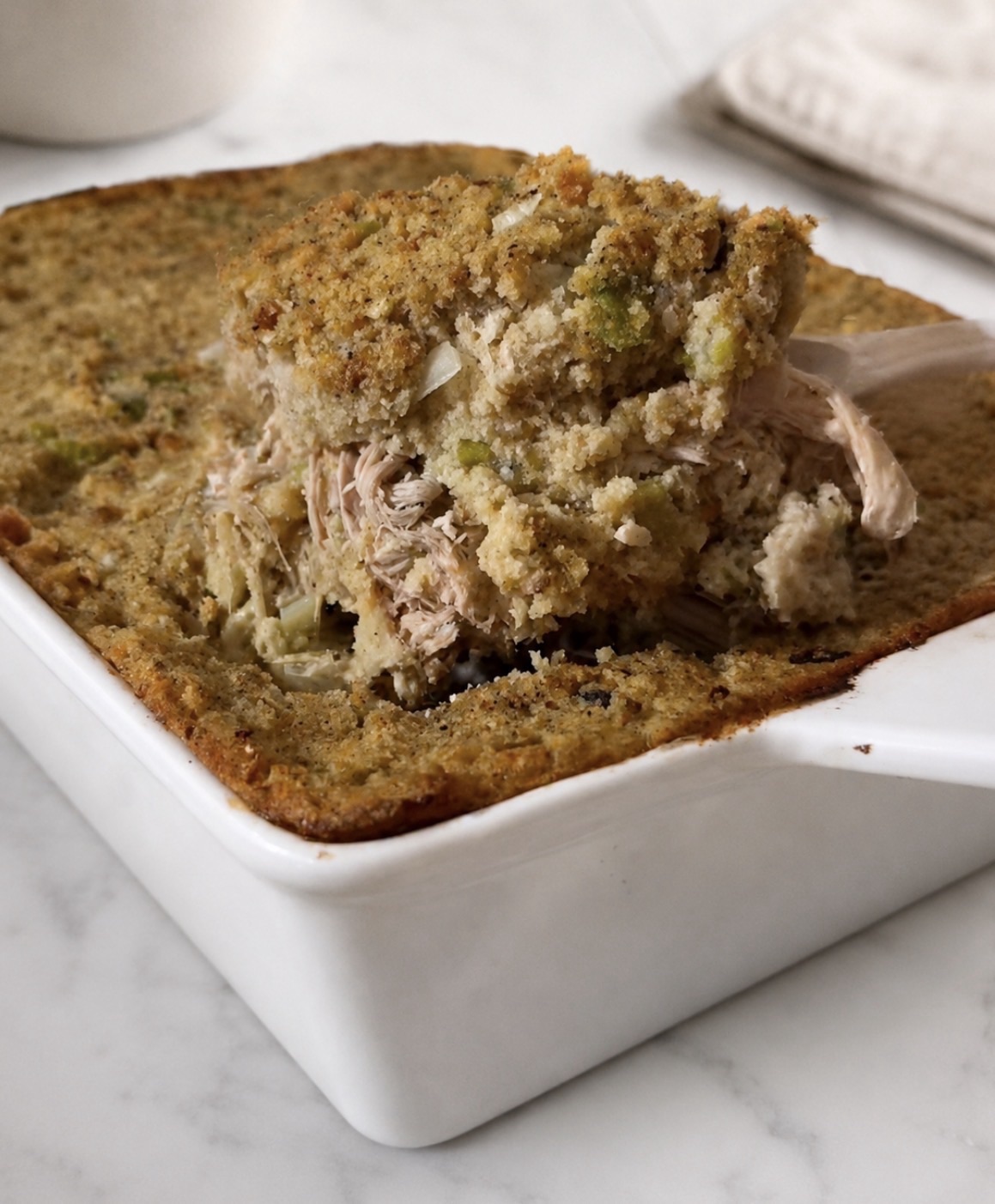
Cornbread dressing is crumbled, deliberately staled cornbread mixed with sautéed onion and celery, broth, eggs, and sage, then baked separately in its own dish rather than stuffed inside the turkey.
Dressing and stuffing get used interchangeably by a lot of people, but they’re not the same thing. One goes inside the bird. One doesn’t. And there’s a real reason most home cooks have moved toward the version that stays out.
This is the dish people quietly compare against everyone else’s dressing at the table, so it’s worth getting the staling step and the broth ratio right before anything else.
Key Takeaways
- Bake the cornbread 1 to 2 days ahead and let it go stale on purpose, since fresh, soft cornbread turns mushy once it hits the broth
- Dressing is baked separately in its own dish. Stuffing is cooked inside the turkey, and the USDA specifically recommends the separate method for food safety reasons
- A shallow, wide baking dish beats a deep one, since it lets moisture evaporate so the top can brown
- Bland dressing is the most common complaint, and it comes from being too cautious with sage and salt, not from a flaw in the recipe
- The whole assembled dish can be put together up to 2 days ahead and refrigerated unbaked, which makes this one of the easier Thanksgiving make-ahead items
Table of Contents
Why Dressing, Not Stuffing
The word “dressing” is the older Southern term, and the distinction it points to is real, not just regional vocabulary. Stuffing goes inside the turkey cavity and cooks there. Dressing bakes on its own, in a separate dish.
There’s a genuine food safety reason most home cooks have shifted toward dressing. The USDA notes that even when a whole turkey reaches a safe internal temperature, the stuffing packed inside the cavity can lag behind and stay in the temperature danger zone longer, since it’s insulated by the meat around it. Baking dressing separately means it heats evenly and you’re not gambling on the center of the bird’s cavity catching up in time.
Ingredients
Cornbread, about 6 to 8 cups crumbled, staled 1 to 2 days: Homemade or a savory boxed mix both work, just avoid a sweet, cake-like cornbread, since traditional Southern cornbread is savory, not sweet.
Celery, 1 to 2 cups, chopped
Yellow onion, 1 to 2 cups, chopped
Unsalted butter, 4 to 8 tablespoons
Sage, fresh or dried, be generous: Start with more than feels natural. Underseasoned dressing is the single most common complaint about this dish.
Chicken or turkey stock, 3 to 4 cups: Added gradually until the mixture looks moist but not soupy.
Eggs, 3 large: This is what binds everything together during baking.
Salt and black pepper, to taste
Equipment
A cast iron skillet isn’t optional if you’re making the cornbread from scratch. Preheating the skillet with fat before the batter goes in is what gives real Southern cornbread its crisp, browned crust, distinct from the softer, cake-like Northern version. A 12-inch cast iron skillet does double duty for this and plenty of other dishes.
A large mixing bowl matters more than it sounds like it would, since combining 6 to 8 cups of crumbled bread with vegetables, eggs, and broth genuinely needs the room. An OXO 3-piece stainless mixing bowl set covers this and most other prep in one purchase.
For baking, a wide, shallow dish beats a deep casserole dish, since it lets excess moisture evaporate instead of steaming the top. The same Pyrex 9×13 glass dish I use for candied yams works well here too.
How to Make Cornbread Dressing
Step 1: Stale the cornbread
Bake your cornbread 1 to 2 days ahead. Cube or crumble it, spread it on a sheet pan, and let it sit out uncovered, or bake at 250 degrees for 30 to 45 minutes, tossing every 10 minutes, to dry it out faster.
This step matters more than almost anything else in the recipe. Fresh, soft cornbread can’t absorb the broth mixture properly and turns to mush once baked.
Step 2: Sauté the vegetables
Melt the butter in a skillet over medium heat. Add the celery and onion and cook until softened, about 8 to 10 minutes.
Step 3: Combine everything
In your large bowl, combine the staled cornbread, the sautéed celery and onion, sage, salt, and pepper. Whisk the eggs into the stock, then pour it over the cornbread mixture gradually, stirring as you go, until everything is evenly moistened but not swimming in liquid.
Step 4: Bake
Preheat the oven to 350 degrees. Transfer the mixture to a buttered 9×13 dish and bake, uncovered, for 45 minutes to 1 hour, until the top is golden and slightly crisp and the center is set.
If the top is browning faster than the center is setting, loosely tent it with foil for the last part of baking.
Variations Worth Trying
Sausage cornbread dressing: Brown a pound of breakfast sausage, drain it, and fold it in with the vegetables. This is a genuinely common, well-documented variation, not a modern shortcut.
Oyster dressing: A real, traditional variation along the Gulf Coast and coastal South, where oysters were once cheap and turkey was the luxury item. Fold in a pint of drained, chopped oysters with the vegetables.
Vegetarian: Swap the chicken or turkey stock for vegetable stock. The method stays identical, just the liquid changes.
Make-Ahead and Storage
The cornbread itself should be made 1 to 2 days ahead anyway, so you’re already partway to a make-ahead dish. The fully assembled, unbaked dressing can also be covered and refrigerated up to 2 days ahead, then baked fresh the day you’re serving it.
Baked leftovers keep 3 to 4 days refrigerated. This freezes well too, both baked and assembled-unbaked, for up to about 3 months. Cool completely before wrapping tightly to avoid ice crystals ruining the texture, and thaw in the fridge for 2 to 3 days before baking or reheating.
Reheat to an internal temperature of 165 degrees, and add a pat of butter or a splash of broth beforehand to bring back some moisture.
The Difference Between Good and Forgettable Dressing
Almost every bland dressing complaint traces back to being too careful with sage and salt. Cornbread itself doesn’t have much flavor on its own, so the seasoning has to do real work. Season more generously than feels right, taste before it goes in the oven, and adjust from there.
FAQ
What’s the difference between dressing and stuffing?
Dressing bakes separately in its own dish. Stuffing cooks inside the turkey cavity. The USDA specifically recommends the separate method, since stuffing inside the bird can stay in an unsafe temperature range longer than the surrounding meat.
Why is my cornbread dressing dry and crumbly?
Not enough broth, or it was added too fast and unevenly. Add stock gradually until the mixture looks moist throughout, and if it’s already baked and dry, drizzle warm broth over individual servings before reheating.
Why did my dressing turn out mushy?
The cornbread probably wasn’t staled long enough before mixing, or it was baked in a deep dish that traps steam. Use cornbread that’s been dried out for a day or two, and bake in a wide, shallow dish so moisture can evaporate.
Can I use store-bought cornbread mix?
Yes, just choose a savory mix rather than a sweet one, since traditional Southern dressing isn’t meant to taste like dessert cornbread.
Can I make this ahead of time?
Yes, on two levels. The cornbread should be baked 1 to 2 days ahead regardless, and the fully assembled, unbaked dressing can be refrigerated up to 2 days ahead before going in the oven.
Cornbread Dressing Recipe
Ingredients
- 6 to 8 cups crumbled cornbread, staled 1 to 2 days
- 1 to 2 cups chopped celery
- 1 to 2 cups chopped yellow onion
- 4 to 8 tbsp unsalted butter
- Sage, fresh or dried, to taste (be generous)
- 3 to 4 cups chicken or turkey stock
- 3 large eggs
- Salt and black pepper, to taste
Instructions
- Bake and stale the cornbread 1 to 2 days ahead, or dry it in a 250-degree oven for 30 to 45 minutes.
- Melt butter in a skillet and cook celery and onion until softened, 8 to 10 minutes.
- Combine cornbread, vegetables, sage, salt, and pepper in a large bowl. Whisk eggs into the stock and pour over gradually, stirring until evenly moistened.
- Bake in a buttered 9×13 dish at 350 degrees, uncovered, 45 minutes to 1 hour, until golden on top and set in the center.
Notes

Cynthia Odenu-Odenu is the founder of Cyanne Eats. A registered nurse with a passion for food, she brings the same attention to detail from her professional life into the kitchen. From chain restaurant rankings to grocery finds and easy recipes, Cynthia covers it all and helps everyday food lovers eat better and spend smarter.