The fastest way to stop buying bottled salad dressing is learning one ratio, three parts oil to one part acid plus a spoonful of mustard as the emulsifier, then building eight different dressings off that same base with whatever flavors you already have in the fridge.
That ratio is the whole trick behind every dressing on this list. Once you’ve got 3 parts fat to 1 part acid locked in, plus something to hold the two together, you can build ranch, vinaigrette, Caesar, or five other dressings without looking up a recipe twice. It takes about five minutes and a jar with a lid.
I ran the math on my own habit a while back and didn’t love the answer. A $6 bottle every week comes out to over $300 a year for something that’s mostly oil, vinegar, and pantry spices I already had. That was the week I stopped buying it.
Below are the 8 dressings I make on repeat, with exact ratios instead of a vague “splash of this.” I’ll also get into why homemade dressing separates in the fridge and what actually fixes it, since that’s the part that sends most people back to the bottled aisle. None of these take more than 10 minutes.
Key Takeaways
- The 3:1 oil-to-acid ratio is the base for almost every dressing here, creamy or vinaigrette style
- Mustard, dijon or dry, is the emulsifier that keeps a shaken dressing from splitting apart in the fridge
- Real buttermilk, not the powdered kind, is the difference between thick ranch and watery ranch
- Homemade dressing separates faster than bottled because it has no gums or stabilizers. That’s normal, not a failed batch
- Most of these keep 5 to 7 days sealed in the fridge, mayo-based ones closer to a week
- A $6 bottle a week adds up to over $300 a year for something you can make from ingredients most kitchens already have
Table of Contents
The 8 Dressings at a Glance
The eight stack up like this, side by side, before you pick one to start with.
| Dressing | Base | Emulsifier | Fridge Life |
| Ranch | Mayo, buttermilk, sour cream | Eggs in the mayo | About 1 week |
| Balsamic Vinaigrette | Olive oil, balsamic vinegar | Dijon mustard | 1 to 2 weeks |
| Honey Mustard | Mayo, dijon, honey | Mayo and mustard | 1 to 2 weeks |
| Caesar | Mayo, parmesan, anchovy | Mayo, slow-streamed oil | 4 to 5 days |
| Italian | Olive oil, red wine vinegar, herbs | Dijon mustard | 1 to 2 weeks |
| Poppyseed | Mayo or yogurt, sugar, vinegar | Mayo or yogurt | About 1 week |
| Green Goddess | Mayo, sour cream, herbs | Mayo | 4 to 5 days |
| Sesame-Ginger | Rice vinegar, soy sauce, sesame oil | Tahini, optional | 1 to 2 weeks |
The 8 Homemade Salad Dressing Recipes
Each one below uses ingredients you can find at a regular grocery store. I’ve made every one of these more times than I can count, so the ratios are exactly what I use myself, not a rounded-off version for print.
1. Ranch
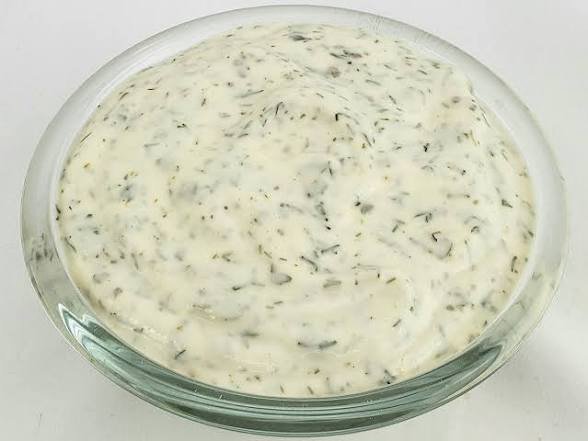
- 1 cup mayonnaise
- 1/2 cup real buttermilk (not the powdered kind)
- 1/4 cup sour cream
- 1 tablespoon fresh dill, chopped (or 1 teaspoon dried)
- 1 tablespoon fresh chives, chopped
- 1 small garlic clove, minced (or 1/2 teaspoon garlic powder)
- 1/2 teaspoon onion powder
- Salt and pepper to taste
Whisk everything together by hand in a bowl, not a blender. The first time I used a blender for this, the dressing came out noticeably thinner, and I couldn’t figure out why until I switched back to a whisk and got the texture I actually wanted.
Let it sit in the fridge for at least an hour before serving, longer if you can. Ranch actually thickens up overnight, so if it looks a little loose right after mixing, that’s not the final texture.
This is close to the dressing I use on my copycat Texas Roadhouse salad, minus the croutons. I keep mine in a 16-ounce wide mouth jar so I can shake it back together before every use instead of digging out a whisk each time.
2. Balsamic Vinaigrette
- 3/4 cup olive oil
- 1/4 cup balsamic vinegar
- 1 tablespoon dijon mustard
- 1 teaspoon honey
- 1 small garlic clove, minced
- Salt and pepper to taste
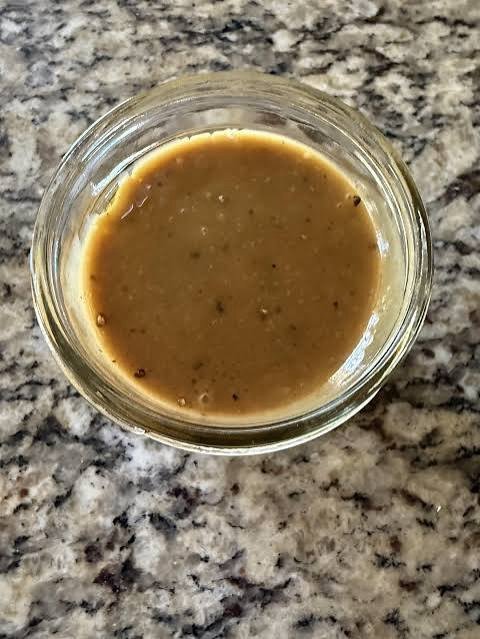
This is the 3:1 ratio in its purest form, three parts oil to one part vinegar. Add the vinegar, mustard, honey, garlic, salt, and pepper to a jar first, then pour the oil in last and shake hard for about 20 seconds.
The dijon is doing more work than people give it credit for. Skip it and the oil and vinegar start separating again within the hour, even after a good shake.
If you’d rather whisk it in a bowl than shake a jar, a balloon whisk pulls the oil into the vinegar faster and more evenly than a fork ever will.
3. Honey Mustard
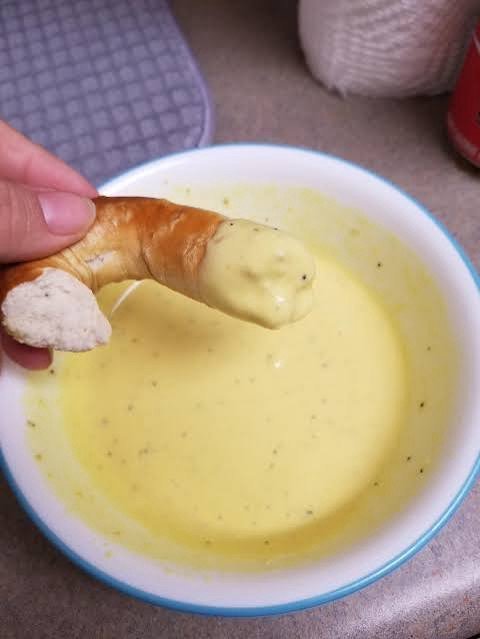
- 1/2 cup mayonnaise
- 1/4 cup dijon mustard
- 3 tablespoons honey
- 1 tablespoon apple cider vinegar
- Pinch of salt
Whisk everything together until smooth. This one’s less about ratio science and more about taste, so adjust the honey up if you want it sweeter or the mustard up if you want more bite.
I started at equal parts honey and mustard and found it too sharp for my taste. Cutting the mustard back by a third and adding a splash of vinegar for brightness is the version I’ve stuck with since.
4. Caesar
- 1/2 cup mayonnaise
- 2 anchovy fillets, minced fine (or 1 teaspoon anchovy paste)
- 2 garlic cloves, minced
- 1 tablespoon dijon mustard
- 2 tablespoons lemon juice
- 1/3 cup grated parmesan
- 2 to 3 tablespoons olive oil
- Black pepper to taste
Whisk the mayo, anchovy, garlic, mustard, and lemon juice together first, then stream the olive oil in slowly while whisking. Adding all the oil at once is the fastest way to end up with a broken, separated mess instead of a smooth dressing.
If you pull this straight from the fridge and it looks curdled, don’t panic. The olive oil solidified in the cold. Let it sit out for 15 to 20 minutes and give it a hard shake before you write off the batch.
I use a version of this on my hot honey Caesar pasta salad, minus the hot honey. A microplane grater gets the parmesan fine enough to actually dissolve into the dressing instead of sitting in clumps at the bottom of the jar.
5. Italian
- 1/2 cup olive oil
- 3 tablespoons red wine vinegar
- 1 tablespoon lemon juice
- 1 teaspoon dijon mustard
- 1 garlic clove, minced
- 1 teaspoon dried oregano
- 1/2 teaspoon dried basil
- Pinch of red pepper flakes
- 2 tablespoons grated parmesan
- Salt and pepper to taste
Shake everything together in a jar. This one actually gets better if you let it sit for 15 to 30 minutes before serving, since the dried herbs need time in the liquid to bloom instead of tasting dusty.
I used to serve this the second I made it and wondered why it tasted flat compared to what I remembered from restaurants. The wait matters more than any ingredient swap I’ve tried.
6. Poppyseed
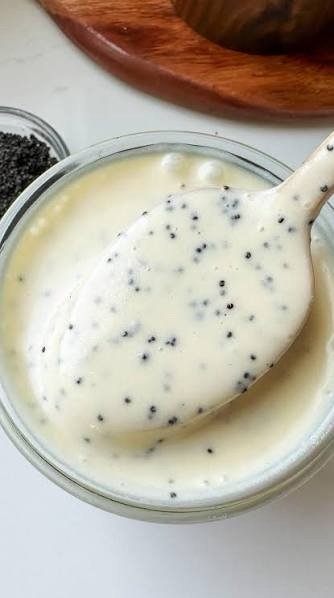
- 1/2 cup mayonnaise or plain yogurt
- 1/4 cup sugar or honey
- 3 tablespoons apple cider vinegar
- 1/4 cup neutral oil (avocado or vegetable)
- 1 tablespoon poppy seeds
- 1/2 teaspoon dry mustard
- Pinch of salt
Whisk the sugar into the vinegar first until it fully dissolves, before adding anything else. Skip that step and you end up with gritty sugar crystals at the bottom of the jar instead of a smooth dressing.
Add the oil in a slow stream, then stir in the poppy seeds last so they stay suspended instead of clumping together.
This is basically the dressing on my copycat Panera strawberry poppyseed salad, just without the fruit already mixed in.
7. Green Goddess
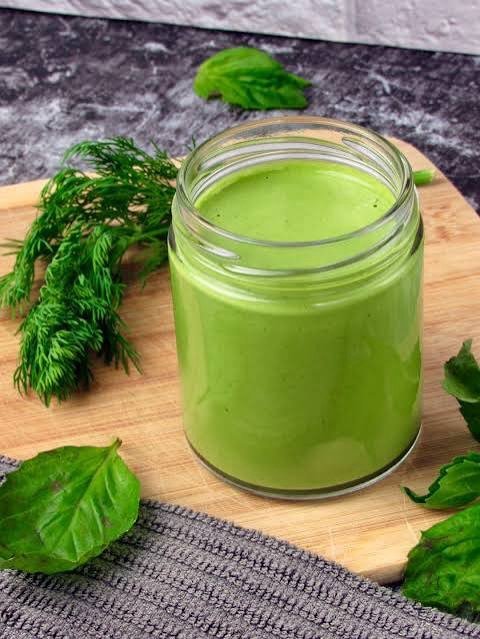
- 1 cup mayonnaise
- 1/2 cup sour cream or plain Greek yogurt
- 1 cup packed mixed fresh herbs (parsley, chives, tarragon)
- 2 anchovy fillets
- 1 garlic clove
- Juice of 1 lemon
- Salt and pepper to taste
Blend everything in a food processor or blender until smooth and bright green. This is the one dressing on the list where a blender actually helps instead of thinning things out, since the herbs need to be fully broken down.
The color and flavor both deepen if you let it sit in the fridge for an hour before serving. Straight out of the blender it tastes good. An hour later it tastes like it actually meant to be there.
8. Sesame-Ginger
- 1/4 cup rice vinegar
- 3 tablespoons soy sauce
- 2 tablespoons toasted sesame oil
- 1 tablespoon fresh ginger, grated
- 1 garlic clove, minced
- 1 to 2 tablespoons honey
- 1 teaspoon tahini (optional, for a creamier texture)
Whisk or shake everything together. This one doesn’t need the same emulsifying work as the oil-heavy dressings, since soy sauce and rice vinegar mix together easily on their own.
The tahini is optional, but it’s the move if you want something closer to the creamy sesame dressing from a hibachi spot instead of a thin vinaigrette. I use Soom’s tahini for this since it stays smooth instead of separating into a hard paste at the bottom of the jar.
I use a similar sesame base on my viral carrot ribbon salad, just with chili crisp added in. For the oil itself, Kadoya’s toasted sesame oil is the brand I keep buying, since a little goes a long way and it doesn’t turn bitter the way some cheaper bottles do once opened.
Why Homemade Dressing Separates (and How to Fix It)
The first few months I made my own dressing, I assumed I was doing something wrong every time it separated in the fridge. Turns out that’s just what fresh dressing does without the stabilizers a bottle has.
- It separates because nothing artificial is holding it together. Bottled dressing uses gums and stabilizers to stay smooth on a shelf for months. Homemade doesn’t have that, so oil and vinegar start splitting within about an hour at room temperature, faster once it hits the fridge.
- Cold olive oil looks broken even when it isn’t. Olive oil solidifies below about 40 degrees, which is exactly what your fridge runs. I’ve pulled dressing out looking curdled more times than I can count, and every time, 15 minutes on the counter and a hard shake brought it right back.
- Mustard is the fix that actually works. I tried skipping it once to save a step, and the dressing separated again within the hour, even after shaking. A spoonful of dijon or dry mustard holds oil and vinegar together noticeably longer than shaking alone.
- Bitterness usually means the oil got beaten too hard. Whisking extra-virgin olive oil aggressively can make it taste bitter, almost soapy. I switched to shaking most dressings in a jar instead of whisking hard, and the bitterness problem went away.
- If it tastes different from the bottle, that’s not a mistake. Homemade dressing is thinner and brighter than what you’re used to, since it’s missing the added sugar and thickeners that give bottled dressing its texture. Give it a few uses and it stops tasting like something’s missing.
Start With Whichever One’s Already in Your Fridge
If you’ve got mayo, buttermilk, and a bit of dill on hand, start with the ranch. It’s the most forgiving of the eight and the one people miss most once they stop buying bottles.
None of these need to happen the same week. I built my own rotation one dressing at a time over about two months, mostly by getting one wrong and figuring out why before I moved on to the next.
Once you’ve got two or three of these in steady rotation, my best summer salad recipes roundup is a good place to actually put them to use.
FAQ
How long does homemade salad dressing last in the fridge?
Oil and vinegar based dressings like the balsamic vinaigrette and Italian keep for 1 to 2 weeks sealed in the fridge. Mayo and dairy based ones like ranch, Caesar, and green goddess are best used within 4 to 7 days.
Why does my homemade dressing separate in the fridge?
It’s missing the gums and stabilizers that keep bottled dressing smooth on a shelf for months. A hard shake, and 15 minutes on the counter first if it’s cold, brings it right back together.
Can I use yellow mustard instead of dijon as the emulsifier?
Yes, yellow mustard emulsifies just as well as dijon. The flavor comes out sharper and more vinegary, so start with a little less than the recipe calls for.
Is homemade salad dressing actually cheaper than store-bought?
Yes, by a wide margin once you’re making it more than once. A $6 bottle a week adds up to over $300 a year, while the same ingredients in bulk cost a fraction of that per batch.
Can I freeze homemade salad dressing?
Oil-based vinaigrettes freeze reasonably well if you thaw them and shake hard before using. Mayo and dairy based dressings like ranch and Caesar don’t freeze well, since the texture turns grainy once thawed.

Cynthia Odenu-Odenu is the founder of Cyanne Eats. A registered nurse with a passion for food, she brings the same attention to detail from her professional life into the kitchen. From chain restaurant rankings to grocery finds and easy recipes, Cynthia covers it all and helps everyday food lovers eat better and spend smarter.