The fastest way to save produce with only a day or two left is to stop trying to keep it pretty and turn it into something where soft, wilted, or spotty doesn’t matter, like soup, a smoothie, a stir-fry, quick pickles, or banana bread if the bananas are the ones on their way out.
Once a vegetable starts going soft or a piece of fruit gets that first brown spot, most of us either eat it fast out of guilt or let it slide into the trash a few days later. Neither one has to happen. The trick is switching what you’re making instead of trying to save the same salad or fruit bowl you originally planned.
I used to be someone who bought produce with good intentions and then found it wilted in the crisper a week later, still in the bag. What changed things for me wasn’t a fancier storage container, it was keeping a short mental list of what to make the second something looks like it’s on its way out.
I’m walking through the 10 things I reach for most, from a big pot of soup to a batch of quick pickles, plus how I decide what’s still fine to cook with and what genuinely needs to go.
Key Takeaways
- Soft, wilted, or spotty produce is usually still fine to cook with, it’s mold, sliminess, or a sour smell that means toss it
- Soup, stir-fry, and roasted vegetable medleys can absorb almost any mix of vegetables in one dish
- Overripe bananas work in more than banana bread, pancakes, oat mix-ins, and frozen snacks all use them up too
- Quick pickles only need a 1:1 vinegar and water brine and last 3 to 4 weeks in the fridge
- Wilting herbs and greens freeze well as pesto, so nothing has to be used up the same day it starts to go
Table of Contents
The 10 Things to Make When Produce Is Down to Its Last Days
Each of these works with more than one kind of produce, so you don’t need the exact ingredient a recipe calls for, just something in roughly the same shape or condition. I’m starting with the one that fits almost anything, since it’s the one I make most often.
1. Clean-Out-the-Crisper Soup
Soup is what I reach for most, because it does not care what vegetables go in. Wilted spinach, soft carrots, a half onion, the end of a bag of celery, all of it works, as long as nothing has gone moldy or slimy.
I cut everything into roughly the same size, about half an inch, so it cooks evenly, then simmer it in stock with a spoonful of tomato paste for depth. Better Than Bouillon is what I keep on hand for the stock base, since a spoonful builds flavor faster than simmering bones I don’t usually have ready.
Once it’s done, I blend part of it smooth with an immersion blender and leave the rest with some texture, since a soup that’s all one consistency gets boring by the third bowl.
Whatever doesn’t get eaten right away goes into portioned freezer trays, so it’s ready on a night I don’t want to cook at all.
2. Frozen Fruit Smoothie Packs
Soft berries, a bruised peach, or bananas that have gone from ripe to too-ripe all blend better once they’re broken down anyway, so a smoothie hides exactly the texture that would bother you if you ate the fruit plain. I peel and freeze bananas the moment they get spotty, since a frozen banana blends into something closer to soft-serve than a smoothie.
Wilting greens work here too, and this swap surprised me more than I expected. A handful of spinach or the last of a bag of lettuce that’s past its prime disappears completely once it’s blended with fruit, so it’s not really a compromise, it’s just extra nutrition riding along for free.
I pack the fruit and greens into bags and freeze them flat, so I’m not chopping anything at 7 a.m., just dumping a bag into the blender with milk or juice.
3. Sheet-Pan Roasted Vegetable Medley
Roasting is forgiving in a way raw preparations aren’t, since high heat browns the outside of a vegetable while it softens the inside, which is exactly what a slightly tired carrot or pepper needs anyway. I cut everything into similar-sized pieces, toss it with olive oil and whatever dried herbs are in the cabinet, and roast until the edges char.
Wrinkly tomatoes get pulled aside and roasted low and slow instead of going in with the rest of the tray. Left in a low oven for a couple of hours, they turn into something a lot closer to sun-dried tomatoes than to a soggy vegetable, and I use them the same way, stirred into pasta or scattered over the rest of the roasted vegetables. My green beans with crispy shallots uses the same high-heat logic on a single vegetable if you want to see it applied more precisely.
If I’m only cooking for one or two people, I skip the oven and use the air fryer instead. My air fryer roasting hacks get the same browned, crispy result in less time and without heating up the whole kitchen for a small batch.
4. Quick Refrigerator Pickles
Cucumbers going soft, radishes losing their snap, or the last of a red onion all turn into something surprisingly good with a simple vinegar brine. I use a 1:1 ratio of vinegar to water, add salt and a little sugar, then pour it hot over whatever I’ve sliced thin and let it sit in the fridge.
These aren’t shelf-stable canning pickles, they’re refrigerator pickles, and they last about 3 to 4 weeks in the fridge, which is plenty of time to work through a jar. I keep a set of wide-mouth mason jars just for this, since the wider opening makes packing sliced vegetables a lot less fiddly than a standard jar.
It’s also the fastest thing on this whole list. Fifteen minutes of slicing and pouring, and the vegetable that was two days from the trash now has three more weeks of life.
5. High-Heat Stir-Fry
I used to crowd my whole pan with vegetables at once and then wonder why everything came out gray and watery instead of browned. Overcrowding a pan makes vegetables steam instead of sear, and steamed vegetables are exactly the soggy texture that makes a stir-fry feel like a waste of good ingredients.
Now I cook in two smaller batches instead of one crowded one, starting with the hardier vegetables like broccoli or carrots, then adding anything softer, like mushrooms or greens, in the last minute or two. The sauce goes in last, off the heat, so it coats instead of steaming everything further.
Truly wilted greens don’t hold up as well here, since they’ve already lost too much moisture to crisp back up. I save those for soup or pesto instead, and use the stir-fry for vegetables that are soft but still holding their shape.
6. Banana Bread (or Muffins) for the Spotty Bananas
Banana bread is the classic overripe banana recipe for a reason, and it’s still the first thing I make once bananas go fully brown and soft. The extra sugar that develops as a banana ripens is exactly what makes the loaf taste better than one made with barely-ripe fruit, so a spotty banana is doing you a favor, not ruining anything.
If I’ve got more bananas than one loaf needs, I peel and freeze the extras flat on a tray first, then bag them once they’re solid. That way I’m not stuck baking the second a banana turns, and my guide to what freezes well covers a handful of other produce that holds up the same way.
Banana bread isn’t the only option either. Stirring a ripe banana into pancake or waffle batter, or into a bowl of oats, uses up one or two bananas without committing to a full loaf, and a sliced loaf also makes a good addition to a breakfast spread if you’re feeding a crowd.
7. Herb and Wilting Greens Pesto
Basil that’s gone a little limp, the last of a bunch of parsley, or wilting greens like arugula or spinach all blend into pesto just as well as the crisp version would. I blend whatever I’ve got with olive oil, a handful of nuts, garlic, and parmesan, then taste and adjust from there since the ratio shifts depending on how much greenery I’m working with.
Pesto freezes exceptionally well, which is the real reason this one earns a spot on the list. I portion it into small freezer trays and pop out a cube or two whenever pasta night needs a fast sauce, and my notes on freezing watercress and other greens go into more detail on which ones hold their flavor best.
A spoonful also works spread on a sandwich in place of mayonnaise, which is how I use up the last little bit that doesn’t fill a whole jar.
8. Vegetable Scrap Broth
Onion ends, carrot peels, celery leaves, and the outer layers of vegetables that are otherwise still fine all go into a bag in my freezer until I’ve got enough to make broth. Once the bag’s full, everything goes into a pot with water, gets seasoned, and simmers for about an hour.
This isn’t a replacement for a rich, long-simmered stock, but it’s a solid base for a weeknight soup or a pan sauce, and it costs nothing beyond what I was already throwing away. A Parmesan rind, if I’ve got one saved, goes in too for extra depth.
I strain it, cool it, and freeze it the same way I freeze soup, in individual portions, so I’m never short a cup of broth when a recipe calls for one.
9. Soft Fruit Compote
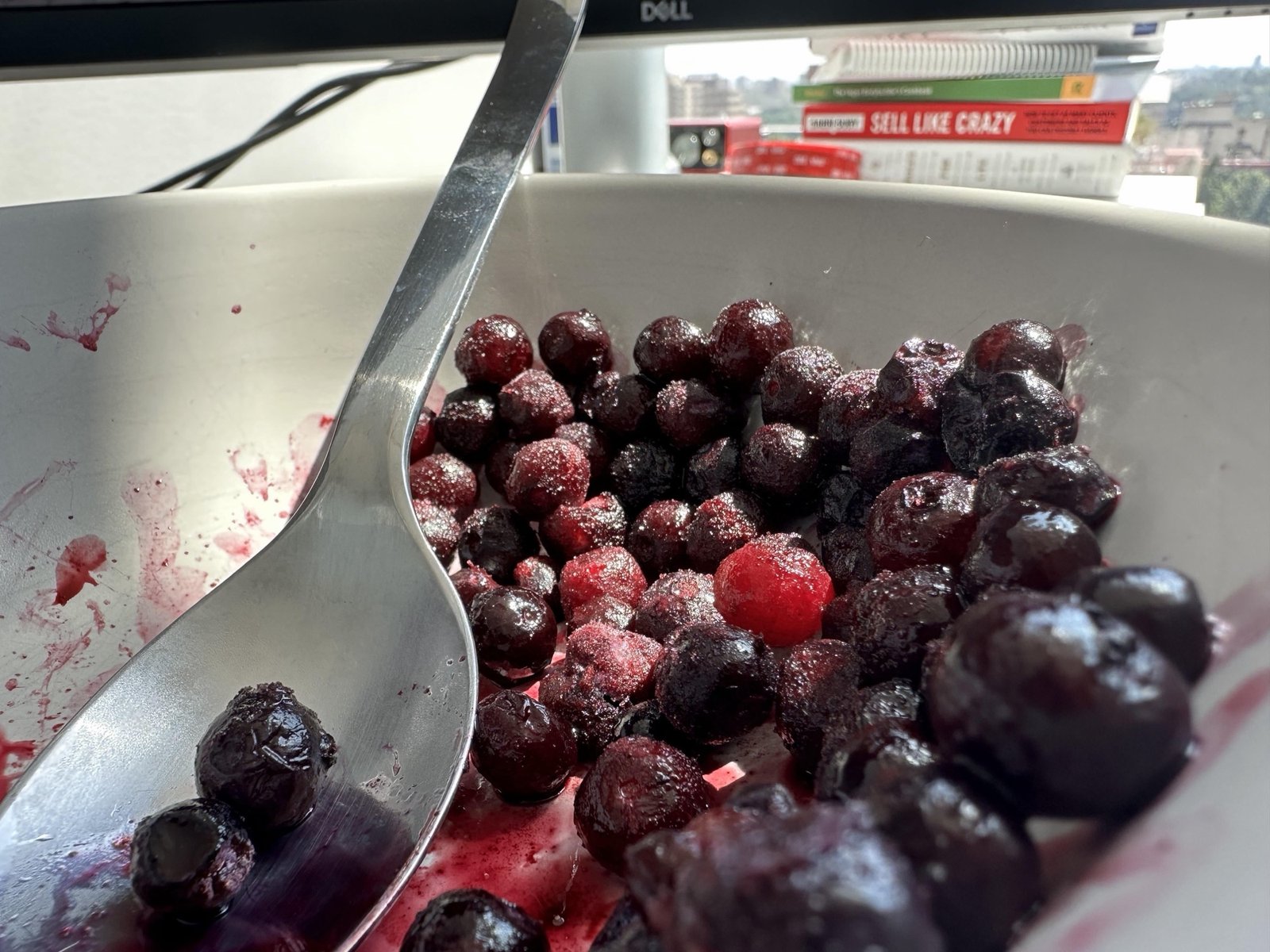
Berries that have gone soft, a couple of overripe peaches, or plums that are more bruise than fruit all break down into compote without much effort. I simmer them with a splash of water, a little sugar, and a squeeze of lemon until they’ve broken down into something thick and spoonable.
I reach for this when fruit is too far gone to eat out of hand but not spoiled. Spooned over yogurt, oatmeal, or pancakes, it does the job of jam without the canning process, and it freezes well in small portions too.
The lemon matters more than it sounds like it should. Without it, soft fruit compote tastes flat, but a little acid brings back some of the brightness the fruit lost as it went past its prime.
10. Fried Rice With Whatever’s Left
Cold, day-old rice works better for fried rice than fresh rice, since the grains have dried out slightly and separate instead of clumping into a sticky mess in the pan. Any vegetable scraps too small to roast or stir-fry on their own, a spoonful of leftover peas, half a diced pepper, the end of an onion, all get a second life here.
I cook the rice in a very hot pan with a scrambled egg pushed to one side, then toss in the vegetables and rice together with soy sauce at the end. It’s the same principle as the stir-fry, high heat and not too much in the pan at once, just with rice doing the heavy lifting instead of a sauce.
It’s also one of the better options if you’re packing lunches for the week, since fried rice reheats well and doesn’t rely on anything staying crispy the way a fresh stir-fry does.
Save It or Toss It: How I Decide
Not everything sitting in the back of the fridge is still usable, and it’s worth being honest about the difference before you build a recipe around something that should go in the trash instead.
Still fine to cook with: wilted, limp, soft, bruised, or slightly discolored produce is almost always still safe, it’s just past its best-looking stage.
Actually needs to go: mold, a sour or off smell, sliminess you can feel when you touch it, or a color change toward gray or black. Those are the USDA’s actual lines for spoiled produce, not just pickiness, and no amount of cooking fixes them.
When in doubt: cut off the questionable part and check what’s underneath. If the rest looks and smells normal, it’s usually fine for something like soup or roasting where texture already doesn’t matter.
The Real Habit That Actually Cuts Down Food Waste
None of these ten things require a special trip to the store or an ingredient you don’t already have. That’s really the point. The actual fix isn’t better shopping, it’s just having a short mental list of what to make the moment something looks like it’s on its way out.
I check what’s closest to the edge every time I open the fridge, the same way I’d notice milk getting close to its date. It takes maybe ten seconds and it’s saved me more meals than any fancier system I’ve tried.
Pick one or two of these that fit how you cook, since soup and stir-fry cover almost everyone. Do that, and you’ll stop losing produce to the back of the crisper for good.
FAQ
How do I know if produce is still safe to use or if it needs to go in the trash?
Wilted, soft, or bruised produce is usually still fine to cook with. Mold, sliminess, a sour smell, or a shift toward gray or black means it needs to go in the trash instead.
Can I mix different vegetables together in the same soup or stir-fry?
Yes, and it’s the easiest way to use up a mix of odds and ends. Cut everything to a similar size so it cooks at roughly the same rate, and the flavors will still work together.
How long do quick pickles actually last in the fridge?
Refrigerator pickles made with a 1:1 vinegar and water brine last about 3 to 4 weeks in the fridge. They aren’t shelf-stable like canned pickles, so they need to stay cold the whole time.
Do overripe bananas need to be peeled before I freeze them?
Yes, peel them first. The peel gets very difficult to remove once a banana is frozen solid, so it’s much easier to do before freezing than after.
What’s the fastest option on this list if I only have ten minutes?
Quick pickles or a smoothie pack are both done in about ten to fifteen minutes. Soup and roasted vegetables take longer since they need real cooking time.

Cynthia Odenu-Odenu is the founder of Cyanne Eats. A registered nurse with a passion for food, she brings the same attention to detail from her professional life into the kitchen. From chain restaurant rankings to grocery finds and easy recipes, Cynthia covers it all and helps everyday food lovers eat better and spend smarter.