
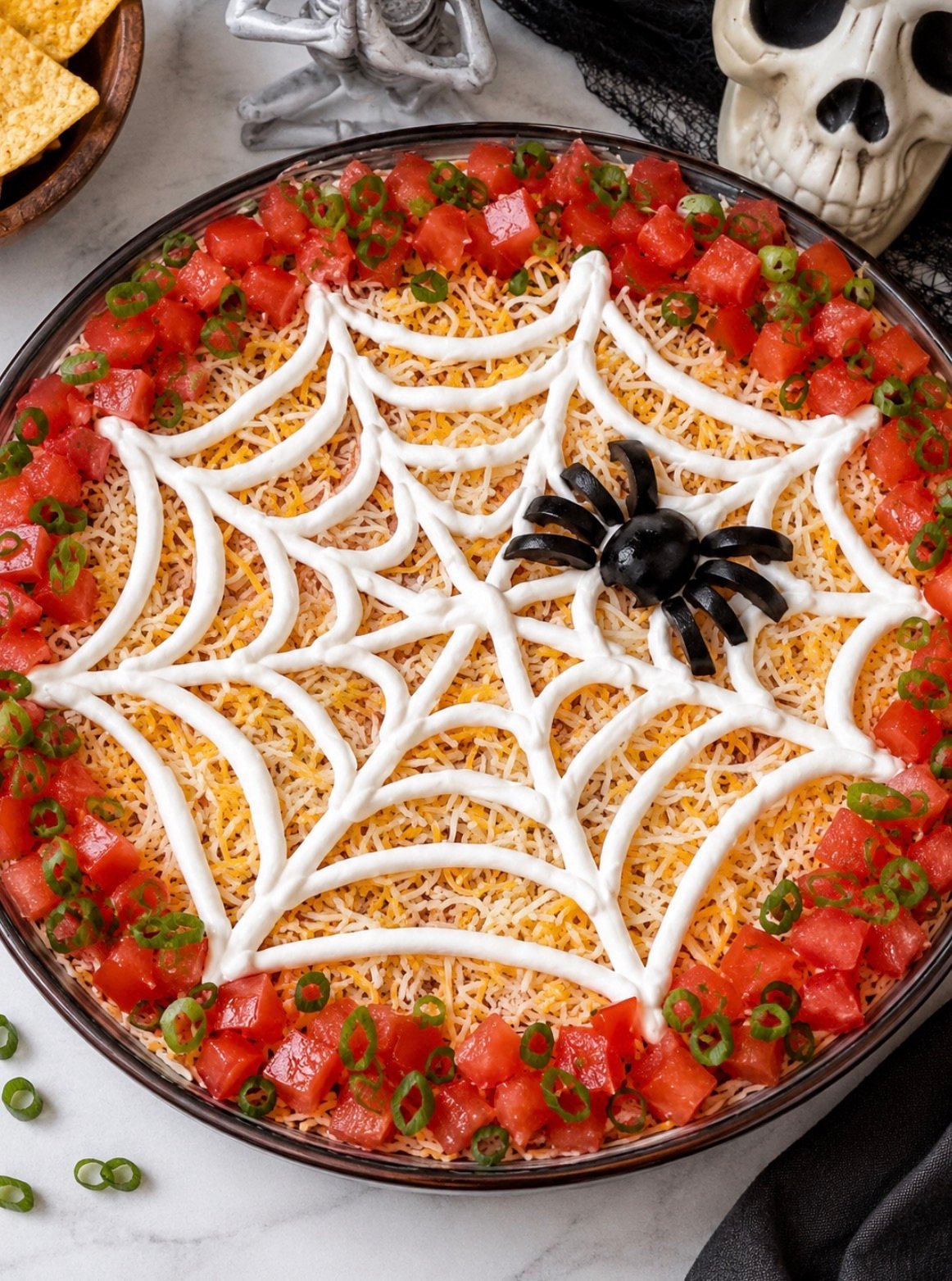
A halloween 7 layer dip is a classic seven-layer taco dip made with refried beans, sour cream, guacamole, salsa, cheese, and olives, finished with a sour cream spiderweb piped on top and dragged into a web pattern with a toothpick.
I’ve made some version of seven layer dip for basically every Halloween party I’ve hosted since college, and it always disappears first. The dip itself isn’t fancy. It’s the spiderweb on top that stops people at the snack table and gets their phones out before anyone digs in.
The first time I tried the web design, I made it two hours before guests showed up because I wanted one less thing to do at party time. Big mistake. By the time anyone saw it, the whole pattern had gone soft and blurry under the plastic wrap, and it just looked like a smudge instead of a web.
This recipe walks through the layer order I actually use, the exact way I pipe and drag the spiderweb so it holds its shape, and the one ingredient swap that stopped my dip from turning watery halfway through the party. I’ll also cover storage, since that’s where most of the web design problems start.
Key Takeaways
- Beans go on the bottom and olives or green onion go on top, every time, because that order keeps the dip from turning to soup when you scoop it.
- Drain or thicken your salsa before it goes in the dip, or it will water down every layer underneath it by the two-hour mark.
- Pipe the spiderweb in sour cream, not cream cheese, since cream cheese is too stiff to drag cleanly with a toothpick.
- Do the web design as close to serving time as you can. It blurs if it sits too long, especially once it’s covered.
- If you have to make the web ahead, stand toothpicks up around the edge of the dish before you wrap it so the plastic never touches the design.
Table of Contents
The Classic Layer Order (And Why It Actually Matters)
I used to think layer order was just a style choice, something you could shuffle around without consequence. It’s not. Each layer is doing a job, and putting a wet layer under a dry one is how you end up with a soupy mess by hour two.
This is the order I build in, from the bottom of the dish up.
- Refried beans. Mix a can of refried beans with a bit of taco seasoning and spread it as your base. It’s thick and sticky enough to hold everything above it in place.
- Cream cheese and sour cream. I blend softened cream cheese with a little sour cream and taco seasoning, then spread it over the beans. This layer acts like glue between the beans and the guac.
- Guacamole. A thick layer of guac goes next. Press a bit of plastic wrap directly on top if you’re making this part ahead, so it doesn’t brown before serving.
- Salsa. This is the layer that causes the most trouble, so use a thick, chunky salsa and drain off any extra liquid first.
- Shredded cheese. A generous layer of shredded Mexican blend or cheddar goes over the salsa. It also gives the sour cream spiderweb something firm to sit on.
- Olives and diced tomato. Sliced black olives and well-drained diced tomato scatter over the cheese for color and crunch.
- Green onion. A light scatter of sliced green onion finishes it off, right before you add the web.
| Layer | What Goes There | Why It’s Positioned There |
| 1 (bottom) | Refried beans | Thick base that won’t collapse under the weight above it |
| 2 | Cream cheese and sour cream | Binds beans to guac without letting either layer slide |
| 3 | Guacamole | Adds richness while staying dense enough to hold shape |
| 4 | Salsa | Adds moisture and flavor, but needs draining first |
| 5 | Shredded cheese | Gives the spiderweb a stable, dry surface to sit on |
| 6 | Olives and tomato | Adds color and texture without adding much liquid |
| 7 (top) | Green onion | Light garnish layer right before the spiderweb goes on |
Before Halloween party season starts, I always grab a pack of disposable piping bags. They’re cheap, they make the web step way less messy than a sandwich bag, and I usually end up using the leftovers for cookie icing anyway.
How I Pipe the Spiderweb So It Actually Holds
This part looks harder than it is, but the technique matters more than people expect. This is exactly how I do it now, after ruining that first attempt.
- Spoon plain sour cream into a piping bag and snip a small tip, or use a squeeze bottle if you have one.
- Starting in the center of the dip, pipe a small dot of sour cream.
- Pipe a ring around that dot, about half an inch out, then another ring half an inch beyond that. Keep going until you’ve covered the surface with a bullseye pattern.
- Take a toothpick and, using only the very tip, drag it from the center dot straight out to the edge, through every ring as you go.
- Repeat that dragging motion around the whole bullseye, spacing your lines evenly, until it looks like a web.
- Wipe the toothpick clean between drags so you’re not smearing sour cream that’s already dried a bit at the tip.
The single biggest thing I got wrong the first time was pressing too hard. A heavy hand drags sour cream clean through the layer underneath it instead of just pulling a thin line, and the whole design turns muddy. Barely touch the surface with the toothpick tip and let it do the work.
I also learned the hard way that timing beats everything else here. Do this step within thirty minutes of serving if you can, because sour cream loosens as it sits and the lines start to blur into each other. If you truly need to prep early, stick a few toothpicks around the rim of the dish standing straight up before you cover it, so the plastic wrap tents over the top instead of resting flat on your web.
The Mistake That Made My Dip Watery (And How I Fixed It)
My first few attempts at this dip always looked great for the first hour and then went downhill fast. The bottom would turn soupy, the beans would separate from the cheese, and by the time the party wound down it looked like a sad science experiment.
The culprit was my salsa. I was scooping straight from a jar of a thin, juicy salsa without thinking twice about it, and all that extra liquid worked its way down through every layer underneath.
Now I set my salsa in a fine mesh strainer for ten minutes before it goes in the dip, and I only use a chunky variety instead of anything runny. That one change fixed the soggy-bottom problem completely, and my dip actually holds its layers for the whole party now instead of just the first hour.
Make-Ahead and Serving Tips
- Build everything through the green onion layer up to a day ahead and keep it covered in the fridge, but hold off on the spiderweb until close to party time.
- Serve this in a wide, shallow dish rather than a deep bowl. A glass serving bowl with straight sides gives the web design room to spread out and actually be seen once people are standing around the table.
- Set out sturdy tortilla chips or scoop-style chips, since thin chips break under seven layers fast.
- If the dip sits out for more than two hours at a party, I’ll swap it for a fresh batch rather than risk food safety with the dairy layers.
My Last Word on This One
This dip has become one of those recipes I don’t even think about anymore. I just build it on autopilot every October, and the spiderweb is still what makes people stop at the table.
Once you’ve drained your salsa and gotten a light hand with the toothpick, the rest of this recipe is genuinely easy. Give yourself twenty five minutes, most of it spent layering, and you’ll have a dip that looks like way more effort than it actually was.
FAQ
Can I make halloween 7 layer dip ahead of time?
Yes, you can build every layer up through the green onions up to a day ahead and refrigerate it covered. Wait to pipe the sour cream spiderweb until shortly before you serve it, since the design blurs the longer it sits.
Why did my seven layer dip get watery?
The most common cause is salsa that’s too thin or wasn’t drained before it went into the dip. Use a thick, chunky salsa and let it sit in a strainer for a few minutes first.
What can I use instead of a piping bag for the spiderweb?
A sandwich bag with one corner snipped off works just as well as a piping bag. You just need a small, controlled opening to draw thin rings of sour cream.
Does the spiderweb design work with guacamole instead of sour cream?
I don’t recommend it, since guacamole is too thick and chunky to pull into clean lines with a toothpick. Sour cream is smooth enough to drag evenly without tearing.
How long does seven layer dip last in the fridge?
It’s best eaten within two to three days if it’s been kept cold and covered the whole time. The texture of the guacamole and sour cream layers starts to change after that.
Spiderweb Seven-Layer Dip
Ingredients
Bean layer
- 1 can (16 oz) refried beans
- 1 tbsp taco seasoning
Cream layer
- 8 oz cream cheese, softened
- ½ cup sour cream
- 1 tsp taco seasoning
Middle layers
- 2 cups guacamole
- 1 cup thick, chunky salsa, drained
- 2 cups shredded Mexican blend cheese
Toppings
- ½ cup sliced black olives
- 1 medium tomato, diced and well drained
- 3 green onions, sliced
Spiderweb
- ½ cup sour cream
- 1 to 2 tsp milk, if needed for pipingconsistency
Instructions
- Mix the refried beans with taco seasoning and spread evenly in the bottom of a wide, shallow dish.
- Blend the softened cream cheese with sour cream and taco seasoning, then spread over the bean layer.
- Spread the guacamole in an even layer over the cream cheese mixture.
- Drain the salsa well, then spread it over the guacamole layer.
- Sprinkle the shredded cheese evenly over the salsa.
- Scatter the olives and drained diced tomato over the cheese.
- Add a light layer of sliced green onion.
- Spoon the sour cream for the spiderweb into a piping bag, then pipe a dot in the center of the dip followed by concentric rings spaced about half an inch apart.
- Drag a toothpick from the center outward through the rings, spacing the lines evenly around the circle, using a light touch to keep the lines clean.
- Serve immediately with sturdy tortilla chips.
Notes

Cynthia Odenu-Odenu is the founder of Cyanne Eats. A registered nurse with a passion for food, she brings the same attention to detail from her professional life into the kitchen. From chain restaurant rankings to grocery finds and easy recipes, Cynthia covers it all and helps everyday food lovers eat better and spend smarter.