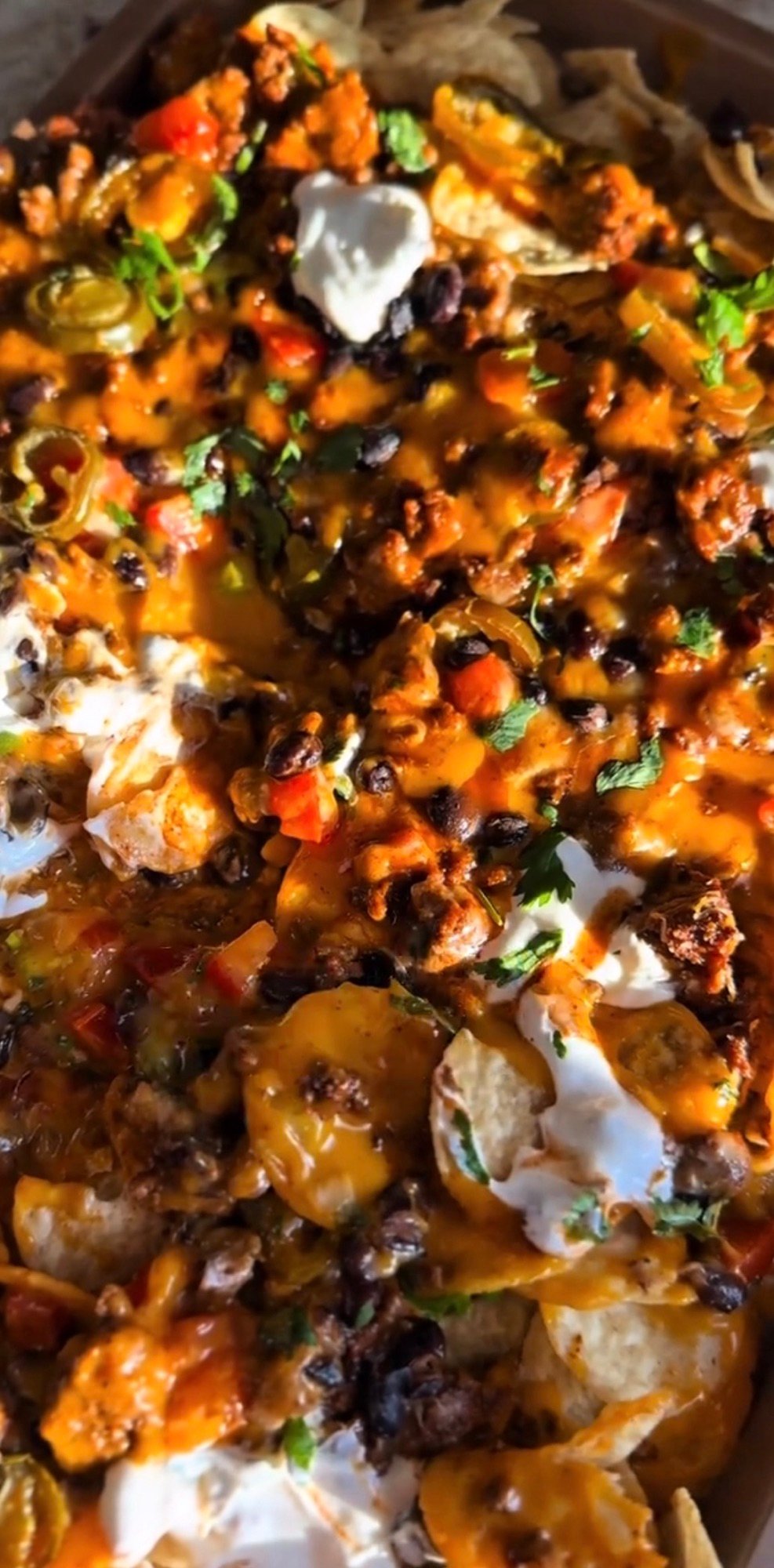
The best sheet pan nachos recipe layers the chips, cheese, and toppings twice in two separate rounds instead of once, so every chip gets coverage instead of just the ones sitting on top.
That one change is the difference between a platter where half the chips are bare and dry, and one where every single piece has cheese on it. I learned this the hard way after bringing a sad, patchy pan of nachos to a game day years ago and watching people dig straight through to the naked chips at the bottom. It’s an easy fix once you know the trick, and it doesn’t take any extra ingredients or time, just a different order of operations.
This recipe is built specifically for feeding a group, not a solo snack plate. I’ll walk through exactly how I layer a sheet pan so nothing ends up dry, when to bake versus broil, and how to keep the toppings from all sliding into one soggy pile in the middle. There’s a full recipe card at the bottom with exact amounts and timing.
Key takeaways
- Layer chips, cheese, and toppings in two separate rounds on the pan, not one big pile
- Spread each layer of chips edge to edge in a single layer, don’t let them stack up
- Bake at 375°F for even melting, then hit the broiler for the last 60-90 seconds only
- Add cold toppings like sour cream, salsa, and guacamole after the pan comes out of the oven
- One standard half sheet pan comfortably feeds 6 to 8 people as an appetizer
Table of Contents
Why my nachos used to fall apart
For years I made nachos the obvious way: dump the chips on a pan, dump the cheese and toppings on top, bake, done.
The problem is gravity: everything heavy sinks toward the middle and bottom of the pile while the toppings just sit on the very top layer of chips. I’d pull the pan out of the oven looking gorgeous, then two minutes into serving it, everyone had already eaten the loaded top chips and all that was left was a bottom layer of plain, slightly soggy tortilla chips nobody wanted to touch.
The fix I landed on is embarrassingly simple: split everything into two rounds instead of one.
The two-round layering method
This is the part of a sheet pan nachos recipe most people skip entirely.
- Spread half the chips in a single, even layer across the pan, edge to edge, with minimal overlap.
- Scatter half your protein, beans, and other heavier toppings evenly over that first layer.
- Cover with about half the shredded cheese, making sure it reaches the corners and edges of the pan, not just the center.
- Add the second half of the chips directly on top, again spread edge to edge.
- Repeat with the remaining protein, beans, and cheese.
- Bake, then add anything cold last.
Doing it this way means the bottom layer of chips gets its own cheese and toppings instead of relying on everything from the top layer to drip down. I tested this against a single-layer version side by side once, and the two-round pan had noticeably fewer bare chips by the time it hit the table.
Bake, broil, or both
I get asked this a lot. Honestly, the answer is both, in the right order.
| Method | What it does well | Where it goes wrong |
| Baking at 375°F | Melts cheese evenly, warms toppings through, gently toasts chips | Takes a few extra minutes compared to broiling |
| Broiling only | Fast, gets bubbly browned spots quickly | Uneven melting, easy to scorch chip edges if you look away |
| Bake then broil | Even melt plus that browned, bubbly top | None, this is the one I use every time |
My routine is to bake the whole assembled pan at 375°F for about 8 to 10 minutes until the cheese is fully melted, then switch the oven to broil and give it 60 to 90 seconds just to get some color and bubble on top. I stand right at the oven door during the broil step: cheese goes from perfect to burnt shockingly fast under a broiler, and I’ve lost a corner of chips to it more than once.
How many pans for how many people
One half sheet pan feeds roughly 6 to 8 people as a party appetizer, assuming there’s other food around it.
Two half sheet pans is my move for anything over 10 guests, and I genuinely prefer this to trying to stack more food onto one giant pan. A second pan gives you more edge space, which means more chips get that crispy, slightly charred rim everyone fights over.
A full sheet pan works if your oven fits one, but I find the extra size makes the two-round layering harder to keep even, so I stick with halves.
What goes down first vs. what goes on last
Not every topping belongs in the oven: some things need heat to work right, and some things just need to sit on top cold at the end.
Goes in before baking:
- Seasoned ground beef, shredded chicken, or carnitas
- Black beans or refried beans, drained well
- Shredded cheddar and Monterey Jack, which I mix together for a better melt
- Diced jalapeños or pickled jalapeños
- Corn
Goes on after baking, off heat:
- Sour cream or Mexican crema
- Fresh pico de gallo or diced tomato
- Sliced avocado or guacamole
- Fresh cilantro
- A squeeze of lime
Keeping the cold, fresh stuff off the pan until after baking matters more than people think. If sour cream or fresh tomato sits under hot cheese for ten minutes, it turns watery and thins everything else out with it, which is part of what makes a pan of nachos go soggy in the first place.
Prepping ahead for a party
I make nachos for a crowd a lot, so I’ve picked up a few shortcuts.
- Cook and season your protein up to two days ahead, then just reheat it briefly before assembling.
- Shred your own cheese instead of buying pre-shredded if you have the time. A box grater makes quick work of it, and the cheese melts smoother because it isn’t coated in anti-caking starch.
- Keep chips in their bag until you’re ready to build the pan so they stay crisp. I always reach for Xochitl restaurant-style tortilla chips since they’re sturdy enough to survive two rounds of layering without turning to dust.
- Assemble the pan right before your oven is ready to go rather than letting it sit assembled and cold, since chips soften the longer they wait.
I use a solid Nordic Ware Natural Aluminum Commercial Baker’s Half Sheet for this because it heats evenly and doesn’t warp, which matters when you’re doing a bake-then-broil combo. I also line every pan with Reynolds Kitchens parchment paper first, since cheese that bubbles over during the broil step turns into a real chore to scrub off bare metal. Both are inexpensive enough that I keep extras on hand just for nacho nights.
My go-to party nacho plan
If I’m hosting, I do two half sheet pans of these instead of one giant tray, and I always use the two-round layering method even when I’m in a rush. It genuinely takes the same amount of time as dumping everything on once. The only difference is nobody ends up with a plain chip at the bottom of the bag anymore.
When I’m setting up a bigger spread, I’ll usually pair this with a couple of picks from my Trader Joe’s party appetizers ranking so there’s more than one thing on the table besides nachos.
Once you build a pan this way, going back to the single-layer version feels like a step backward. Every bite actually has something on it.
Frequently asked questions
How do I keep sheet pan nachos from getting soggy?
Layer the chips in two separate rounds instead of one pile, spread them edge to edge, and hold off on cold toppings like sour cream and salsa until after the pan comes out of the oven.
Can I make nachos ahead of time for a party?
You can prep the protein, chop toppings, and shred cheese up to two days ahead, but assemble and bake the actual pan right before serving so the chips stay crisp.
What’s the best cheese for melting on nachos?
A mix of shredded cheddar and Monterey Jack melts smoothly and holds up well under a broiler. Pre-shredded bags work in a pinch, but freshly shredded cheese melts more evenly.
How many people does one sheet pan of nachos feed?
A standard half sheet pan feeds about 6 to 8 people as an appetizer alongside other food. For 10 or more guests, I make two half sheet pans instead of one large one.
Should I broil or bake nachos?
Bake at 375°F until the cheese fully melts, then broil for 60 to 90 seconds just to add color and bubble on top. Broiling alone tends to melt unevenly and burns easily.
Sheet Pan Loaded Nachos for a Crowd
Ingredients
- 1 bag (13-ounce) sturdy restaurant-style tortilla chips
- 1 pound ground beef, seasoned and cooked
- 1 can (15-ounce) black beans, drained and rinsed
- 2 cups shredded cheddar cheese
- 2 cups shredded Monterey Jack cheese
- 1 cup corn kernels
- ½ cup pickled jalapeños, sliced
- ½ cup sour cream
- 1 cup pico de gallo or diced tomato
- 1 avocado, sliced
- ¼ cup fresh cilantro, chopped
- 1 lime, cut into wedges
Instructions
- Preheat the oven to 375°F and line a half sheet pan with parchment paper.
- Spread half the tortilla chips in a single, even layer across the pan.
- Scatter half the ground beef, black beans, and corn evenly over the chips.
- Sprinkle half the cheddar and Monterey Jack cheese over that layer, reaching the edges of the pan.
- Add the second half of the chips on top in an even layer.
- Repeat with the remaining beef, beans, corn, and cheese, plus the jalapeños.
- Bake for 8 to 10 minutes, until the cheese is fully melted.
- Switch the oven to broil and cook for 60 to 90 seconds, watching closely, until bubbly and lightly browned on top.
- Remove from the oven and top with sour cream, pico de gallo, avocado, and cilantro.
- Serve immediately with lime wedges on the side.

Cynthia Odenu-Odenu is the founder of Cyanne Eats. A registered nurse with a passion for food, she brings the same attention to detail from her professional life into the kitchen. From chain restaurant rankings to grocery finds and easy recipes, Cynthia covers it all and helps everyday food lovers eat better and spend smarter.