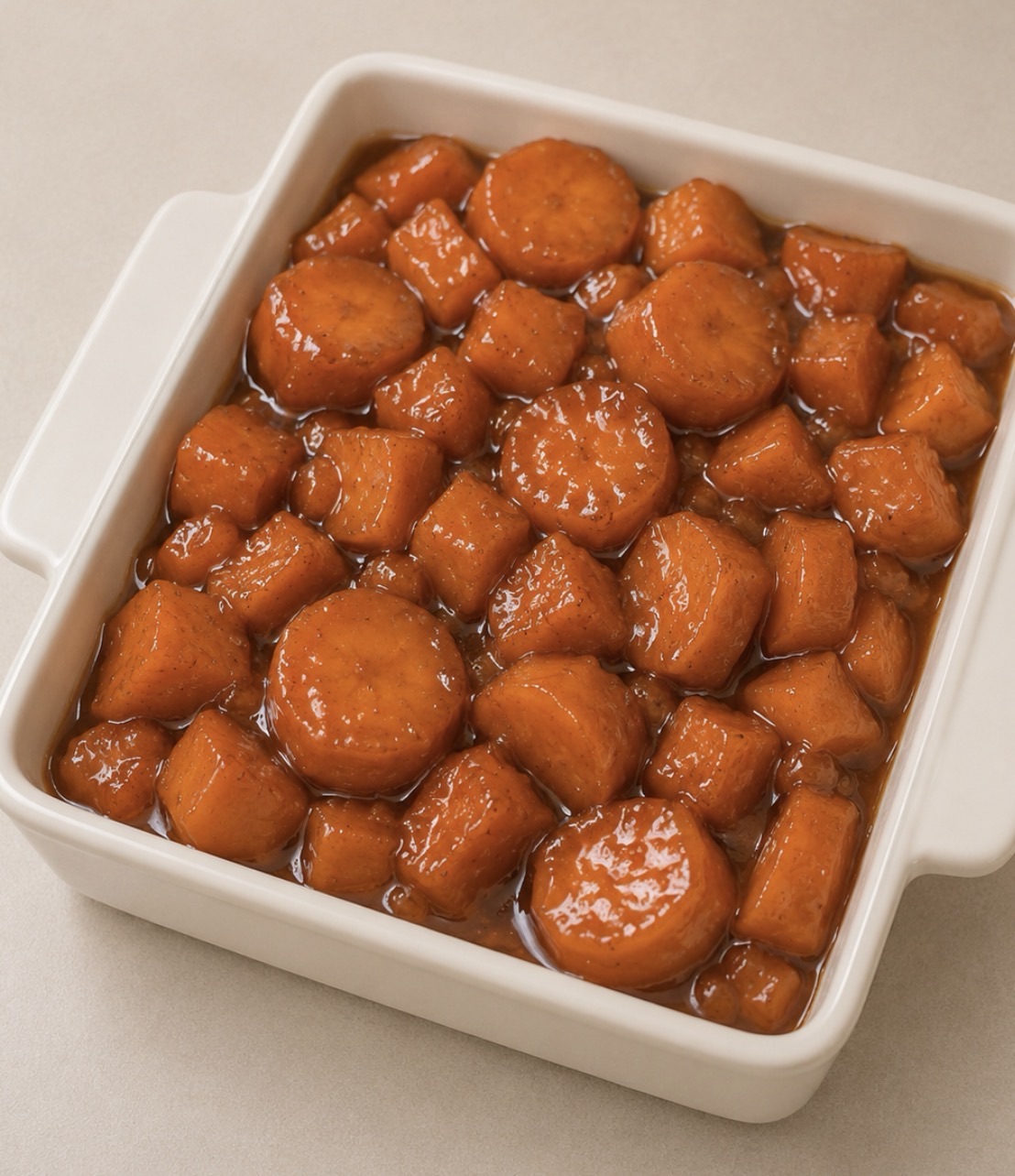
Candied carrots are sliced carrots simmered first in water until just tender, then finished in a butter and brown sugar glaze that reduces until it clings to every piece.
Carrots are the side dish nobody plans around and everybody finishes first. Glazed properly, they go from an afterthought to the thing people ask about before the turkey’s even carved.
The technique is genuinely simple, two stages, one pan. Getting it right just means knowing where people usually go wrong.
Key Takeaways
- Carrots get parboiled first, then finished in a butter and brown sugar glaze, not candied from raw
- Cutting every piece the same size matters more than almost anything else in this recipe
- Whole carrots, peeled and cut yourself, caramelize better than pre-peeled baby carrots, which hold more water
- The glaze needs medium heat and frequent stirring once it starts reducing, since it goes from thin to scorched fast
- This doesn’t freeze particularly well, the glaze tends to separate on thawing, so plan to make it fresh
Table of Contents
Coins, Not Baby Carrots, If You Want the Best Glaze
Baby carrots are convenient, but they’re processed down from larger carrots, which means more surface area exposed and more water content. That extra moisture tends to steam the carrots rather than let them caramelize the way a fresh-cut carrot does.
Whole carrots, peeled and sliced into coins about half an inch thick, give you a sweeter, crisper result with real caramelized edges. Cut them on a diagonal if you want the classic oval shape you see on a restaurant plate, though a straight cut works exactly the same.
The one rule that matters most: cut every piece the same size. Mixed sizes are the single biggest reason people end up with some carrots mushy and others still crunchy in the same batch.
Ingredients
Carrots, 2 to 2.5 lbs: Peeled and sliced into 1/2-inch coins. A Y-shaped vegetable peeler makes this fast for a full bag.
Unsalted butter, 4 tablespoons
Brown sugar, 1/3 to 1/2 cup: Or swap in honey for a lighter, more floral sweetness, though it needs a slightly longer reduction to thicken the same way.
Water, 1/2 cup: For the initial simmer.
Salt, 1/4 to 1/2 teaspoon
Optional add-ins: 1/4 cup fresh orange juice plus a teaspoon of zest for the orange-glazed version, or 1/2 teaspoon cinnamon for a spiced version.
Equipment
A wide 12-inch skillet is genuinely the most important tool here, more than any specialty gadget. The glazing stage depends on the liquid reducing quickly, and a wide surface area does that far faster than a narrow saucepan. A 12-inch cast iron skillet holds heat evenly and gives the glaze room to reduce properly.
If you’re cutting a large batch, a mandoline slicer with a hand guard gets you uniform coins fast, which matters since even cutting is the one rule that determines whether this recipe works at all. Carrots are round and can roll under the blade, so use the guard every time rather than pushing them through by hand.
How to Make Candied Carrots
Step 1: Parboil the carrots
Add the sliced carrots to a pot with enough water to just cover them. Bring to a boil and cook until just fork-tender, not fully soft, about 5 to 8 minutes depending on thickness. Drain well.
Step 2: Build the glaze
In your skillet, melt the butter over medium heat. Stir in the brown sugar and the 1/2 cup water, and bring to a simmer, stirring until the sugar dissolves.
Step 3: Glaze the carrots
Add the drained carrots to the skillet. Simmer uncovered, tossing or stirring frequently, for 5 to 10 minutes, until the liquid reduces into a glossy glaze that coats every piece.
Watch the heat here. Once most of the water has cooked off, what’s left is essentially butter and sugar, and that mixture can go from perfectly glazed to scorched in under a minute if you walk away.
Step 4: Season and serve
Season with salt to taste. If you’re making the orange version, stir in the orange juice and zest during the last 2 minutes of glazing rather than at the start, so the bright citrus flavor doesn’t cook off.
Variations Worth Trying
Orange-glazed: Stir in 1/4 cup fresh orange juice and a teaspoon of zest during the final 2 minutes of glazing. This is the most well-known variation, and it cuts through the sweetness with real brightness instead of just adding more sugar.
Pecan-topped: Scatter 1/3 cup toasted, chopped pecans over the finished carrots right before serving. Add them at the table, not during cooking, so they stay crunchy instead of going soft in the glaze.
Spiced: Stir in 1/2 teaspoon cinnamon and a pinch of ground ginger with the brown sugar for a warmer, more Thanksgiving-leaning flavor.
Storage and Reheating
Refrigerate leftovers in an airtight container for 4 to 5 days.
This is one dish I don’t recommend freezing. The glaze’s texture depends on butter and reduced liquid holding together, and that tends to break and separate once it’s frozen and thawed, leaving you with mushy carrots in a broken sauce.
Reheat gently in a skillet over medium-low heat, adding a splash of water if the glaze has thickened too much in the fridge. A quick microwave reheat works too, just stir halfway through.
The Two Things That Ruin This Dish
Every mushy batch traces back to overcooking during the parboil stage. Every watery or burnt glaze traces back to the wrong heat at the glazing stage, either too low to reduce or too high to control. Get the parboil timing and the glaze heat right and the rest of the recipe takes care of itself.
FAQ
Why did my candied carrots turn out mushy?
The parboil stage went too long. Pull the carrots while they still have a little resistance, since they continue cooking once they hit the glaze.
Why is my glaze too thin?
Either too much water was added, or it wasn’t drained off before glazing, or it just needs more time reducing over medium heat. Raise the heat slightly and keep stirring rather than adding more sugar.
Can I use baby carrots instead of whole carrots?
You can, but expect a softer, less caramelized result, since baby carrots hold more water than whole carrots peeled and cut fresh. If using them, don’t parboil as long, since they’re often already partially tender.
Do candied carrots freeze well?
Not particularly. The butter-based glaze tends to separate on thawing, leaving a broken sauce and softer carrots. This is a dish better made fresh than frozen ahead.
What’s the best sweetener if I don’t want to use brown sugar?
Honey works well and gives a lighter, more floral flavor, though it’s thinner than brown sugar syrup and needs a slightly longer reduction to thicken to the same glaze consistency.
Candied Carrots Recipe
Ingredients
- 2 to 2.5 lbs carrots, peeled and sliced into 1/2-inchcoins
- 4 tbsp unsalted butter
- 1/3 to 1/2 cup brown sugar
- ½ cup water
- 1/4 to 1/2 tsp salt
- Optional: 1/4 cup orange juice plus 1 teaspoon zest, or1/2 teaspoon cinnamon
Instructions
- Parboil sliced carrots in water until just fork-tender, 5 to 8 minutes. Drain well.
- Melt butter in a wide skillet over medium heat. Stir in brown sugar and water, and simmer until the sugar dissolves.
- Add the drained carrots and simmer uncovered, stirring frequently, 5 to 10 minutes, until the glaze reduces and coats the carrots.
- Season with salt. For the orange version, stir in orange juice and zest during the last 2 minutes.
Notes

Cynthia Odenu-Odenu is the founder of Cyanne Eats. A registered nurse with a passion for food, she brings the same attention to detail from her professional life into the kitchen. From chain restaurant rankings to grocery finds and easy recipes, Cynthia covers it all and helps everyday food lovers eat better and spend smarter.