
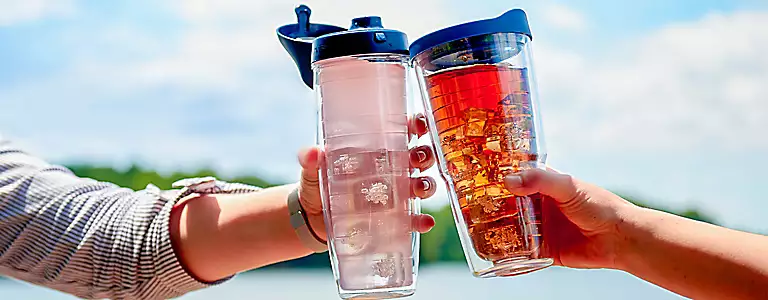
It depends on which Tervis you own. Classic double-wall plastic tumblers are microwave-safe for short bursts as long as there’s no warning stamped on the bottom, but stainless steel Tervis tumblers should never go in the microwave.
I used to assume every Tervis tumbler was fair game for the microwave since they all look so similar on the shelf. That’s not actually true, and mixing up the two main lines is an easy way to melt a tumbler or spark a fire. This is how to tell which one you’ve got.
Key Takeaways
- Flip your tumbler over and check the bottom before you microwave it. That stamp is the real answer, not the material alone.
- No warning on the bottom means it’s rated safe for up to 30 seconds at a time.
- “Microwave When Full” means it’s only safe if the liquid fills it to within an inch of the rim.
- “Do Not Microwave” means it has metallic elements in it, which can spark.
- Stainless steel Tervis tumblers are never microwave-safe, full stop.
Table of Contents
Check the Bottom of Your Tumbler First
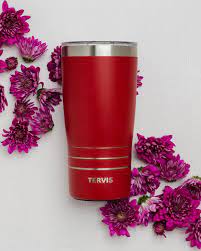
Tervis makes a few different product lines, and they don’t all handle heat the same way. The company actually stamps the microwave guidance right on the bottom of the cup, so that’s the fastest way to know what you’re working with.
- No warning at all: safe for up to 30 seconds at a time.
- “Microwave When Full”: only safe when filled with liquid to within an inch of the rim.
- “Do Not Microwave”: the cup has metallic elements in the decoration, so it’s off-limits.
If you can’t find any markings, or they’ve worn off from years of dishwasher cycles, don’t guess. Just transfer your drink to a plain glass or ceramic mug instead.
Classic Double-Wall Tumblers
These are the tumblers most people picture when they think of Tervis: an inner and outer wall made of Tritan plastic with a sealed air gap between them for insulation. Without a warning stamp, these are the ones rated microwave-safe for short heating bursts.
I still keep the sessions short. Thirty seconds is the limit Tervis gives, and I’ve found that’s plenty to take the chill off coffee without stressing the plastic.
Stainless Steel Tumblers
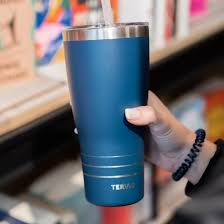
Tervis also sells stainless steel tumblers, including the DuraPrint line, and these should never go in the microwave. Metal and microwaves don’t mix. It can spark, and on the older stainless steel tumblers made before January 2023, the heat can actually disable the vacuum insulation that keeps drinks hot or cold.
If your tumbler feels like metal and has any weight to it, assume it’s off-limits for the microwave and pour your drink into something else to reheat it.
What Happens If You Microwave the Wrong One
Microwaving a “Do Not Microwave” tumbler or a stainless steel one isn’t just a wasted thirty seconds. That’s a real risk, not just a wasted thirty seconds:
- Sparks or fire: metal in the microwave, whether it’s a stainless steel tumbler or a metallic decoration, can arc and spark.
- Warping or melting: plastic tumblers that aren’t rated for the microwave can warp under sustained heat, especially with lids on that trap steam.
- Ruined insulation: heating a legacy stainless steel Tervis can break the vacuum seal, so it stops keeping drinks hot or cold the way it used to.
- Burns from sippy cups: if you’re heating a drink in a My First Tervis cup for a kid, take the lid off first and let it cool before handing it back over. Liquid can heat unevenly and scald.
My Safety Tips

- Check the bottom stamp every time, especially if you own more than one Tervis and they get mixed up in the cabinet.
- Skip the lid, or use a vented lid, so steam doesn’t build up pressure while it heats.
- Let a tumbler come to room temperature before microwaving it if it’s been in the fridge or freezer. Going straight from cold to hot can crack the plastic.
- Use oven mitts or a towel when you pull it out. The outer wall stays cooler than glass, but the drink itself will be hot.
- When you’re not sure what you’re holding, pour the drink into a plain glass or ceramic mug and microwave that instead. It’s the safest option every time.
My Take
Tervis didn’t design every tumbler in its lineup to handle a microwave, and that’s fine. The classic plastic tumblers cover most everyday reheating without any drama, as long as you respect the bottom stamp and keep sessions short.
Stainless steel is where I draw a hard line. It’s not worth the risk to your microwave or your tumbler’s insulation. When in doubt, a plain mug takes thirty extra seconds and saves you the guesswork.
FAQs
Is it OK to put a Tervis tumbler in the microwave?
Only classic double-wall plastic Tervis tumblers without a “Do Not Microwave” stamp on the bottom, and even then only for short bursts under 30 seconds. Stainless steel Tervis tumblers should never go in the microwave.
How do I know if my Tervis tumbler is microwave-safe?
Flip it over and check the bottom. No warning means safe for up to 30 seconds. “Microwave When Full” means it needs to be filled with liquid to within an inch of the rim. “Do Not Microwave” means it has metallic elements and should stay out of the microwave entirely.
Can you microwave a stainless steel Tervis tumbler?
No. Metal in the microwave can spark, and heating an older stainless steel Tervis can permanently damage the vacuum insulation that keeps drinks hot or cold.
What happens if you microwave a Tervis tumbler that isn’t rated for it?
It can warp, melt, or spark depending on the materials involved, and it can also damage the inside of your microwave. If you’re not sure what you’re holding, transfer the drink to a plain glass or ceramic mug instead.

Cynthia Odenu-Odenu is the founder of Cyanne Eats. A registered nurse with a passion for food, she brings the same attention to detail from her professional life into the kitchen. From chain restaurant rankings to grocery finds and easy recipes, Cynthia covers it all and helps everyday food lovers eat better and spend smarter.