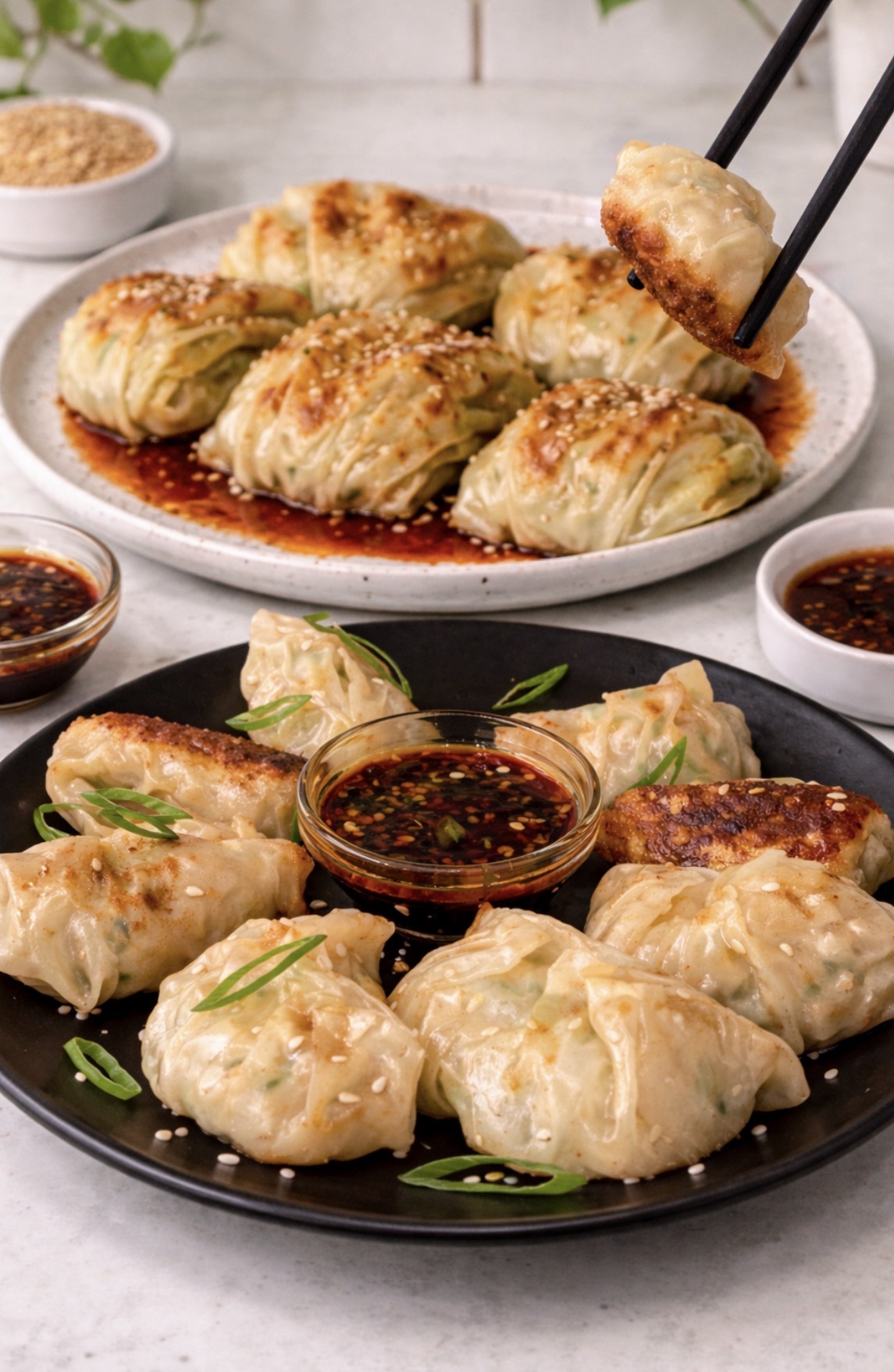
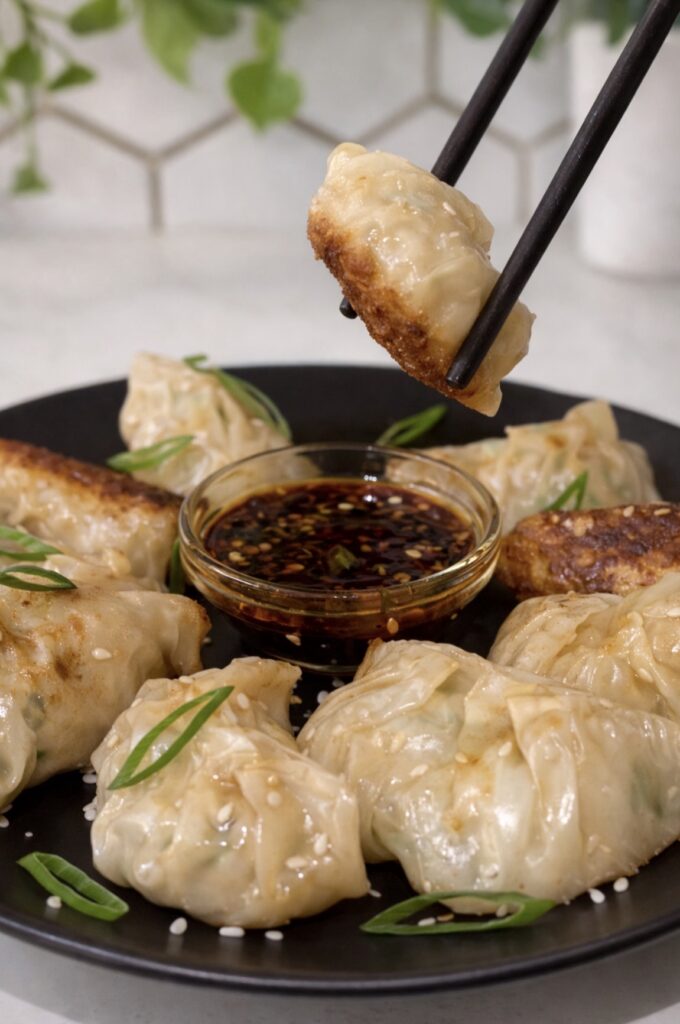
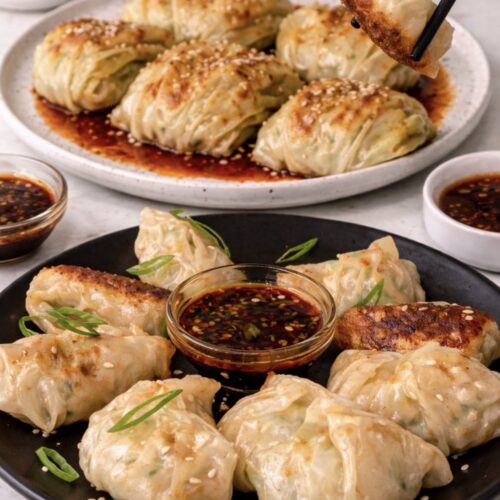
Cabbage dumplings are either pan-fried dumplings filled with seasoned ground pork and napa cabbage, and or a low-carb version where softened cabbage leaves replace the dough wrapper entirely around a savory meat filling.
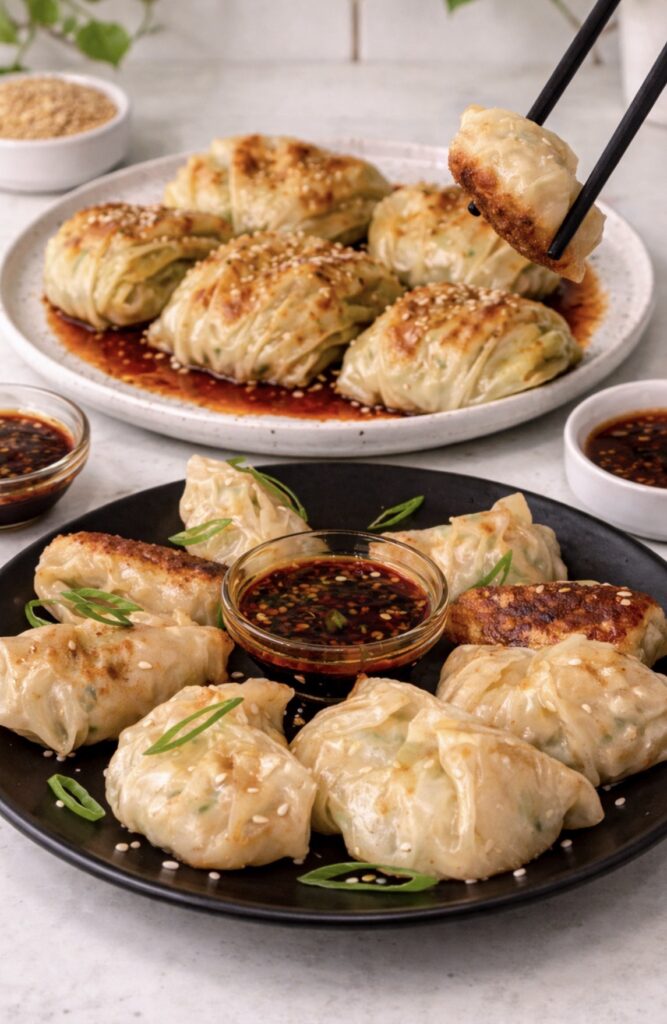
Both versions are excellent and both are worth knowing. The classic filling version is one of the most popular dumplings in all of Chinese cooking. The cabbage-wrapped version is the one blowing up on TikTok right now, and it genuinely delivers.
I am covering both in this guide because they share the same filling and the same dipping sauce. The only real difference is the wrapper.
Table of Contents
Key Takeaways
- Moisture control is the most important step in either version. Cabbage holds a lot of water and if you do not squeeze it dry, the filling will be soggy and the dumplings will fall apart
- Mix the filling vigorously in one direction until it becomes sticky and paste-like. This step builds the bouncy texture that makes great dumplings great
- For the cabbage-wrapped version, napa cabbage is the easiest to work with. Green cabbage works too but needs more blanching time
- Freeze uncooked, not cooked. Frozen uncooked dumplings cook directly from frozen in the same pan
- The crispy skirt technique works for any version using dough wrappers and turns a good dumpling into a great one
The Two Versions Explained
Classic cabbage dumplings use finely chopped napa cabbage mixed with seasoned ground pork as the filling, all wrapped in round wheat-flour dough. They are pan-fried until the bottom is golden, then steamed in the same pan to cook through. This is Northern Chinese comfort food, one of the most beloved dumplings in the world.
Cabbage-wrapped dumplings skip the dough entirely. Softened cabbage leaves serve as the wrapper around a seasoned pork or chicken filling. They have no flour, significantly fewer carbs, and a lighter, more delicate texture. This is the version trending hard on TikTok right now, and the technique is closer to stuffed cabbage rolls than traditional dumplings.
They share the same filling recipe. Decide which version you want to make, then follow the same filling instructions below.
Ingredients
For the filling (makes about 35 to 40 dumplings):
Ground pork, 1 lb: At least 20 percent fat. Lean ground pork produces dry, crumbly filling every time.
Napa cabbage, 10 oz, finely chopped: About half a small head after the outer leaves are removed. The finer you chop it, the better the texture. This is not a job for a food processor.
Scallions, 3, finely sliced
Fresh ginger, 1 tablespoon, grated
Garlic, 2 cloves, minced
Soy sauce, 2 tablespoons
Toasted sesame oil, 2 teaspoons: Kadoya Toasted Sesame Oil is the right brand for this. It is the most widely used in Chinese cooking and the flavor is noticeably cleaner than other brands.
Shaoxing wine or dry sherry, 1 tablespoon
White pepper, 1/2 teaspoon
Sugar, 1 teaspoon
Cornstarch, 1 tablespoon: Absorbs residual moisture from the cabbage and helps the filling bind.
For the wrappers (classic version): Store-bought round dumpling wrappers work well. Look for them in the refrigerator section of any Asian grocery store. They are sold fresh or frozen, 40 to 50 per pack. Wonton wrappers are square and thinner; use round dumpling wrappers specifically.
For the cabbage-wrapped version: 1 medium head of napa cabbage or green cabbage, outer leaves reserved whole.
For the dipping sauce:
- 2 tablespoons soy sauce
- 1 tablespoon Chinese black vinegar or rice vinegar
- 1 teaspoon toasted sesame oil
- 1 teaspoon chili crisp or chili oil (optional)
- 1 clove garlic, minced
- 1/2 teaspoon sugar dissolved in 1 tablespoon hot water
Step 1: Prep the Cabbage Filling
Finely chop the napa cabbage into pieces no larger than a centimeter. Place in a colander, sprinkle with 1 teaspoon salt, toss to distribute, and let sit for 10 to 15 minutes. The salt draws the water out through osmosis.
Transfer the cabbage to a clean kitchen towel, gather the corners, and wring out every drop of liquid you can over the sink. This step is not optional. Wet cabbage equals soggy filling and dumplings that burst or fall apart during cooking.
Step 2: Make the Filling
Combine the ground pork, squeezed-dry cabbage, scallions, ginger, garlic, soy sauce, sesame oil, Shaoxing wine, white pepper, sugar, and cornstarch in a large bowl.
Mix vigorously in one direction, either clockwise or counterclockwise, for 3 to 5 minutes until the mixture becomes sticky and holds together when pressed. It should look like a dense paste, not loose ground meat. This one-direction mixing is what gives the filling its bouncy, juicy texture. Mix it longer rather than shorter.
Taste the filling before wrapping. The easiest way is to microwave a small spoonful for 30 seconds on a plate. Adjust salt or soy sauce as needed.
Classic Version: Wrapping and Cooking
Wrapping
Place a dumpling wrapper on a clean, dry surface. Spoon about 1.5 to 2 teaspoons of filling into the center. Do not overfill. Overstuffed dumplings burst.
Moisten the edge of the wrapper with a small amount of water using your finger. Fold the wrapper in half over the filling to form a half-moon. Press the center point together first, then pleat one side toward the center in small folds, pressing firmly as you go. The filling should be completely sealed with no air pockets. Set the finished dumpling flat-side down.
A simple half-moon with no pleats is completely acceptable for beginners and still produces a good result.
Work in batches and cover finished dumplings with a damp kitchen towel so they do not dry out.
Pan-frying (the crispy potsticker method)
Heat 1.5 tablespoons of vegetable oil in a 10 or 12-inch nonstick pan over medium-high heat. Arrange the dumplings flat-side down in a single layer with a small gap between each one. Fry for 2 to 3 minutes without moving them until the bottoms are golden brown.
Add 1/3 cup of water to the pan, stand back from the steam, and immediately cover with a lid. Steam for 4 to 5 minutes until the water has fully evaporated. Remove the lid and fry for 1 more minute to re-crisp the bottoms.
Slide onto a plate crispy-side up and serve immediately with dipping sauce.
How to Make the Crispy Skirt
The lacy, connected crust that forms around the base of pan-fried dumplings looks impressive and adds real crunch. It is easier to make than it looks.
Whisk together 1/4 cup cold water, 1 teaspoon cornstarch, and 1 teaspoon all-purpose flour until smooth. The slurry needs to be stirred right before pouring since the starch settles immediately.
After the dumplings have fried 2 minutes on the first side and have a golden base, pour the slurry evenly into the pan so it comes about a quarter of the way up the dumplings. Cover with a lid and cook on medium-high for 5 to 6 minutes. Remove the lid and cook another 1 to 2 minutes until all the water evaporates and the starch forms a translucent golden web connecting the dumplings.
Place a flat plate face-down over the pan, then flip the pan and plate together in one quick motion. The skirt lands on top, golden side up.
This only works with a nonstick pan. The skirt will not release from stainless steel or cast iron.
Cabbage-Wrapped Version: Prepping the Leaves
The goal is leaves that are pliable enough to fold without tearing but still have enough structure to hold the filling.
Napa cabbage (recommended for beginners): Bring a pot of water to a boil. Separate the leaves. Submerge 2 to 3 leaves at a time for 30 to 60 seconds until softened but not limp. Remove immediately and lay flat on a kitchen towel to dry. Pat thoroughly dry.
Green cabbage: Needs 3 to 5 minutes in boiling water to fully soften. The central rib is thick and should be shaved down with a knife or peeled back slightly so the leaf folds without cracking.
Freeze-thaw method (no boiling): Freeze the whole cabbage overnight. Leave it on the counter to thaw fully the next day. The leaves will be naturally soft and pliable, ready to use without any cooking.
After any method, trim any remaining thick rib sections and pat the leaves completely dry before filling.
Cabbage-Wrapped Version: Filling and Cooking
Use the same filling from above. Lay a prepared cabbage leaf flat. Place 2 to 3 tablespoons of filling in the lower third. Fold the sides in over the filling, then roll upward from the bottom into a compact parcel. The cabbage will seal itself once the filling is snug.
Steaming then pan-searing (best result)

Place the rolls seam-side down in a bamboo steamer lined with parchment paper. A 10-inch 2-tier bamboo steamer fits about 8 to 10 rolls per tier. Steam over boiling water for 12 to 15 minutes until the filling is cooked through.
Heat a thin layer of oil in a nonstick pan over medium-high heat. Sear the steamed rolls seam-side down for 2 minutes, then flip and sear the other side for 2 minutes. You want some color on the outside.
Air fryer method
Lightly brush or spray the rolls with oil. Air fry at 375 degrees for 10 to 12 minutes, flipping once at the 6-minute mark. The outside gets pleasantly charred at the edges.
This method consistently produces the neatest presentation and the crispiest exterior of any cooking method. Check that the internal temperature of the filling reaches 165 degrees.
The Dipping Sauce
Mix all sauce ingredients together and taste. The balance you are looking for is salty from the soy sauce, sour from the vinegar, a little spicy from the chili crisp, and slightly sweet from the dissolved sugar.
Marukan Seasoned Rice Vinegar is good for beginners since the seasoning is built in. Chinese black vinegar (Chinkiang) is deeper and more complex if you can find it.
For a soy-free version: substitute coconut aminos for the soy sauce, and add an extra pinch of salt since coconut aminos is sweeter and less salty.
Troubleshooting
The filling is too wet. The cabbage was not squeezed dry enough. It needs to be wrung out aggressively in a kitchen towel, not just drained in a colander. This step cannot be rushed.
The dumplings are bursting during cooking. Either overfilled or the filling was too wet. Use less filling per wrapper and make sure the filling is thoroughly squeezed dry.
The filling tastes bland. Season more aggressively. The filling needs to be slightly overseasoned on its own because the wrapper or cabbage leaf mutes the flavor. Add more soy sauce or a small pinch of chicken bouillon powder.
The cabbage leaves are tearing. Underblanched leaves are brittle. Go longer in the boiling water, especially with green cabbage. The freeze-thaw method eliminates this problem entirely.
The dumplings are sticking to the pan. Not enough oil, the pan was not hot enough before adding the dumplings, or the dumplings were moved too early. Let them fry untouched until the bottoms release cleanly on their own.
The crispy skirt is burning before it crisps. The heat was too high. Use medium rather than medium-high during the slurry stage, and watch the pan the entire time.
Tips for the Best Dumplings
Do not use a food processor to chop the cabbage. It creates an uneven, watery pulp. Hand-chop the cabbage into small pieces with a knife.
Make a test dumpling before wrapping the whole batch. Pan-fry one and taste the filling. It is much easier to add more seasoning to the bowl than it is to unwrap and re-stuff.
Work fast once the dumplings are assembled. The moisture from the filling slowly softens the wrappers. Wrap a batch, cook it, then wrap the next batch. Do not let assembled dumplings sit for more than 15 minutes before cooking.
Rest the filling for at least 30 minutes in the fridge before wrapping. This lets the flavors meld and firms the mixture, making it easier to handle.
Protein Variations
Shrimp: Coarsely chop raw peeled shrimp and mix with the pork for a shrimp and pork combination that is sweet and juicy. A straight shrimp filling with no pork works well in the cabbage-wrapped version specifically.
Ground chicken: Works in both versions. Add 1 extra teaspoon of sesame oil and a tablespoon of neutral oil to compensate for the lower fat content.
Vegetarian: Replace the pork with pressed firm tofu crumbled small, 4 oz of shiitake mushrooms finely diced, and a handful of soaked glass noodles cut into short pieces. The noodles absorb excess moisture and improve texture.
Korean-style: Add 1 tablespoon of gochujang and substitute the Shaoxing wine with 1 tablespoon of rice vinegar. Use ground beef instead of pork. This is the version making the rounds on TikTok as “protein cabbage pillows” and it is very good.
How to Freeze and Reheat
To freeze: Arrange assembled uncooked dumplings in a single layer on a parchment-lined baking sheet, not touching. Freeze for at least 4 hours until solid, then transfer to a zip-top bag with as much air removed as possible. Label with the date. Good for 2 to 3 months.
Cooking from frozen: Pan-fry the same as fresh but extend the steaming time to 5 to 7 minutes. Do not thaw first. Boil from frozen by adding 2 to 3 extra minutes to the cooking time.
Do not freeze cooked dumplings. The wrappers turn soggy and tear when reheated.
Reheating cooked leftovers: Heat a small amount of oil in a pan over medium. Add leftover dumplings, add 2 tablespoons of water, cover for 3 to 4 minutes, uncover and let the bottoms crisp back up. Microwave works but destroys the texture.
More Cabbage Recipes
Cabbage is one of the best value ingredients in the produce section and there are a lot of excellent things to do with it. My Golumpki Soup Recipe takes the same stuffed-cabbage concept and turns it into a one-pot soup that is even better the next day. My Cabbage Alfredo Recipe uses shredded cabbage as a pasta substitute with a butter, cream, and parmesan sauce.
For more ideas, the full Best Cabbage Recipes roundup covers everything worth making this year.
Conclusion
Cabbage dumplings come down to three things: squeeze the cabbage dry, mix the filling until it is genuinely sticky, and do not overfill the wrapper. Get those three things right and the rest is just practice. The crispy skirt is a bonus step that takes the finished dish from good to something that looks and tastes like it came from a restaurant. The cabbage-wrapped version requires even less technique and the air fryer method in particular is one of the most practical, low-effort dinners in the whole cabbage category.
FAQ
What is the best cabbage for dumplings?
Napa cabbage is the most widely used for classic dumpling filling because it is mild, tender, and easy to work with. Green cabbage is sturdier and standard for Japanese-style gyoza. For the cabbage-as-wrapper version, napa is easiest for beginners; savoy has the best texture but is harder to find.
Do I have to squeeze the cabbage dry?
Yes. This is the most important step in the whole recipe. Cabbage holds significant water and if it is not squeezed dry the filling will be wet, the dumplings will fall apart, and the bottoms will steam rather than crisp.
Can I use store-bought dumpling wrappers?
Yes. Round dumpling wrappers from an Asian grocery store work well and save a lot of time. They come fresh or frozen. Wonton wrappers are square and thinner and will produce a different result.
Why do my dumplings keep bursting?
Either the wrapper is overfilled, the filling has too much moisture, or the seal was not pressed firmly enough. Use less filling, squeeze the cabbage more thoroughly, and press the edges firmly before pleating.
Can I make these gluten-free?
Use the cabbage-as-wrapper version and substitute coconut aminos for the soy sauce in the filling and dipping sauce. The cabbage-wrapped version has no flour at all.
Are cabbage dumplings low-carb?
The cabbage-wrapped version is genuinely low-carb. Each parcel has very few grams of net carbs depending on filling size. The classic dough-wrapped version is not low-carb.
How do I know when the filling is cooked through?
The internal temperature of the filling should reach 165 degrees. For pan-fried dumplings, after steaming the required time with the lid on, the filling is reliably cooked. For cabbage-wrapped dumplings, especially in the air fryer, use a thermometer.
Can I freeze assembled dumplings?
Yes. Freeze in a single layer until solid, then transfer to a bag. Cook directly from frozen without thawing. Do not freeze cooked dumplings.
Cabbage Dumplings Recipe (Classic + Low-Carb Wrapped Version)
Ingredients
Filing
- 1 lb ground pork (20% fat minimum)
- 10 oz napa cabbage, finely chopped
- 2 scallions, finely sliced
- fresh ginger, grated
- 2 cloves garlic, minced
- 2 tbsp soy sauce
- 2 tsp toasted sesame oil
- 1 tbsp Shaoxing wine or dry sherry
- 1/2 tsp white pepper
- 1 tsp sugar
- 1 tbsp cornstarch
- 1 tsp salt (for drawing water from cabbage)
For classic version
- 1 pack round dumpling wrappers (35 to 40 ct)
For wrapped version
- 1 medium head napa or green cabbage
Dipping sauce
- 1 tbsp soy sauce
- 1 tbsp rice vinegar or Chinese black vinegar
- 1 tsp toasted sesame oil
- 1 tsp chili crisp (optional)
- 1 clove garlic, minced
- 1/2 tsp sugar dissolved in 1 tablespoon hot water
Instructions
- Salt the chopped cabbage, rest 10 to 15 minutes, then wring completely dry in a kitchen towel.
- Combine all filling ingredients in a large bowl. Mix vigorously in one direction for 3 to 5 minutes until sticky and paste-like. Refrigerate 30 minutes.
- For classic version: place 1.5 to 2 tsp filling in each wrapper. Moisten edges, fold, pleat, and seal. For wrapped version: blanch cabbage leaves 30 to 60 seconds (napa) or 3 to 5 minutes (green), pat dry, fill with 2 to 3 tbsp filling, and fold into parcels.
- Classic pan-fry: heat oil in nonstick pan, fry dumplings flat-side down 2 to 3 minutes until golden. Add 1/3 cup water, cover, steam 4 to 5 minutes. Uncover and crisp 1 minute more.
- Cabbage-wrapped: steam in bamboo steamer 12 to 15 minutes, then sear in oiled pan 2 minutes per side. Or air fry at 375°F for 10 to 12 minutes, flipping once.
- Mix dipping sauce ingredients together. Serve alongside dumplings immediately.
Notes

Cynthia Odenu-Odenu is the founder of Cyanne Eats. A registered nurse with a passion for food, she brings the same attention to detail from her professional life into the kitchen. From chain restaurant rankings to grocery finds and easy recipes, Cynthia covers it all and helps everyday food lovers eat better and spend smarter.