
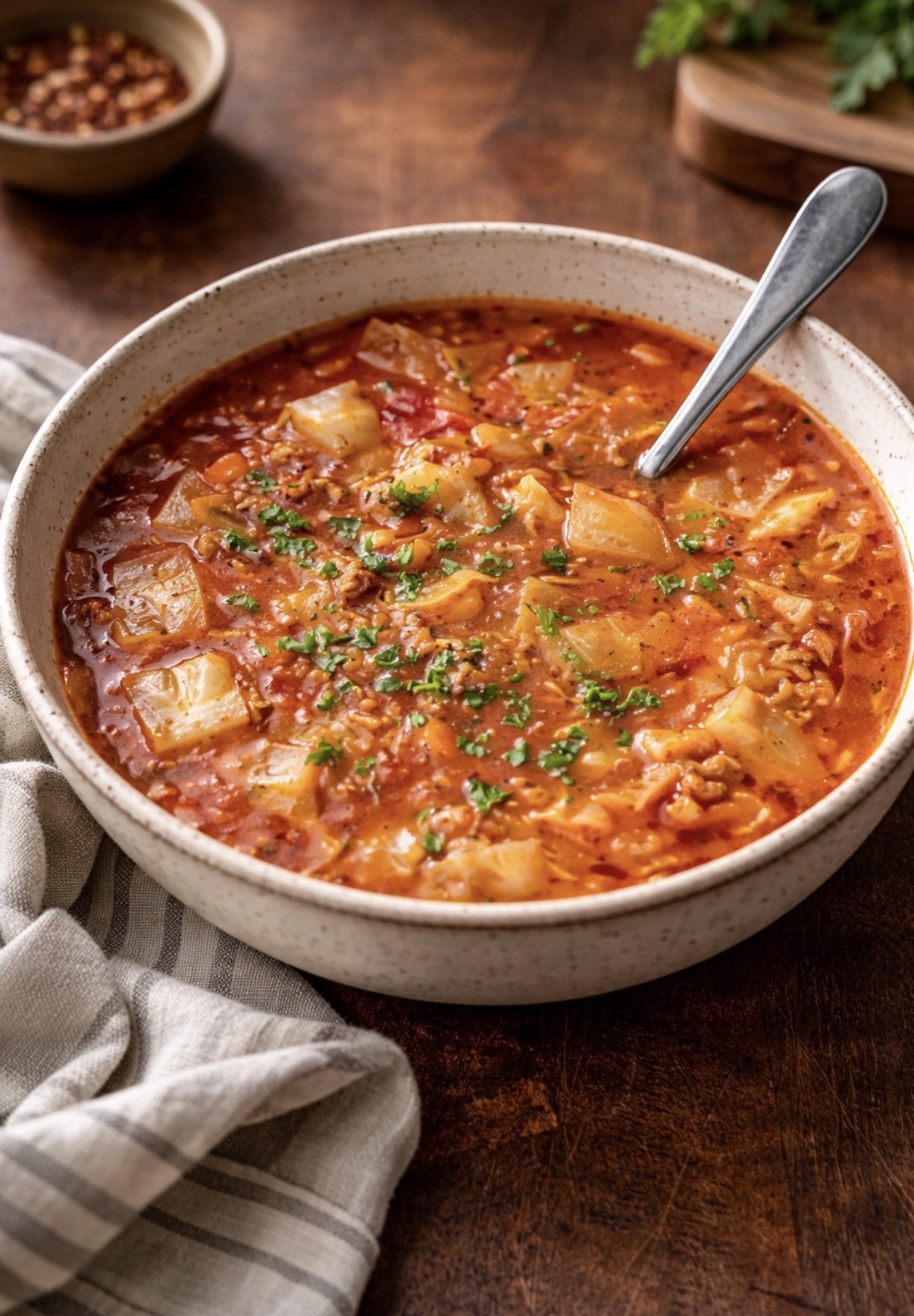
Golumpki soup is a one-pot Polish-American comfort soup made with ground beef, chopped cabbage, rice, and a sweet-tangy tomato broth that delivers all the flavor of traditional stuffed cabbage rolls without the rolling.
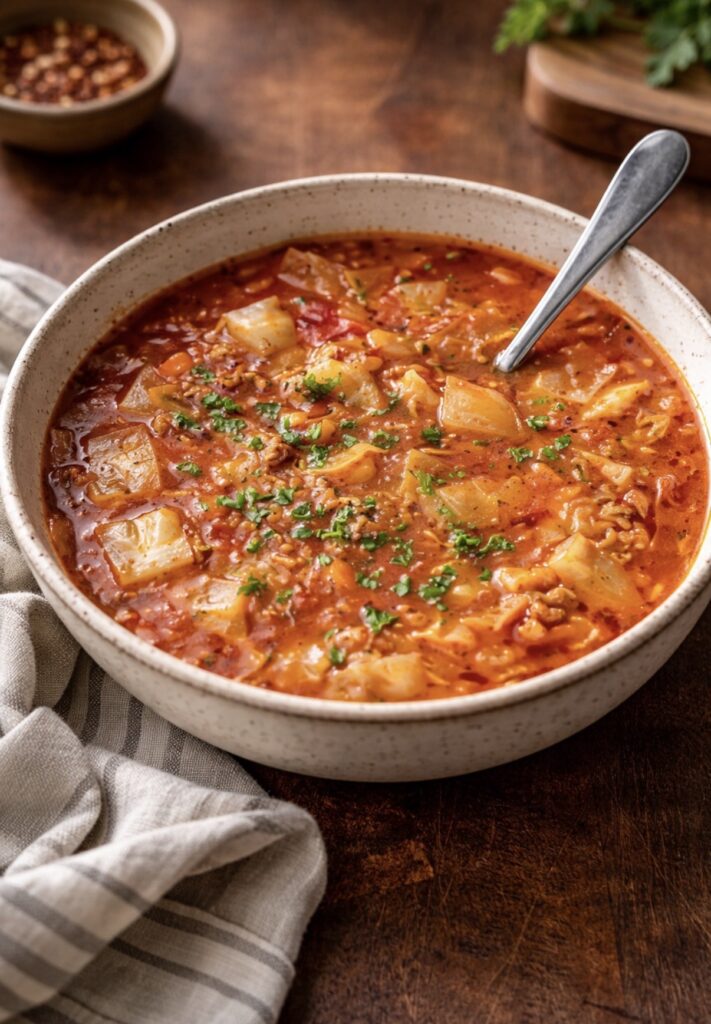
I grew up eating stuffed cabbage rolls at family dinners and always thought they were worth the effort. They are. But on a weeknight when I want that exact flavor without spending two hours in the kitchen, this soup is what I make instead.
Everything goes into one pot. The result tastes like someone’s Polish grandmother made it all day. It is even better the next day, which makes it one of my favorite things to batch cook on Sundays.
Table of Contents
Key Takeaways
- The sweet-tangy balance is the signature: brown sugar cuts the tomato acidity and Worcestershire sauce adds the savory depth that makes this taste like actual stuffed cabbage rolls
- Use a beef and pork combination if you can find it; that is the traditional approach and produces the richest flavor
- Cook rice separately and add it to individual bowls instead of directly to the pot if you plan to have leftovers
- Fire-roasted diced tomatoes make a noticeable difference over regular diced tomatoes
- This soup is better on day two and freezes well for up to 3 months
What Is Golumpki Soup?
Gołąbki (pronounced go-WOHMP-kee) are traditional Polish stuffed cabbage rolls. Blanched cabbage leaves are filled with a mixture of ground meat, rice, and onion, then simmered in tomato sauce. The word is the diminutive of the Polish word for pigeon, and the dish has been part of Polish cooking for centuries.
The soup version is a Polish-American adaptation, not a dish you would find in Poland. It takes the same filling ingredients and the same tomato-based sauce and turns them into a hearty one-pot soup with chopped cabbage instead of rolled leaves. The flavor profile is remarkably similar to the original, especially when you get the sweet-sour balance right.
This is comfort food in the truest sense. It is filling, deeply savory, and the kind of meal that makes your kitchen smell like something good is happening.
Golumpki Soup vs. Regular Cabbage Soup
These are not the same dish. Regular cabbage soup often has no meat, no rice, and a lighter broth.
Golumpki soup has ground meat, rice, and a rich tomato base, all of which are specifically chosen to replicate the flavor of stuffed cabbage rolls.
The brown sugar, Worcestershire, and paprika are what cross the line from generic cabbage soup into something that actually tastes like golumpki.
Ingredients You Need
Ground beef, 1 lb (85/15 lean-to-fat): The fat content matters here. Too lean and the soup tastes flat. Brown it well and leave the fond on the bottom of the pot. That browned crust flavors everything.
Ground pork, 1/2 lb (optional but recommended): The traditional Polish approach uses a beef and pork combination. The pork adds richness and juiciness that beef alone does not quite achieve. If you want to keep it simple, use 1.5 lbs of ground beef total.
Green cabbage, 1 small head (about 4 to 6 cups chopped): Chop it into rustic, bite-sized pieces. Do not shred it fine or it will disappear into the broth. You want to be able to see and taste the cabbage in every bowl.
Yellow onion, 1 medium (diced)
Garlic, 3 to 4 cloves (minced)
Diced tomatoes, 1 can (14.5 oz): Fire-roasted diced tomatoes are noticeably better here if you can find them. The slight char adds depth that regular diced tomatoes do not have.
Tomato sauce, 1 can (15 oz)
Beef broth, 4 to 6 cups (low-sodium): Start with 4 cups and add more as needed. I use Better Than Bouillon Roasted Beef Base instead of boxed broth and it makes a real difference. One teaspoon per cup of water and the flavor is noticeably richer.
Long-grain white rice, 1/2 cup (uncooked): See the rice note below before adding this to the pot.
Brown sugar, 1 to 2 tablespoons: This is not optional. It cuts the acidity of the tomatoes and gives the soup the distinctly sweet-tangy balance that makes it taste like actual stuffed cabbage rolls.
Worcestershire sauce, 1 tablespoon
Paprika, 1 to 2 teaspoons: Regular or smoked both work.
Dried oregano and thyme, 1 teaspoon each (or 1 teaspoon Italian seasoning)
Bay leaves, 2
Salt and black pepper to taste
Olive oil for browning
For serving: Sour cream and fresh parsley or dill. The sour cream is not optional. It makes it.
The Rice Problem (And How to Fix It)
This is the most important thing to know before you make this soup.
If you add uncooked rice directly to the pot, it will absorb liquid as the soup sits. By the time you eat leftovers the next day, you will have thick stew instead of soup. By the time you try to eat it on day three, the rice will have absorbed almost everything.
The fix is simple: cook the rice separately and add it to individual bowls, then ladle the soup over top. Store the rice and soup separately in the fridge. This makes the soup infinitely better for leftovers, meal prep, and freezing.
If you are only making this soup to eat right now with no plans for leftovers, adding the rice directly to the pot works fine. Just pull the soup off the heat when the rice is cooked through and serve it immediately.
How to Make It
Step 1: Brown the meat
Heat a tablespoon of olive oil in a large Dutch oven or heavy-bottomed pot over medium-high heat. Add the ground beef and pork. Cook for 5 to 7 minutes, breaking up the meat as you go, until deeply browned. Do not stir too early. Let the meat develop a crust on the bottom of the pot. Drain most of the fat, leaving about 1 tablespoon.
Step 2: Cook the aromatics
Add the diced onion to the pot and cook for 3 to 4 minutes until softened. Add the garlic and cook for 30 seconds more.
Step 3: Add the cabbage
Add the chopped cabbage and stir everything together. Cook for 3 to 4 minutes, stirring occasionally, until the cabbage just starts to wilt. It will look like a lot of cabbage. That is fine. It cooks down significantly.
Step 4: Build the broth
Add the diced tomatoes, tomato sauce, beef broth, Worcestershire sauce, brown sugar, paprika, oregano, thyme, and bay leaves. Stir everything together and bring to a boil.
Step 5: Simmer
If adding rice directly to the pot, add it now. Reduce heat to a simmer, cover, and cook for 25 to 30 minutes until the rice is tender and the cabbage is soft. If cooking rice separately, just simmer the soup covered for 20 to 25 minutes until the cabbage is fully tender.
Step 6: Taste and finish
Remove the bay leaves. Taste the soup and adjust seasoning. If it tastes too acidic, add a little more brown sugar. If it tastes flat, add salt and a splash more Worcestershire. A small splash of apple cider vinegar or lemon juice at the very end brightens the whole bowl.
Step 7: Serve
Ladle into bowls over a scoop of cooked rice if you cooked it separately. Top with a dollop of sour cream and fresh parsley or dill.
Tips for the Best Result
Do not rush the meat browning. Deeply browned meat creates fond at the bottom of the pot, and that fond is pure flavor. Scrape it up when you add the tomatoes and broth. If you just gray the meat without browning it, the soup will taste noticeably flatter.
Keep the cabbage pieces rustic. Cut the cabbage into roughly 1-inch pieces. Finer chops will dissolve into the broth and you will lose the texture contrast that makes the soup interesting.
Use a good pot. A wide, deep Dutch oven distributes heat evenly and gives the cabbage room to cook down. A Lodge Enameled Cast Iron Dutch Oven is my go-to for soups like this. The enamel coating means it is non-reactive with the tomatoes and easy to clean.
Taste before you serve. The balance of sweet, acidic, savory, and salty is what makes this soup taste like golumpki. If something feels off, taste deliberately: too acidic means more brown sugar; too sweet means more Worcestershire or a splash of vinegar; too flat means more salt; too thick means more broth.
Variations Worth Trying
Add kielbasa: Slice a 12 oz kielbasa and add it alongside the ground meat. This is the most popular Polish-inspired upgrade in comment sections and it works extremely well.
Slow cooker version: Brown the meat and aromatics on the stovetop first. Transfer everything except rice to the slow cooker. Cook on LOW for 6 to 8 hours or HIGH for 3 to 4 hours. Add cooked rice to bowls when serving.
Instant Pot version: Use the Sauté function to brown the meat and cook the aromatics. Add all remaining ingredients including uncooked rice. Pressure cook on HIGH for 5 minutes with a 10-minute natural release. Cabbage can overcook quickly under pressure, so check it before serving.
Turkey or pork sausage: Ground turkey or Italian sausage (casings removed) both work as lighter substitutions. The flavor will be milder with turkey; Italian sausage adds a different but good herbal note.
Keto version: Skip the rice entirely and add 1 cup of cauliflower rice in the last 5 minutes of simmering. The soup still tastes like golumpki without the rice and the cauliflower absorbs the broth beautifully.
What to Serve With It
Golumpki soup is a full meal on its own. If you want to round out the table, crusty rye bread or pumpernickel is the classic pairing. A simple cucumber and dill salad cuts through the richness nicely.
If you love this kind of hearty cabbage-based cooking, my Cabbage Dumplings Recipe is another great option from the same flavor family.
Blistered Cabbage Steaks Recipe
How to Store and Reheat
Store leftovers in an airtight container in the fridge for 3 to 5 days. The soup gets better on day two as the flavors meld. If you stored rice in the pot, the soup will thicken significantly. Just add a splash of beef broth when reheating and stir gently.
Freezing: Golumpki soup freezes well for up to 3 months. For best results, freeze the soup without rice and cook fresh rice when reheating. If you already added rice to the pot, it will soften when thawed but still tastes good. Thaw overnight in the fridge and reheat on the stovetop over medium-low heat with a little extra broth.
Conclusion
Golumpki soup works because it takes the same ingredients and flavor logic as traditional stuffed cabbage rolls and turns them into a weeknight one-pot meal. The brown sugar and Worcestershire are not optional extras. They are the reason this tastes like golumpki instead of generic tomato-beef soup. Get the balance right, brown your meat properly, and handle the rice the right way for leftovers. That is the whole recipe.
My family asks for this more than almost anything else I make. I hope yours does too.
FAQ
What does golumpki mean?
Golumpki (gołąbki in Polish) literally means “little pigeons.” It refers to traditional Polish stuffed cabbage rolls. The soup version takes the same filling ingredients and tomato-based sauce and turns them into a one-pot meal with chopped cabbage instead of rolled leaves.
Can I use ground turkey instead of ground beef?
Yes. Ground turkey produces a lighter, milder soup. Use 93/7 lean-to-fat for the best texture. The flavor will be less rich than beef and pork, so make sure to season generously and do not skip the Worcestershire sauce.
Why does my golumpki soup taste too acidic?
The brown sugar is doing the job of balancing the tomato acidity. If the soup tastes sharp or acidic, add brown sugar one teaspoon at a time until the flavor rounds out. A pinch more salt also helps balance perceived acidity.
My soup turned into stew overnight. What happened?
The rice absorbed the liquid while it sat. This is the most common golumpki soup problem. Going forward, cook rice separately and add it to individual bowls at serving time. Store the soup and rice in separate containers in the fridge.
Can I make golumpki soup ahead of time?
Yes and it is actually better after resting overnight. Make it up to 3 days ahead and refrigerate. Keep the rice separate. Reheat on the stovetop with a splash of extra broth to restore the consistency.
Is golumpki soup the same as cabbage roll soup?
They are the same concept with different names. Golumpki soup is the Polish-American name; cabbage roll soup is the more generic American term. Both describe the same dish: a deconstructed stuffed cabbage roll made into a tomato-based ground beef and rice soup.
Can I freeze golumpki soup?
Yes. It freezes well for up to 3 months. For best results, freeze the soup without rice and cook fresh rice when serving. Leave an inch of headspace in freezer containers and thaw overnight in the fridge before reheating.
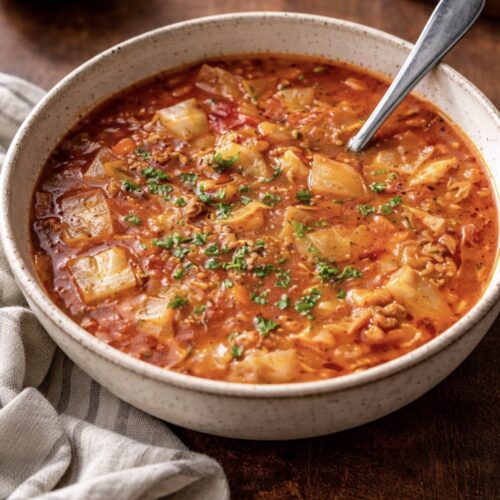
Golumpki Soup Recipe (Easy Stuffed Cabbage Soup)
Ingredients
- 1 lb ground beef (85/15)
- 1/2 lb ground pork (or use 1.5 lbs total ground beef)
- 1 small head green cabbage, chopped into 1-inch pieces (4 to 6 cups)
- 1 medium yellow onion, diced
- 3 to 4 cloves garlic, minced
- 1 can (14.5 oz) diced tomatoes, preferably fire-roasted
- 1 can (15 oz) tomato sauce
- 4 cups low-sodium beef broth
- 1/2 cup uncooked long-grain white rice (see rice note
- 1 to 2 tbsp brown sugar
- 1 tbsp Worcestershire sauce
- 1 to 2 tsp paprika
- 1 tsp dried oregano
- 1 tsp dried thyme
- 2 bay leaves
- Salt and black pepper to taste
- 1 tbsp olive oil
For serving
- Sour cream
- Fresh parsley or dill
Instructions
- Heat olive oil in a large Dutch oven over medium-high heat. Add ground beef and pork. Cook 5 to 7 minutes until deeply browned, breaking up the meat. Drain most of the fat, leaving about 1 tablespoon.
- Add diced onion. Cook 3 to 4 minutes until softened. Add garlic and cook 30 seconds.
- Add chopped cabbage. Stir and cook 3 to 4 minutes until just starting to wilt.
- Add diced tomatoes, tomato sauce, beef broth, Worcestershire sauce, brown sugar, paprika, oregano, thyme, and bay leaves. Stir well and bring to a boil.
- If adding rice directly to the pot, add it now. Reduce heat to low, cover, and simmer 25 to 30 minutes until rice is cooked through and cabbage is tender. If cooking rice separately, simmer covered for 20 to 25 minutes until cabbage is fully soft.
- Remove bay leaves. Taste and adjust: more brown sugar if too acidic, more salt if flat, more broth if too thick.
- Ladle into bowls over cooked rice if stored separately. Top with sour cream and fresh herbs.
Notes
Meat: Beef and pork combination is the traditional approach. All beef works fine if that is what you have.
Tomatoes: Fire-roasted diced tomatoes add noticeably more depth than regular. Crushed tomatoes (1 can, 28 oz) can replace both the diced tomatoes and sauce in a pinch.
Storage: Refrigerate up to 5 days. Freeze up to 3 months. Always add extra broth when reheating.

Cynthia Odenu-Odenu is the founder of Cyanne Eats. A registered nurse with a passion for food, she brings the same attention to detail from her professional life into the kitchen. From chain restaurant rankings to grocery finds and easy recipes, Cynthia covers it all and helps everyday food lovers eat better and spend smarter.