
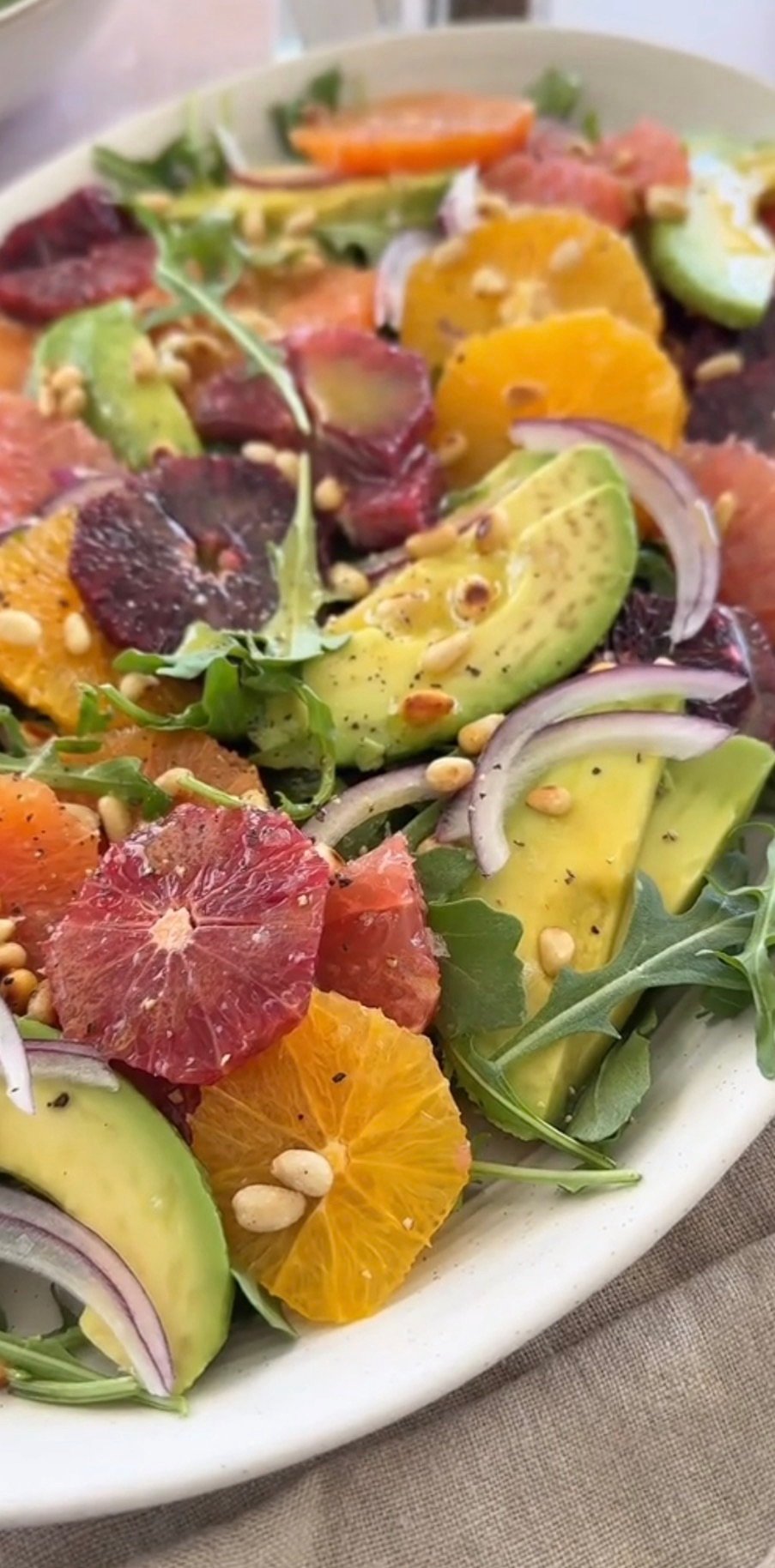
Avocado citrus salad is a winter salad made from segmented oranges or grapefruit, sliced ripe avocado, thin red onion, and peppery greens like arugula, tossed in a light citrus vinaigrette right before serving.
That combination sounds almost too simple to bother writing about, but most winter salads I tried before this one turned out too sweet, too watery, or just bland. Segmenting the citrus properly and adding the avocado at the very last minute are the two things that actually make it work every time.
I started making this one every January because I got tired of the same three soups on repeat, right around the same stretch when I’m usually trying to reset my grocery budget after the holidays. It’s the salad that actually makes me look forward to citrus season instead of just tolerating it until spring produce shows up.
This article covers how I actually build the salad, the two mistakes that took me a few tries to work out, and how to swap ingredients based on whatever citrus looks best at the store that week.
Key Takeaways
- Winter citrus (roughly December through February) is at peak sweetness right when avocados are cheap and plentiful, which is why this pairing works so well this time of year.
- Segmenting the citrus properly, cutting away every bit of white pith and membrane, is what keeps the salad from tasting bitter.
- Avocado goes in last, right before serving, tossed with the acidic dressing so it doesn’t brown on the plate.
- Arugula or baby spinach holds up better than delicate lettuces once the citrus juice starts pooling in the bowl.
- A handful of toasted nuts or seeds and a good flaky salt turn this from “diet food” into something I’d actually serve to guests.
Table of Contents
Why Winter Citrus and Avocado Actually Belong Together
Oranges, grapefruit, and blood oranges hit their best flavor from December through February, which happens to be exactly when heavier winter cooking makes a bright, acidic salad feel necessary. Avocado’s fat softens the citrus’s tartness instead of fighting it. The result tastes rich but doesn’t sit heavy the way a cream-based side dish does.
I also like that this salad barely needs a recipe once you understand the ratio. It’s roughly equal parts citrus and avocado, a small handful of thinly sliced onion, a big bed of greens, and just enough dressing to coat everything without drowning it.
How I Actually Build This Salad
- Segment the citrus first. Cut off both ends of the orange or grapefruit, then slice the peel and pith away in downward strips, following the curve of the fruit. Slice each segment free of its membrane, working over a bowl so you catch the juice.
- Slice the red onion paper thin. I soak mine in ice water for ten minutes while I do everything else. It takes the raw bite off without turning it soft.
- Whisk the dressing. Olive oil, a spoonful of the reserved citrus juice, a small drizzle of honey, a scrape of dijon mustard, salt, and pepper.
- Layer the greens on a platter. Arugula on its own is great, but I mix in baby spinach for volume so the peppery bite doesn’t take over the whole bite.
- Add the avocado and dressing last, right before you serve. This is the step I used to skip, and it’s the one that matters most. I slice it fast with an avocado slicer so it never sits around getting exposed to air.
- Finish with nuts, seeds, and salt. Toasted pistachios, sliced almonds, or pepitas all work.
For the segmenting step, a good citrus zester with a channel knife makes cleaner cuts than a regular paring knife, especially if you’re doing several oranges at once. I keep an OXO citrus zester with channel knife in the drawer specifically for winter citrus salads.
The Two Mistakes That Took Me a Few Tries to Fix
The avocado browned before I even got the salad to the table. I used to slice it early and let it sit while I finished everything else, and by the time dinner was on the table it had that dull gray edge nobody wants to eat around. Now avocado is the very last thing that goes in the bowl, and it gets tossed straight into the citrus dressing so the acid coats it immediately.
The salad tasted bitter and I couldn’t figure out why. It turned out I was leaving little bits of white pith and membrane stuck to my citrus segments, thinking a quick trim was close enough. Once I started cutting all the way to the flesh, following the curve of the fruit and slicing each segment fully free of its membrane, the bitterness disappeared completely and the salad actually tasted like what it was supposed to.
Orange vs. Grapefruit vs. Blood Orange in This Salad
I usually mix two of these rather than picking just one. Orange and grapefruit together give you sweetness and tartness in the same bite, which is more interesting than either fruit on its own.
| Citrus | Flavor in the salad | Best paired with |
| Navel orange | Sweet, mellow, the easiest starting point | Arugula, pistachios, feta |
| Grapefruit | Tart and a little bitter even when segmented well | Avocado, mint, honey dressing |
| Blood orange | Sweet with a berry note, best color on the plate | Fennel, red onion, olive oil |
| Cara cara orange | Sweet and slightly pink, less acidic than navel | Spinach, goat cheese, pepitas |
Ingredient Swaps That Actually Work
- Greens: arugula, baby spinach, or a spring mix if that’s what’s in the fridge. Iceberg and romaine are too watery and don’t hold the dressing.
- Crunch: toasted pistachios, sliced almonds, pepitas, or even crushed tortilla strips if you want something less predictable.
- Cheese: crumbled feta or goat cheese, though the salad is genuinely good without it if you’re keeping things dairy-free.
- Onion: shallot works if red onion is too sharp for your taste, and it’s milder once soaked.
- Sweetener in the dressing: honey, maple syrup, or skip it entirely if your citrus is sweet enough on its own.
This Salad Fixed My Winter Salad Rut
I’ll admit I got sick of salads for a while: every one felt like the same lettuce and cucumber routine I was eating out of obligation rather than actually wanting to eat. What changed things was leaning into contrast: something creamy, something tart, something crunchy, and enough salt that it actually tastes seasoned instead of virtuous.
A good pinch of flaky salt at the end makes a bigger difference here than people expect. I reach for Maldon sea salt flakes specifically because the crunch holds up against the soft avocado.
This isn’t a salad I eat because I have to. It’s one I actually crave once the weather turns, and I think that’s the real test of whether a “healthy” recipe is worth repeating.
Frequently Asked Questions
Can I make avocado citrus salad ahead of time?
You can segment the citrus and make the dressing up to a day ahead and store them separately in the fridge. Wait to slice the avocado and toss everything together until right before you serve it, or the avocado will brown and the greens will wilt.
What’s the best citrus for avocado citrus salad?
Navel oranges are the easiest starting point because they’re reliably sweet and simple to segment. Grapefruit and blood orange are great additions if you want more tartness or color.
How do I keep the avocado from browning in this salad?
Add the sliced avocado last and toss it directly with the acidic citrus dressing right before serving. The acid slows the browning enough that it holds its color through the meal.
Why does my citrus salad taste bitter?
Bitterness almost always comes from leftover white pith or membrane on the citrus segments. Cut all the way down to the flesh when you’re peeling and segmenting, and trim away any white bits you missed before adding the fruit to the bowl.
Can I turn this into a full meal instead of a side?
Yes, adding grilled chicken, shrimp, or a handful of chickpeas turns this into a filling lunch. I also like it alongside a piece of roasted salmon for dinner.
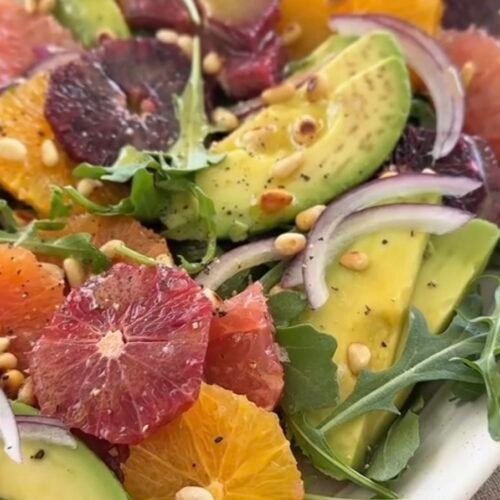
Avocado Citrus Salad Recipe
Ingredients
- 4 cups arugula, or a mix of arugula and babyspinach
- 2 navel oranges, segmented, juice reserved
- 1 grapefruit, segmented, juice reserved
- 1 ripe avocado, sliced
- ¼ small red onion, thinly sliced and soaked inice water 10 minutes
- ¼ cup 1/4 cup toasted pistachios or sliced almonds
- 2 tbsp olive oil
- 1 tbsp reserved citrus juice
- 1 tsp honey
- ½ tsp dijon mustard
- Flaky salt and black pepper, to taste
Instructions
- Segment the oranges and grapefruit over a bowl to catch the juice, cutting away all peel, pith, and membrane.
- Drain and pat dry the sliced red onion.
- Whisk together the olive oil, reserved citrus juice, honey, dijon, salt, and pepper.
- Arrange the greens on a platter or in a wide bowl.
- Top with the citrus segments and red onion.
- Right before serving, add the sliced avocado and drizzle everything with the dressing, tossing gently.
- Finish with toasted pistachios or almonds and a pinch of flaky salt.

Cynthia Odenu-Odenu is the founder of Cyanne Eats. A registered nurse with a passion for food, she brings the same attention to detail from her professional life into the kitchen. From chain restaurant rankings to grocery finds and easy recipes, Cynthia covers it all and helps everyday food lovers eat better and spend smarter.