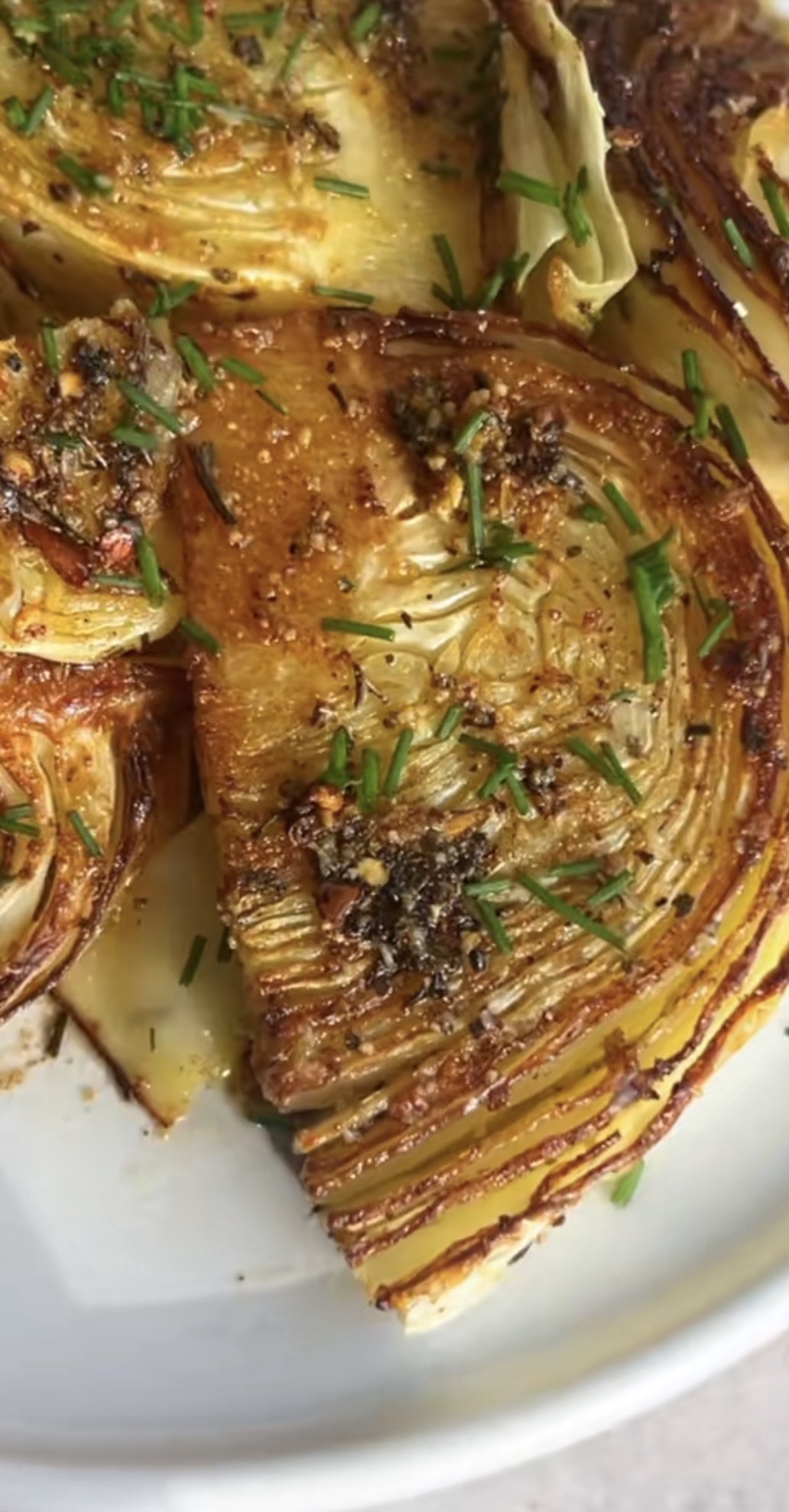
Blistered cabbage steaks are thick slices of green cabbage roasted at high heat until the outer leaves char and caramelize while the center turns fork-tender and sweet, served with a lemon-tahini drizzle or miso butter.
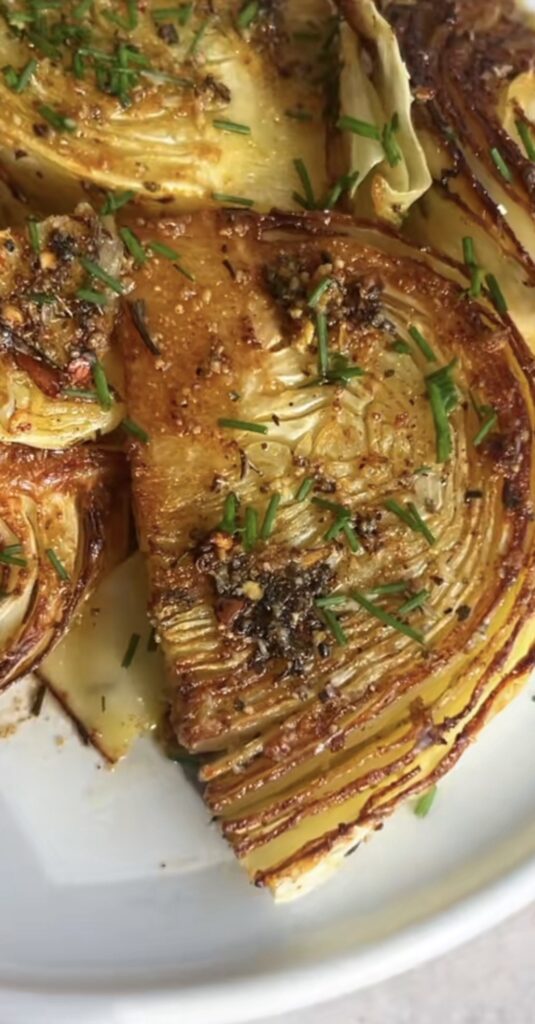
If you think you do not like cabbage, this recipe might change your mind. A whole head costs under $2. You slice it into thick rounds, brush both sides with seasoned olive oil, and roast at high heat until the edges blister and char into something that tastes nothing like boiled cabbage.
The outside gets crispy and slightly smoky. The inside turns silky and almost sweet from the caramelization. The whole thing takes 35 minutes on one pan.
Table of Contents
Key Takeaways
- Cut the steaks 1 inch thick and keep the core intact. The core holds the layers together during roasting. Remove it and the steak falls apart
- Pat the cabbage dry before oiling. Any moisture on the surface will steam the cabbage instead of blister it
- Use a hot oven, at least 400 degrees, and finish under the broiler for 2 minutes to get the dramatic charred edges
- Space the steaks apart on the pan. Crowding causes steaming, not browning
- The lemon-tahini drizzle is the finishing touch that makes these feel like a restaurant dish
Why High Heat Changes Everything
The sulfurous smell people associate with cooked cabbage comes from low, slow, wet cooking. That is boiled cabbage. Blistered cabbage steaks are the opposite.
High oven heat triggers the Maillard reaction, which browns the proteins on the surface. At the same time, it caramelizes the natural sugars in the cabbage leaves.
The result tastes nutty, slightly sweet, and faintly smoky. The inner layers steam gently in their own moisture while the exterior chars, so you get two textures in one slice.
The broiler finish at the end pushes that exterior char further without overcooking the interior. Two minutes under the broiler turns good cabbage steaks into great ones
Ingredients
Green cabbage, 1 large head: Look for a tight, dense head that feels heavy for its size. Loose, leafy heads fall apart. One head yields 4 to 6 steaks depending on size.
Olive oil, 3 tablespoons: Enough to coat both sides generously. Under-oiled cabbage dries out and does not brown properly.
Garlic powder, 1 teaspoon
Smoked paprika, 1 teaspoon: La Chinata Sweet Smoked Paprika is made from peppers slow-smoked over Spanish oak in the Extremadura region. The difference from standard paprika is noticeable. It adds a subtle woodsmoke flavor that works perfectly on caramelized cabbage.
Onion powder, 1/2 teaspoon
Red pepper flakes, 1/4 teaspoon
Kosher salt, 1 teaspoon
Black pepper, 1/2 teaspoon
For the lemon-tahini drizzle:
- Tahini, 3 tablespoons. Soom Premium Tahini is made from single-origin Ethiopian sesame seeds and has none of the bitterness that cheaper tahinis carry.
- Lemon juice, 2 tablespoons (about 1 lemon)
- Garlic, 1 clove, minced or grated
- Water, 2 to 3 tablespoons, to thin
- Salt to taste
Optional finishers: Freshly grated Parmesan, toasted pine nuts or pecans, fresh parsley, a drizzle of balsamic glaze.
How to Cut Cabbage Steaks (Without Them Falling Apart)
This is the most important step in the whole recipe.
Set the cabbage on a cutting board with the flat base down. Remove any damaged outer leaves. Using a sharp chef’s knife, cut vertically from top to bottom into 1-inch slabs, keeping each cut parallel.
You will get 4 to 6 full steaks from the center of the head plus a couple of outer pieces that are too loose to use as steaks.
The key is to cut through the core, not around it. Every steak should have a piece of the core at the bottom, because the core is what holds all the layers together during cooking. If you cut off the core, you will have a pile of loose leaves by the time the steak hits the oven.
The outer pieces that do not hold their steak shape are not wasted. Save them for the Cabbage Alfredo or add them to the Southern Cabbage Boil.
How to Make Blistered Cabbage Steaks
Step 1: Prep the oven and pan
Preheat the oven to 425 degrees. Place a rimmed baking sheet in the oven while it preheats. A hot pan creates an immediate sear on contact, which starts the browning process before the oven heat even reaches the top surface.
Line the pan with foil (not parchment). Foil conducts heat better and produces a more blistered bottom crust.
Step 2: Season the steaks
Pat each cabbage steak dry with a paper towel on both sides. Moisture is the enemy of char.
Mix the olive oil, garlic powder, smoked paprika, onion powder, and red pepper flakes in a small bowl until combined. A silicone basting brush makes this much easier than trying to pour oil evenly over cabbage. It gets into the grooves between the layers. Brush both sides of each steak generously. Sprinkle kosher salt and black pepper on both sides.
Step 3: Roast
Carefully pull the hot baking sheet from the oven. Arrange the steaks on the foil in a single layer with at least an inch of space between them. Do not crowd the pan.
Roast at 425 degrees for 20 minutes. Flip each steak carefully using a wide spatula, getting under the full surface rather than an edge. Roast for another 10 to 15 minutes until the exterior is deeply caramelized and the center is tender when pierced with a knife.
Switch the oven to broil and broil for 1 to 2 minutes until the top surface is charred in spots. Watch closely. There is a narrow window between charred and burnt.
Step 4: Make the lemon-tahini drizzle
While the steaks are in their final minutes, whisk together the tahini, lemon juice, minced garlic, and a pinch of salt in a small bowl. Add water one tablespoon at a time until the sauce is thin enough to drizzle but still has body. It should fall off a spoon in a slow, thick stream.
Step 5: Plate and serve
Transfer the cabbage steaks to a serving plate. Drizzle the tahini sauce over the top. Finish with any optional toppings: freshly grated Parmesan, toasted pine nuts, fresh parsley, or a drizzle of balsamic glaze.
Serve immediately.
Cooking Methods Compared
Oven roasting is the most reliable method, but it is not the only one. Here is how each approach compares:
| Method | Temp | Time | Result | Best For |
|---|---|---|---|---|
| Oven (this recipe) | 425°F | 30–35 min | Even browning, reliable blister | Everyday cooking, hands-off |
| Cast iron + oven | High stovetop + 400°F | 10 min + 25 min | Best crust of any method | Restaurant-quality results |
| Grill | 400–450°F | 8–12 min | Most char, smoky flavor | Summer BBQ |
| Air fryer | 380°F | 10–15 min | Good crispness, less drama | Quick weeknight cooking |
For the cast iron method: heat a dry skillet over medium-high until very hot, add a thin layer of high-smoke-point oil, and sear the oiled steaks 4 to 5 minutes per side without moving them. Finish in a 400-degree oven for 20 to 25 minutes.
Topping Variations
The lemon-tahini drizzle is the base recipe, but the same blistered steak works as a canvas for several directions.
Miso butter: Whisk together 2 tablespoons of Hikari Organic White Miso Paste, 2 tablespoons of softened butter, 1 teaspoon of sesame oil, and 1 teaspoon of rice vinegar. Brush over the steaks right out of the oven. The miso provides deep, salty umami that pairs exceptionally well with caramelized cabbage. Skip all added salt in the base seasoning when using this topping since miso is very salty on its own.
Balsamic and Parmesan: Drizzle Nonna Pia’s Balsamic Glaze over the hot steaks, then shave or grate Parmesan over the top. The sweet-acidic glaze cuts through the richness of the cheese and contrasts with the charred edges. This is the easiest finishing option with the most visual impact.
Hot honey: Drizzle honey mixed with a pinch of crushed red pepper over the finished steaks. The sweetness amplifies the caramelization and the heat plays against the smoky paprika in the seasoning.
Parmesan crust: For a crispier finish, try the TikTok method. Make small mounds of freshly grated Parmesan on a parchment-lined baking sheet, season and flatten them slightly, then press the oiled cabbage steaks on top. Roast until the cheese crisps into a golden frico crust beneath. Flip and roast 10 minutes more on the other side.
Troubleshooting
The steaks fell apart. The core was removed, the cabbage was cut too thin, or a loose-leafed cabbage was used. Always keep the core attached, use 1-inch thickness, and choose a very tight, heavy head.
The cabbage steamed instead of blistered. The pan was crowded, the cabbage was wet before oiling, or the oven temperature was too low. Space steaks at least 1 inch apart, always pat dry first, and use at least 400 degrees.
The outside burned before the center softened. The steaks were too thick or the oven was too hot. Stick to 1-inch thickness and check with a knife at the 30-minute mark.
The steaks taste bitter. A splash of lemon juice or balsamic vinegar at the end neutralizes the bitterness. Adding a little honey to the seasoning oil also helps.
The tahini drizzle seized up into a paste. Add more water and whisk vigorously. Tahini tightens when it first contacts cold liquids and then loosens again as you keep adding water. Add it one tablespoon at a time.
What to Serve With Blistered Cabbage Steaks
These work as a side dish alongside roasted chicken, grilled salmon, lamb chops, or a simple grain bowl. They also hold up well as a vegetarian main when served with the tahini drizzle, a handful of toasted chickpeas, and warm pita.
For more ways to use cabbage, the 15 Best Cabbage Recipes roundup has everything from dumplings to alfredo to a Southern boil. If you want something rich and saucy on the stovetop, the Southern Cabbage Boil simmers chopped cabbage with smoked sausage and bacon in a savory pot likker. For a pasta-style twist, the Cabbage Alfredo uses shredded cabbage as the base for a buttery Parmesan sauce.
Storage and Reheating
Store leftovers in an airtight container in the refrigerator for up to 4 days. Store the tahini drizzle separately so it does not make the steaks soggy.
The steaks will lose their crispness overnight. To restore some texture, reheat in a 350-degree oven for 6 to 8 minutes or in an air fryer at 375 degrees for 3 to 4 minutes. A microwave reheats them quickly but eliminates any crispness entirely.
The Best Cabbage Cuts for Steaks
A round head of cabbage yields more steaks and holds together better than an oval head. Buy the heaviest, densest head you can find. Heads that feel light for their size have looser leaf structure and will fall apart. Avoid pre-cut or “convenience cut” halves, which cannot yield proper steaks.
The outer pieces you cannot use as steaks are the tastiest parts for other applications. The looser outer leaves get more direct heat and caramelize the deepest. Chop them and add to soups, stir fries, or grain bowls.
Conclusion
Cabbage is one of the most underrated vegetables in the grocery store. It costs almost nothing, keeps well in the refrigerator, and works in more ways than most people use it.
Blistering it at high heat is the preparation that shows what it can actually do. The char, the caramelization, the contrast of crispy edges and silky center. None of that happens any other way.
If someone in your house says they do not like cabbage, make these first
FAQ
Why do my cabbage steaks fall apart?
The most common cause is cutting through or removing the core. Every steak needs a section of core at the bottom to hold the layers together during cooking. Cutting the steaks thinner than 3/4 inch also increases the risk of falling apart, as does using a loose-leaf head of cabbage instead of a tightly packed one.
Do I need to remove the core from cabbage steaks?
No, and you should not. The core holds the steak together. Slice straight through it when cutting your steaks. The core becomes tender during roasting at 425 degrees and is completely edible.
What is the best temperature for roasting cabbage steaks?
400 to 425 degrees Fahrenheit. Lower temperatures cause the cabbage to steam rather than blister. The high heat is what triggers the Maillard reaction and caramelization that gives blistered cabbage steaks their nutty, slightly smoky flavor.
How do I stop cabbage steaks from being soggy?
Pat the cabbage completely dry before brushing with oil. Any moisture on the surface will create steam in the oven rather than allowing the surface to char. Also space the steaks at least 1 inch apart on the baking sheet. Crowding creates steam from neighboring pieces.
Can I make blistered cabbage steaks in the air fryer?
Yes. Slice to 3/4 inch instead of 1 inch, brush with the seasoned oil, and air fry at 380 degrees for 10 to 15 minutes. The result is crispy but has less dramatic char than the oven method.
Are cabbage steaks good for keto or low carb diets?
Yes. One cup of cooked cabbage has about 5 grams of net carbs. The base recipe with olive oil and spices is naturally keto. The lemon-tahini drizzle adds a small amount of carbs from the tahini. Avoid the balsamic glaze variation if strict keto, as balsamic contains sugar.
Blistered Cabbage Steak Recipe
Ingredients
Cabbage steaks
- 1 large head green cabbage (tight and heavy)
- 3 tbsp olive oil
- 1 tsp garlic powder
- 1 tsp smoked paprika
- 1/2 tsp onion powder
- 1/4 tsp red pepper flakes
- 1 tsp kosher salt
- 1/2 tsp black pepper
Lemon-tahini drizzle
- 3 tbsp tahini
- 2 tbsp lemon juice
- 1 clove garlic, minced
- 2 to 3 tbsp water
- Pinch of salt
Optional toppings
- Parmesan, toasted pine nuts or pecans, fresh parsley, balsamic glaze
Instructions
- Preheat oven to 425 degrees. Place a foil-lined rimmed baking sheet in the oven to preheat.
- Slice cabbage into 1-inch rounds through the core. Pat both sides completely dry.
- Mix olive oil with garlic powder, smoked paprika, onion powder, and red pepper flakes. Brush generously on both sides of each steak. Season with salt and pepper.
- Remove hot baking sheet from oven. Arrange steaks with at least 1 inch of space between them.
- Roast 20 minutes. Flip carefully with a wide spatula. Roast 10 to 15 more minutes until deeply caramelized and tender.
- Broil 1 to 2 minutes for charred edges. Watch closely.
- Whisk tahini, lemon juice, garlic, and water until smooth and pourable. Add water one tablespoon at a time.
- Plate steaks, drizzle with tahini sauce, and add any optional toppings.
Notes

Cynthia Odenu-Odenu is the founder of Cyanne Eats. A registered nurse with a passion for food, she brings the same attention to detail from her professional life into the kitchen. From chain restaurant rankings to grocery finds and easy recipes, Cynthia covers it all and helps everyday food lovers eat better and spend smarter.