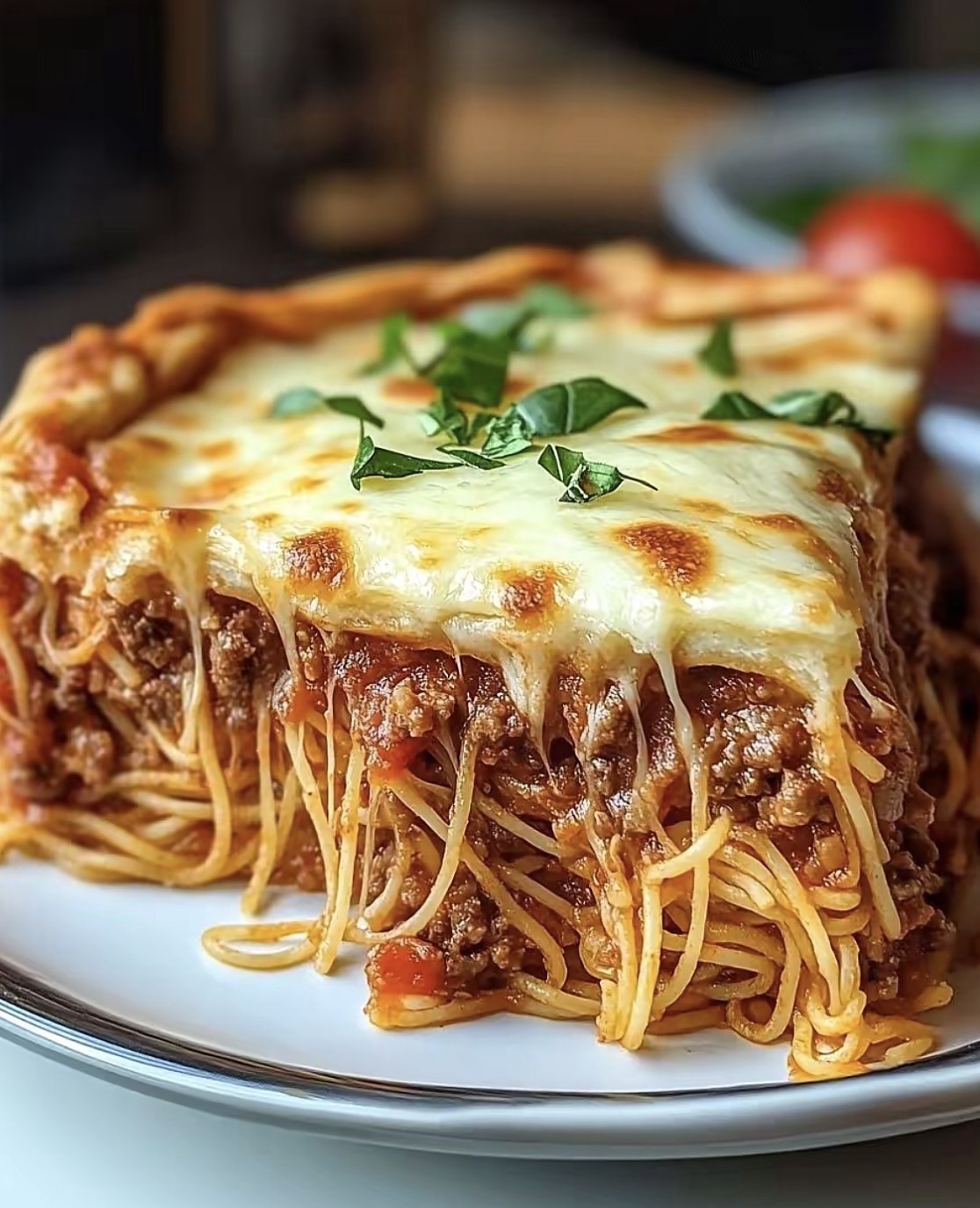
Leftover spaghetti pie is cooked spaghetti bound with egg, butter, and Parmesan to form a crust in a pie dish, then layered with ricotta, meat sauce, and mozzarella and baked until golden and sliceable.
This is the recipe that makes you glad you saved the leftover pasta. Cold spaghetti works better here than fresh because the surface starches have set and the noodles grip the egg mixture more firmly. The result is an actual sliceable pie with clean wedges, a golden crust on the bottom, and a cheesy, saucy filling that tastes like a baked ziti and a lasagna decided to share a pan.
The whole thing takes about 45 minutes including bake time, and most of the work is assembling layers. If you have leftover spaghetti and a jar of marinara, you have dinner.
Table of Contents
Key Takeaways
- Do not rinse the leftover spaghetti before using it. The surface starch is what helps the noodles grip the egg mixture and hold the crust together
- Cold pasta actually works better than warm. Room temperature or refrigerator-cold spaghetti is ideal
- Press the noodle mixture firmly up the sides of the pan, not just the bottom. That is what creates the pie crust shape
- Rest the pie for at least 10 minutes before slicing. Cutting too soon produces a cheesy avalanche instead of clean wedges
- If the ricotta or cottage cheese looks very wet, drain it in a mesh strainer for 10 minutes before using
The Ratio That Makes It Work
Two eggs, half a cup of Parmesan, and two tablespoons of butter for every half-pound of cooked spaghetti. That is the binding formula. The eggs coagulate in the oven and glue the noodle surfaces together, the Parmesan adds salt and structure, and the butter keeps the crust from drying out.
This ratio holds across decades of recipes and it works every time. Memorize it and you can make spaghetti pie without looking anything up.
Ingredients
Cooked leftover spaghetti, 8 oz (about 4 cups): Cold from the refrigerator is ideal. If the spaghetti already has sauce on it from the previous night, that is fine and will add flavor to the crust.
Eggs, 2 large: Room temperature. These are the binding agent for the crust. Do not skip or reduce them.
Parmesan cheese, 1/2 cup, freshly grated: Freshly grated melts into the crust better than pre-shredded. Pre-shredded is coated in cellulose and does not bind properly.
Unsalted butter, 2 tablespoons, melted
Ricotta cheese, 1 cup: Full-fat gives the cleanest, densest filling layer. If using cottage cheese instead, drain it in a mesh strainer first to remove excess moisture.
Meat sauce, 1.5 to 2 cups: Leftover meat sauce is perfect here. If making fresh, brown half a pound of ground beef with a diced onion and two minced garlic cloves, drain the fat, and simmer with a jar of marinara for 10 minutes. Rao’s Homemade Marinara is worth using here. It is thick enough that it does not flood the crust, and the clean ingredient list means the flavor comes through clearly.
Mozzarella cheese, 1.5 cups shredded: Half goes in with the ricotta layer, half goes on top.
Italian seasoning, 1 teaspoon
Garlic powder, 1/2 teaspoon
Salt and black pepper
What Pan to Use
A 9-inch deep-dish pie plate is the standard vessel. Deep-dish matters because you need enough height to build the three layers without the filling overflowing.
Ceramic holds heat more evenly than glass and produces a crispier noodle crust on the bottom. A 9-inch Emile Henry Pie Dish is the best ceramic option at this price point. It is made in France from HR ceramic, oven-safe to 500 degrees, and goes straight from oven to table without looking like a casserole dish.
A springform pan also works and lets you unmold the pie completely for a dramatic presentation. If using a springform, line the base with parchment before pressing in the noodles.
How to Make Leftover Spaghetti Pie
Step 1: Prep the crust mixture
Preheat the oven to 350 degrees. Grease a 9-inch deep-dish pie plate generously with butter or cooking spray.
In a large bowl, whisk together the 2 eggs, melted butter, grated Parmesan, Italian seasoning, garlic powder, and a pinch of salt. Add the cold leftover spaghetti and toss until every strand is coated.
Step 2: Form the crust
Transfer the noodle mixture to the greased pie plate. Use the back of a spoon or your hands to press the noodles firmly into the bottom and up the sides of the dish, creating a wall about 1 inch high. The sides are the most important part. Press firmly and make sure there are no gaps.
Step 3: Add the ricotta layer
Mix the ricotta with half the shredded mozzarella and a pinch of salt. Spread this mixture evenly over the noodle crust in a single smooth layer, going all the way to the noodle walls.
Step 4: Add the meat sauce
Spoon the meat sauce over the ricotta layer. Spread it evenly but do not press down. You want the ricotta and sauce to stay as separate layers rather than mixing together.
Step 5: Add the top cheese
Sprinkle the remaining mozzarella evenly over the meat sauce.
Step 6: Bake
Bake uncovered at 350 degrees for 20 to 25 minutes until the edges are set and the cheese is beginning to bubble. The center should look mostly set when you nudge the pan.
Add a tent of foil if the cheese is browning faster than the pie is setting.
Step 7: Rest and slice
Remove from the oven and let the pie rest on a wire rack for 10 to 15 minutes. This is non-negotiable. The layers need time to firm up. Cut into wedges and serve.
Using Leftover Spaghetti vs. Cooking Fresh
Leftover spaghetti is better for this recipe. The surface starches have gelled after chilling, which gives the noodles a tackier texture that grips the egg mixture. The result is a firmer crust that holds its shape when sliced.
Freshly cooked spaghetti works but produces a softer crust. If cooking fresh, cook the pasta just to al dente, drain it without rinsing, spread it on a baking sheet for 5 minutes to cool slightly, then proceed with the recipe. Never use spaghetti that is still steaming hot because it will partially scramble the eggs.
Leftover spaghetti that is already sauced is completely fine. The sauce absorbed into the noodles adds flavor to the crust. Just be aware that a saucy leftover will produce a slightly softer bottom crust than plain noodles.
Variations
Muffin tin version: Use the same recipe and press the noodle mixture into the wells of a greased 12-cup muffin pan. Fill each well about halfway with noodles, top with a small spoonful of ricotta mixture, then sauce, then cheese. Bake at 350 degrees for 30 minutes. The muffin version freezes well individually and reheats in under 2 minutes in the microwave.
Vegetarian version: Replace the meat sauce with a combination of sautéed bell pepper, onion, mushrooms, and zucchini simmered in marinara. The texture and layering work exactly the same way.
Cottage cheese instead of ricotta: Drain the cottage cheese thoroughly in a mesh strainer for at least 10 minutes before using. Cottage cheese produces a tangier, slightly looser filling. Full-fat cottage cheese holds together better than low-fat.
Extra cheesy: Add a thin layer of shredded Parmesan between the ricotta and meat sauce layers. More cheese between layers means the whole thing holds together more cleanly when sliced.
Troubleshooting
The crust fell apart when sliced. Either the pie was not rested long enough or the egg ratio was off. Always rest 10 to 15 minutes before cutting. Make sure you used 2 full eggs for every 8 oz of pasta.
The bottom is soggy. The pasta was too wet going in, or the sauce was too thin. Drain leftover spaghetti briefly if it is swimming in sauce. Use a thick marinara. Bake uncovered so steam can escape.
The filling is watery. The ricotta or cottage cheese was not drained. Always drain wet cheese before using. Also make sure the meat sauce is cooked down enough to be thick rather than pourable.
The cheese browned too fast. Tent loosely with foil for the last 10 minutes of baking.
More Ways to Use Leftover Spaghetti
If you liked this recipe, two more ways to use up leftover pasta are worth bookmarking.
The Leftover Spaghetti Frittata is even faster. Leftover noodles mixed with eggs and cheese, cooked in a skillet and finished under the broiler in about 20 minutes.
For the pasta that started it all, the Dirty Spaghetti Recipe is the viral Cajun-spiced pasta that is worth making on purpose so you have leftovers to work with.
Make-Ahead and Storage
Make-ahead: Assemble the pie completely and refrigerate up to 24 hours before baking. Add 10 minutes to the bake time if it goes in cold. If refrigerating for more than a day, hold back the meat sauce and add it just before baking so the tomato acid does not soften the noodle crust overnight.
Refrigerator: Store baked leftovers covered for 3 to 5 days.
Freezer: Freeze before or after baking, wrapped tightly in foil, for up to 3 months. Thaw overnight in the refrigerator before baking or reheating.
Reheating: Microwave individual slices for 90 seconds. For the whole pie, cover with foil and reheat at 325 degrees for 20 to 25 minutes until warmed through.
Conclusion
Spaghetti pie is one of those recipes that earns more respect the more you make it. The technique is simple, the ratio is fixed, and the result is something that slices cleanly and tastes better than plain reheated pasta. It is the best possible use of leftover spaghetti and one of the easiest ways to stretch pasta into a second meal that does not feel like a second meal.
FAQ
Can you make spaghetti pie with leftover spaghetti that already has sauce?
Yes. Sauced leftover spaghetti works fine and adds flavor to the crust. The crust will be slightly softer than one made with plain noodles because the sauce keeps the pasta moist. Make sure the sauce is not so thick and heavy that it makes the mixture hard to press into the pan.
Does spaghetti pie need to be refrigerated overnight?
No. You can bake it the same day you assemble it. If you do refrigerate it assembled overnight, add 10 minutes to the bake time and hold the meat sauce until just before baking to protect the noodle crust from the tomato acid.
What is the difference between spaghetti pie and baked spaghetti?
Spaghetti pie uses the egg and Parmesan binding technique to form an actual crust that holds its shape when sliced. Baked spaghetti is typically everything combined in a casserole dish and baked together without the structural crust step. Spaghetti pie slices like a pie. Baked spaghetti scoops like a casserole.
Can I use a regular pie dish instead of deep-dish?
A regular pie dish works but the filling may overflow if you use the full amounts listed. Reduce the filling quantities slightly or use the shallower amounts, making sure to build a taller noodle wall at the edges to contain everything.
How do you keep spaghetti pie from falling apart?
Two steps matter most. First, use the correct egg ratio of 2 eggs per 8 oz of pasta. Second, rest the baked pie for at least 10 minutes before slicing. Cutting too soon is the most common cause of spaghetti pie falling apart.
Can you freeze spaghetti pie?
Yes. Wrap the assembled or baked pie tightly in foil and freeze up to 3 months. Thaw overnight in the refrigerator before baking or reheating.
Leftover Spaghetti Pie Recipe
Ingredients
Crust
- 8 oz cooked leftover spaghetti (about 4 cups), cold
- large eggs
- 2 tbsp unsalted butter, melted
- 1/2 cup Parmesan cheese, freshly grated
- 1 tsp Italian seasoning
- 1/2 tsp teaspoon garlic powder
- Salt and black pepper to taste
Filling
- 1 cup ricotta cheese, full-fat
- 1.5 cup shredded mozzarella, divided
- 1.5 to 2 cup meat sauce (leftover or fresh)
Instructions
- Preheat oven to 350 degrees. Grease a 9-inch deep-dish pie plate well.
- Whisk eggs, melted butter, Parmesan, Italian seasoning, garlic powder, salt, and pepper in a large bowl. Add cold spaghetti and toss to coat every strand.
- Press noodle mixture firmly into the pie plate, covering the bottom and pushing up the sides about 1 inch.
- Mix ricotta with 3/4 cup of the mozzarella and a pinch of salt. Spread evenly over the noodle crust.
- Spoon meat sauce evenly over the ricotta layer. Top with the remaining mozzarella.
- Bake uncovered 25 to 30 minutes until edges are set and cheese is bubbly.
- Rest 10 to 15 minutes before slicing into wedges.
Notes

Cynthia Odenu-Odenu is the founder of Cyanne Eats. A registered nurse with a passion for food, she brings the same attention to detail from her professional life into the kitchen. From chain restaurant rankings to grocery finds and easy recipes, Cynthia covers it all and helps everyday food lovers eat better and spend smarter.