
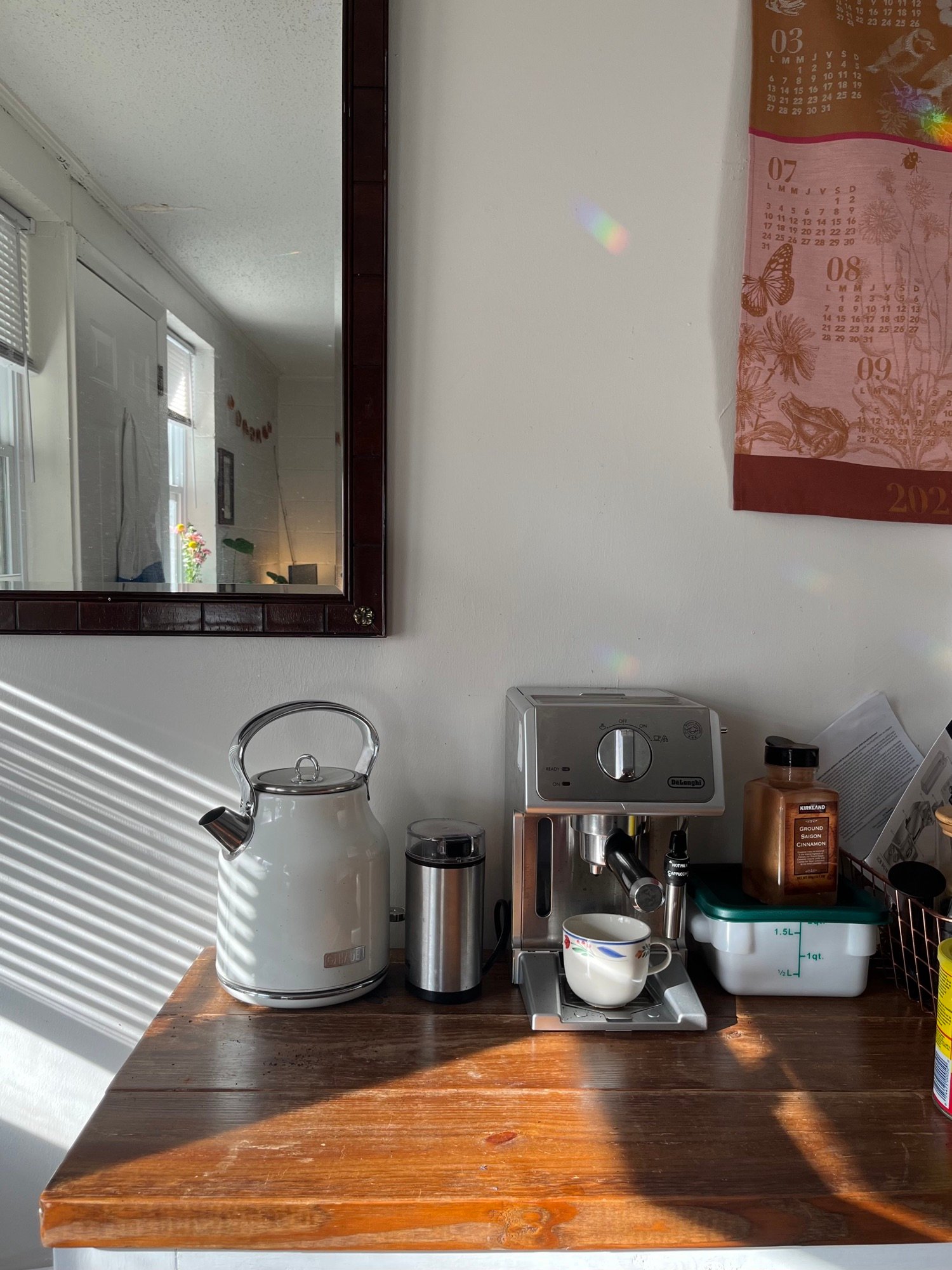
The kitchen essentials you actually need for a first apartment or dorm are one good nonstick pan, a stockpot-sized pot, a sharp knife, a cutting board, nesting mixing bowls, stackable storage containers, and a couple of appliances picked around what your space actually allows, not a 20-piece boxed set you’ll use twice and forget.
I moved into my first apartment with a stack of hand-me-down pots that didn’t match and a knife so dull it basically just bruised tomatoes instead of cutting them. It took me longer than I’d like to admit to realize the problem wasn’t my cooking. It was the gear.
A couple of years later I helped my younger cousin pack for her freshman dorm, and watching her nearly buy a full 12-piece cookware set for a room with a microwave and a mini fridge is what convinced me this list needed to exist. Half of that set would have sat in a box under her bed all year.
This isn’t a registry. It’s the short list of stuff that earns actual cabinet space when every square inch matters, plus the handful of things I’d tell anyone to skip no matter how good the sale looks.
Key Takeaways
- The biggest mistake is buying a full boxed cookware set instead of the handful of pieces you’ll actually reach for every week
- Check your housing handbook before you buy any appliance with a heating coil, since air fryers, hot plates, and toasters are commonly banned in dorms even though small microwaves and rice cookers usually aren’t
- One pan that goes from a dorm hot plate to a real stovetop is worth more than three specialty pans that only do one thing
- A first apartment with a real stove and oven can support a couple of small appliances a dorm room legally can’t have
- Storage containers that stack matter more than how many pieces come in the set, since mini fridges have almost no shelf height to spare
- Secondhand and hand-me-down cookware works exactly as well as new, as long as the nonstick coating isn’t scratched up
Table of Contents
Check Your Housing Rules Before You Buy Anything
This is the mistake I see people make over and over, and it’s an easy one to avoid. Most colleges publish an exact list of what’s allowed in a dorm room, and it’s worth reading before you order anything with a cord.
Appliances with an open coil or exposed heating element are almost always banned for fire safety, which rules out more than people expect:
- Usually allowed: small microwaves (700 watts or less is a common cutoff), rice cookers, coffee makers, and electric kettles, as long as they’re UL-approved and plugged straight into the wall
- Commonly banned: hot plates, toasters, air fryers, electric skillets, griddles, and anything with an open flame or exposed coil
None of this applies once you’re in a first apartment with a real kitchen. That’s the split this list works around: some items belong on every kitchen counter no matter where you live, and a few only make sense once you have an actual stove.
If you’re also mapping out what a semester of groceries actually costs, I broke down a full week of it in my back-to-school lunch meal plan, and the kitchen gear below is a one-time cost that plays into that same budget.
11 Dorm and First-Apartment Kitchen Essentials That Actually Get Used
These are ordered roughly by how often I’d reach for each one, not by price. A few are dorm-legal on their own, a few need a real kitchen, and I’ve flagged which is which.
1. A Pan That Can Actually Do Everything
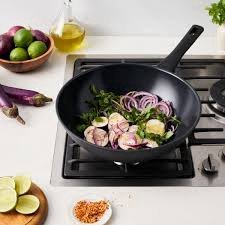
Skip the three-pan starter set and buy one good nonstick pan instead. A 12-inch one handles eggs, a quick stir-fry, a grilled cheese, and a pan sauce without you needing anything else within reach.
The ZWILLING Madura Plus 12-inch nonstick stir-fry pan is the one I’d point a first-apartment kitchen toward if you can stretch the budget, since the coating holds up to real daily use in a way the bargain bin versions don’t. If money’s tight this year, any decent 10 to 12-inch nonstick pan from a regular store brand will get you through, and you can upgrade once you’ve got a paycheck behind you.
2. A Stockpot-Sized Pot for Pasta, Soup, and Rice in a Pinch
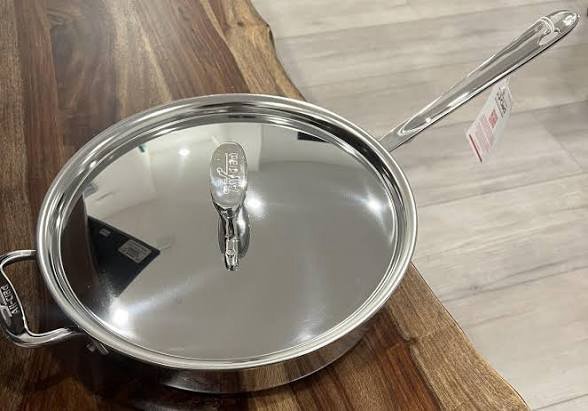
You need exactly one pot big enough to boil pasta or simmer a pot of soup, and a 3-quart saucepan covers both jobs for one or two people without taking up half your cabinet. Anything bigger is dead weight until you’re regularly cooking for a crowd.
This is the pot I’d reach for to make a one-pot dinner like my southern cabbage boil, which scales down easily for a dorm-sized kitchen and doesn’t need a single specialty tool beyond the pot itself.
3. One Actually Sharp Knife
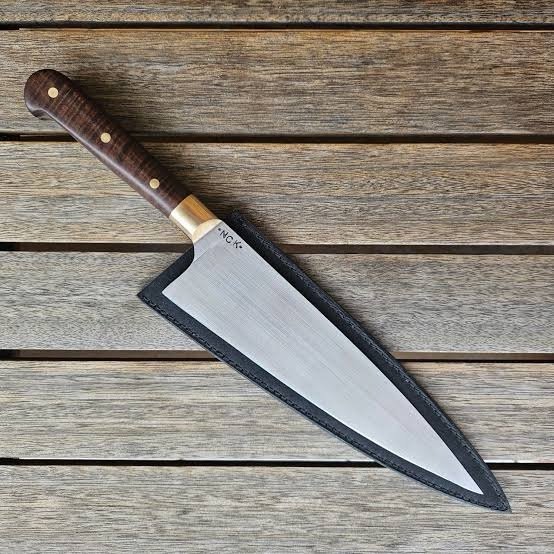
A dull knife is more dangerous than a sharp one because it slips instead of cutting cleanly, and it makes every single dinner take twice as long. A single 8-inch chef’s knife handles at least 90 percent of what you’ll ever cut, from onions to chicken breast to a block of cheese.
Skip the 15-piece knife block entirely. A cheap paring knife for small jobs and one good chef’s knife will outperform a full set of knives you’ll never sharpen. Skip novelty blades too. I’ve seen people try to press a kiridashi knife into kitchen duty because it looks impressively sharp, but it’s built for woodworking, not food, and it won’t hold up as a produce knife.
4. A Plastic Cutting Board You’re Not Afraid to Toss in the Dishwasher
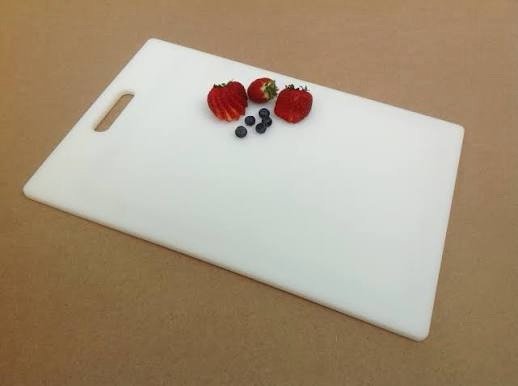
Wood boards look nicer, but a large plastic cutting board is dishwasher-safe, doesn’t need oiling, and doesn’t mind sitting wet in a communal sink for a few hours before someone gets to it. That last part matters more than it sounds like it should in a shared kitchen.
Get one big enough to actually fit a chicken breast and a pile of vegetables without them sliding off the edge onto the counter.
5. Nesting Mixing Bowls That Double as Serving and Storage
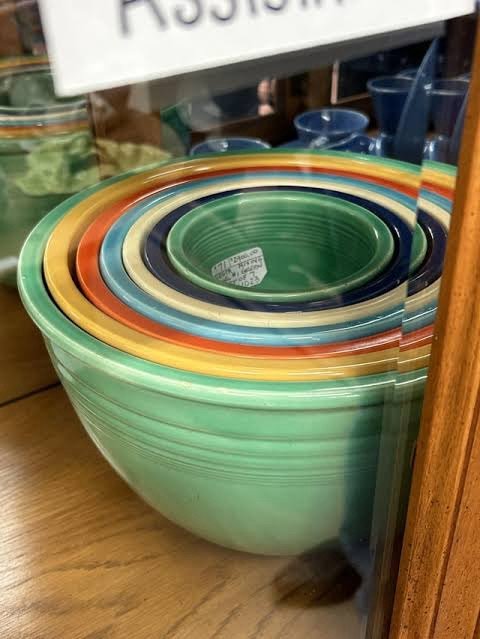
A set of nesting mixing bowls does triple duty: mixing a marinade, serving popcorn for movie night, and holding leftovers with a plate on top when you’re out of lids. Nesting matters more here than in a full-size kitchen, since they stack down to almost nothing in a small cabinet.
I still use the same set I bought for my first apartment years later, which says more about how little you actually need to replace this kind of gear than anything else on this list.
6. Stackable Storage Containers That Actually Fit a Mini or Shared Fridge
This is where most starter kits get it wrong. They throw in a mismatched pile of container shapes that don’t stack, so half your fridge shelf goes to waste around oddly shaped lids. Glass containers that are designed to stack solve that, and glass also means you can reheat leftovers straight in the container without transferring them to a plate first.
If you’re trying to get more organized about eating well on a schedule, my guide to meal prepping for busy weeks leans on exactly this kind of container to make the whole system work without extra dishes.
7. A Mini Rice Cooker, If Your Dorm Allows It
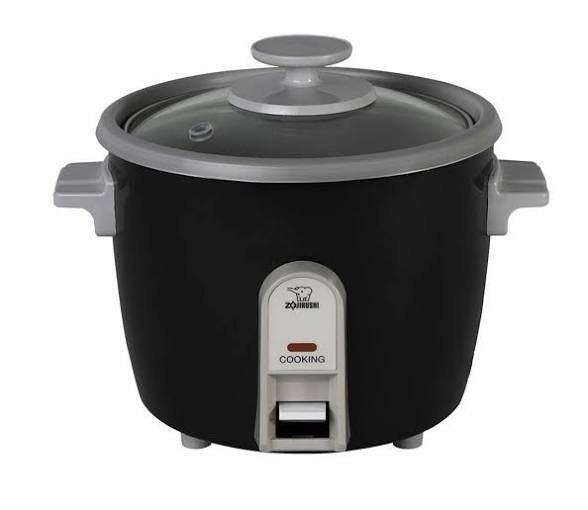
Rice cookers show up on almost every allowed-appliance list because they don’t have an open coil, and they’re one of the lowest-effort ways to eat something other than cereal for dinner. Dump in rice and water, hit the button, and walk away.
A compact one-to-three-cup model is the right size for a single dorm resident, and the Zojirushi Rice Cooker & Steamer is the one I’d actually point you toward. Zojirushi’s been making rice cookers for decades, and the difference shows up in how evenly it cooks instead of leaving a crunchy layer on the bottom. If you’d rather shop somewhere more familiar, it’s also on Amazon. Either way, this is the kind of appliance that gets handed down between roommates year after year without ever wearing out.
8. A Compact Air Fryer for the First-Apartment Kitchen
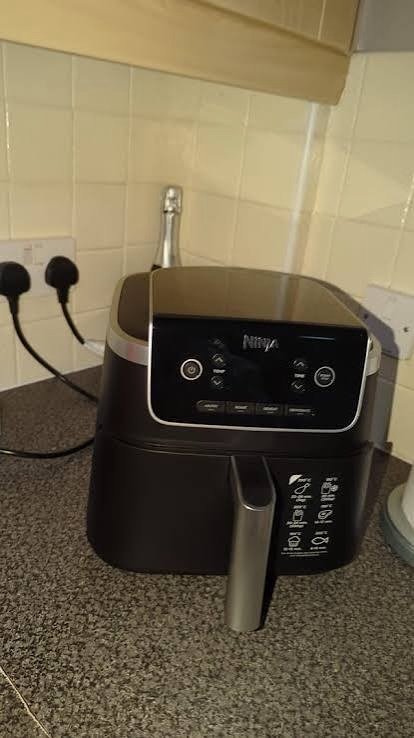
This one’s for the apartment column, not the dorm column, since air fryers are on the commonly-banned list at most schools. Once you’ve got a real kitchen, though, a compact air fryer is genuinely one of the most-used appliances I own.
The SharkNinja 5-quart Air Fryer Pro handles reheated leftovers, frozen food, and small roasted dinners without heating up your whole kitchen the way an oven does. If you already have one, my air fryer cooking hacks roundup covers a lot of uses beyond frozen fries.
9. A Personal-Size Blender for Smoothies and Protein Shakes
A full-size blender pitcher is overkill for one person’s smoothie, and it’s one more bulky thing you don’t have room for. A compact, single-serve blender that blends straight into a cup you can drink from solves both problems at once.
The feature that actually matters is a cup that detaches and doubles as a to-go bottle, since that’s the difference between using it daily and it becoming a countertop decoration. The AR+COOK Personal Blender with To-Go Cup covers that for a straightforward smoothie routine. If you want more power behind it, especially for ice or frozen fruit, this Ninja blender is the one I’d go with instead. It’s a genuine step up in motor strength, which matters more than people expect once you’re blending anything other than soft fruit.
10. A Mini Fridge With an Actual Freezer Compartment
This is the one purchase I’d tell you to size up on if your budget allows it. A fridge with no real freezer, just a tiny ice-box shelf at the top, means you can’t keep frozen vegetables or ice cream on hand, and that limits more meals than people expect going in.
Look for one with a separate door for the freezer section rather than a single compartment split by a shelf, since those hold temperature far better. The Tractor Supply Freestanding Mini Fridge with Freezer is built exactly that way, and it’s also available on Amazon if that’s an easier checkout for you. If you’re stocking a small fridge for real, my fridge essentials guide covers what’s actually worth the shelf space once you have one.
11. A Basic Utensil Set: Spatula, Tongs, and a Wooden Spoon
You need exactly three tools to start: a silicone spatula that won’t scratch your nonstick pan, a pair of tongs for flipping anything on the stove, and one wooden spoon for stirring. Everything past that is a nice-to-have, not a must-have.
Buy these three separately rather than reaching for a 15-piece utensil crock. You’ll use four of the fifteen pieces in a boxed set and the rest will sit in a drawer taking up space you don’t have.
Start With Five Pieces, Not Twenty
If I had to rebuild a first kitchen from nothing tomorrow, I’d start with the pan, the pot, the knife, the cutting board, and one set of storage containers. That’s five items, and it covers almost every meal a person actually cooks in their first year on their own.
Everything past that, the rice cooker, the air fryer, the mini fridge, gets added as your space and your housing rules actually allow for it. Buying it all on day one just means half of it sits in a box while you figure out what you really cook.
FAQ
Do I really need a full cookware set for a dorm or first apartment?
No. One good nonstick pan and one pot cover most meals a single person cooks, and boxed sets usually pad the count with pieces you’ll rarely touch.
What kitchen appliances are usually banned in college dorms?
Hot plates, toasters, air fryers, electric skillets, and anything with an open flame or exposed heating coil are commonly banned, while small microwaves, rice cookers, and coffee makers are usually allowed.
How small of a mini fridge do I actually need?
For one person, a model with a real separate freezer door holds up better than a bigger fridge with a tiny ice-box shelf, since the separate freezer actually keeps food frozen.
Is it worth buying new kitchen gear or should I go secondhand?
Secondhand pots, bowls, and utensils work exactly as well as new ones. The one thing to check closely is a nonstick pan’s coating, since a scratched-up one isn’t worth taking for free.
What’s the one thing you’d tell someone to buy first?
A good nonstick pan. It covers more meals on its own than any other single piece of gear on this list.

Cynthia Odenu-Odenu is the founder of Cyanne Eats. A registered nurse with a passion for food, she brings the same attention to detail from her professional life into the kitchen. From chain restaurant rankings to grocery finds and easy recipes, Cynthia covers it all and helps everyday food lovers eat better and spend smarter.