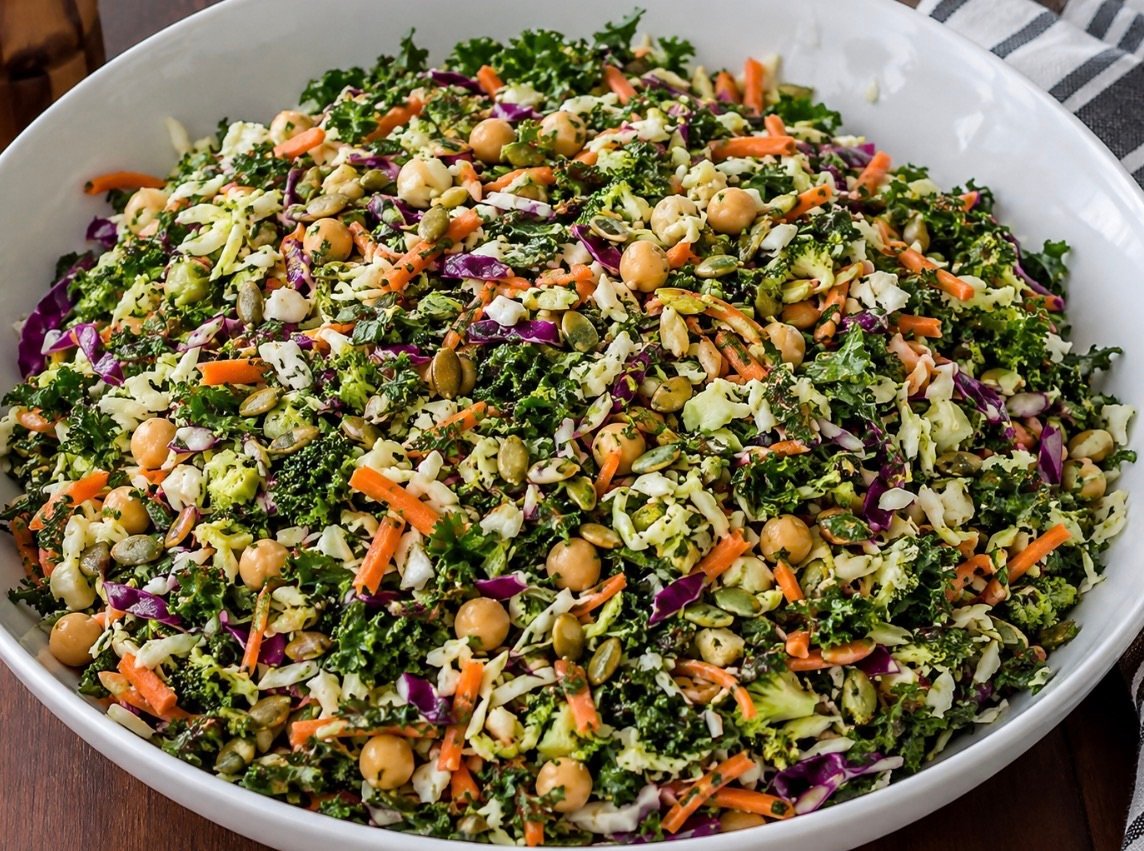
A detox salad that actually fills you up is finely chopped, not just raw greens with dressing, and it needs a real source of protein and fiber like chickpeas mixed through every single bite.
I used to think a detox salad just meant a bowl of kale and maybe some shredded carrot with a squeeze of lemon on top. It looked healthy, it photographed fine, and about an hour later I was standing in front of my fridge again wondering what went wrong. Nothing went wrong exactly, I just hadn’t actually eaten a meal.
This crunchy detox salad is the fix I landed on after a lot of trial and error in my own kitchen. Everything gets chopped small, almost minced, so every forkful has kale, cabbage, broccoli, carrots, chickpeas, and seeds in it instead of three bites of plain lettuce followed by one lucky bite with everything good in it. It eats like a real meal because it’s built like one.
Below I’m getting into why the chopping technique matters more than the ingredient list, the mistake I kept making that left me hungry, the vinaigrette that actually makes this taste like something you’d choose on purpose, and the full recipe with amounts so you can build it exactly the way I do.
Key Takeaways
- Chop everything small and uniform, this isn’t a salad you toss whole leaves into
- Chickpeas are non-negotiable if you want this to hold you past the one-hour mark
- A punchy, acidic vinaigrette is what keeps finely chopped vegetables from tasting like rabbit food
- This keeps well for 3-4 days in the fridge, making it an actual meal-prep option
- Toasted seeds add the crunch that a soft chopped salad is missing without them
Table of Contents
Why chopping small is the whole point
When I first started making versions of this salad, I was leaving the kale in bigger pieces because it felt like more effort to chop it down small. That was backwards. The smaller and more uniform the chop, the more the dressing actually coats every piece, and the easier the whole thing is to eat.
Big leafy pieces mean you’re chewing through mouthfuls of plain kale in between bites of the good stuff. Fine chopping spreads the chickpeas, the seeds, and the dressing evenly through the whole bowl. It also changes how filling the salad feels, because you’re getting a little bit of protein and fiber in every bite instead of saving it all for the end.
I use a sharp chef’s knife for the kale, cabbage, and broccoli, and a box grater or the shredding disc on a food processor for the carrots. My Victorinox Fibrox has held an edge through years of chopping and it’s the one I reach for every time. If you’re making a big batch, running the sturdier vegetables through a food processor in short pulses gets you there faster without turning everything to mush.
I do all of this on one large plastic cutting board so I’m not shuffling piles between a bunch of small ones.
The mistake that kept me hungry
My early versions of this salad were basically raw kale, a little cabbage, and a light vinaigrette. It looked like the detox salads I’d seen everywhere, and I felt good about eating it right up until I got hungry again less than an hour later.
The problem was obvious once I actually thought about it: I was eating almost no protein and barely any fat, just a big bowl of raw fiber and water. My body processed it fast and moved on.
The fix was adding a real protein and fiber source and committing to the fine chop so it actually eats like a meal instead of a side dish. Once I started adding a full cup of chickpeas per serving and chopping everything down small, the hunger-an-hour-later problem stopped happening. It’s a simple change, but it’s the one that actually matters.
What goes into this detox salad
| Ingredient | Amount | Why it’s here |
| Kale, stems removed | 4 cups, finely chopped | The base, holds up well once dressed |
| Green cabbage | 2 cups, finely shredded | Adds crunch and bulk without wilting |
| Broccoli florets | 1 cup, finely chopped | Extra fiber and a different kind of crunch |
| Carrots | 1 cup, shredded | Sweetness to balance the vinaigrette |
| Chickpeas, drained and rinsed | 1 1/2 cups | The protein and fiber that makes this filling |
| Pepitas or sunflower seeds | 1/3 cup, toasted | Crunch and healthy fat |
| Fresh parsley | 1/4 cup, chopped | Brightens the whole bowl |
I use canned chickpeas for this most weeks because dried beans take planning I don’t always have. Goya’s canned chickpeas (check current price on Amazon) are what I keep stocked, mostly because I can grab a multipack and never run out mid-recipe.
For the pepitas, I buy a big bag of raw pumpkin seeds and toast them myself in a dry pan, which costs less than the pre-toasted kind and takes about five minutes.
The vinaigrette that makes it work
A finely chopped salad needs a dressing with enough acid and salt to cut through all that raw vegetable volume, or the whole thing tastes flat no matter how good your chop is. I whisk this together right in the bottom of my mixing bowl before the vegetables go in.
- Whisk 3 tablespoons olive oil with 2 tablespoons apple cider vinegar
- Add 1 tablespoon fresh lemon juice and 1 teaspoon Dijon mustard
- Stir in 1 teaspoon honey or maple syrup to round out the sharpness
- Season with salt and black pepper, then taste and adjust the acid
I’ve tried this with rice vinegar instead of apple cider vinegar and it’s good, just a little softer in flavor. If you like a sharper bite, apple cider vinegar is the one I’d reach for first.
How I put it together
Chop all the vegetables to a similar small size before you start mixing anything, it makes a real difference in how the finished salad eats. Toss the kale, cabbage, broccoli, and carrots together in a large glass mixing bowl first. Add the chickpeas and pour the vinaigrette over everything, then toss it thoroughly so every piece gets coated.
Let it sit for at least 10 minutes before serving. The kale softens slightly and actually absorbs some of the dressing instead of just wearing it on the surface. Scatter the toasted seeds and parsley on top right before you serve it so they stay crunchy instead of going soft in the dressing.
A good salad spinner earns its keep here since you’re washing a lot of kale and cabbage at once. I use an OXO Good Grips spinner (see it on Amazon) and it cuts my prep time down noticeably compared to patting everything dry with towels.
Make it your own
Swap chickpeas for shelled edamame or cooked lentils if you want a change from beans. Toasted almonds or walnuts work in place of pepitas if that’s what’s in your pantry. A soft-boiled egg on top turns this into a heartier lunch if chickpeas alone aren’t enough protein for you on a given day.
The bowl that actually holds up
This crunchy detox salad has become the one I reach for when I want something that feels light but doesn’t leave me raiding the pantry an hour later. The chop is what does the real work here, not any single ingredient. Once the vegetables are small and the chickpeas are in, the salad stops being a side dish and starts being an actual meal.
It keeps in the fridge for a solid few days too, which is more than I can say for most salads I’ve made. I make a big batch on Sunday and I’m still eating it happily by Wednesday.
If Sunday batch cooking isn’t already part of your routine, my guide to the easiest way to meal prep for busy weeks walks through how I plan the rest of my meals around it.
Frequently Asked Questions
Can I make this detox salad ahead of time?
Yes, this salad actually gets better after sitting a few hours in the fridge as the kale softens slightly. Keep it in an airtight container and it holds well for 3 to 4 days.
What can I use instead of chickpeas?
Cooked lentils, shelled edamame, or white beans all work well as a swap. The goal is keeping some protein and fiber in the mix, so pick whichever one you have on hand.
Do I need a food processor to chop everything this fine?
No, a sharp chef’s knife works fine, it just takes a few extra minutes. A food processor speeds things up if you’re making a large batch or meal prepping for the week.
Why does my detox salad taste bland?
It usually means the dressing needs more acid or salt, not more vegetables. Taste the vinaigrette on its own before adding it, it should taste almost too sharp since the vegetables will mellow it out.
Is this salad actually filling enough for a full meal?
Yes, as long as you include the chickpeas and seeds and don’t skip them to save time. Without a protein and fat source, any salad this size will leave you hungry again within an hour.
Here’s the ingredient list at a glance before you jump into the full step-by-step recipe card below:
| Ingredient | Amount | Why it’s here |
| Kale, stems removed | 4 cups, finely chopped | The base, holds up well once dressed |
| Green cabbage | 2 cups, finely shredded | Adds crunch and bulk without wilting |
| Broccoli florets | 1 cup, finely chopped | Extra fiber and a different kind of crunch |
| Carrots | 1 cup, shredded | Sweetness to balance the vinaigrette |
| Chickpeas, drained and rinsed | 1 1/2 cups | The protein and fiber that makes this filling |
| Pepitas or sunflower seeds | 1/3 cup, toasted | Crunch and healthy fat |
| Fresh parsley | 1/4 cup, chopped | Brightens the whole bowl |
Crunchy Detox Salad
Ingredients
- 4 cups kale, stems removed, finely chopped
- 2 cups green cabbage, finely shredded
- 1 cup broccoli florets, finely chopped
- 1 cup carrots, shredded
- 1½ cup chickpeas, drained and rinsed
- ⅓ cup pepitas or sunflower seeds, toasted
- ¼ cup fresh parsley, chopped
- 3 tbsp olive oil
- 2 tbsp apple cider vinegar
- 1 tbsp fresh lemon juice
- 1 tsp Dijon mustard
- 1 tsp honey or maple syrup
- Salt and black pepper, to taste
Instructions
- Chop the kale, cabbage, and broccoli to a similar small, uniform size. Shred the carrots.
- In a large bowl, whisk together the olive oil, apple cider vinegar, lemon juice, Dijon mustard, honey, salt, and pepper.
- Add the chopped kale, cabbage, broccoli, and carrots to the bowl and toss with the vinaigrette until well coated.
- Add the chickpeas and toss again gently.
- Let the salad sit for at least 10 minutes before serving.
- Top with toasted pepitas and fresh parsley right before serving.
Notes

Cynthia Odenu-Odenu is the founder of Cyanne Eats. A registered nurse with a passion for food, she brings the same attention to detail from her professional life into the kitchen. From chain restaurant rankings to grocery finds and easy recipes, Cynthia covers it all and helps everyday food lovers eat better and spend smarter.