
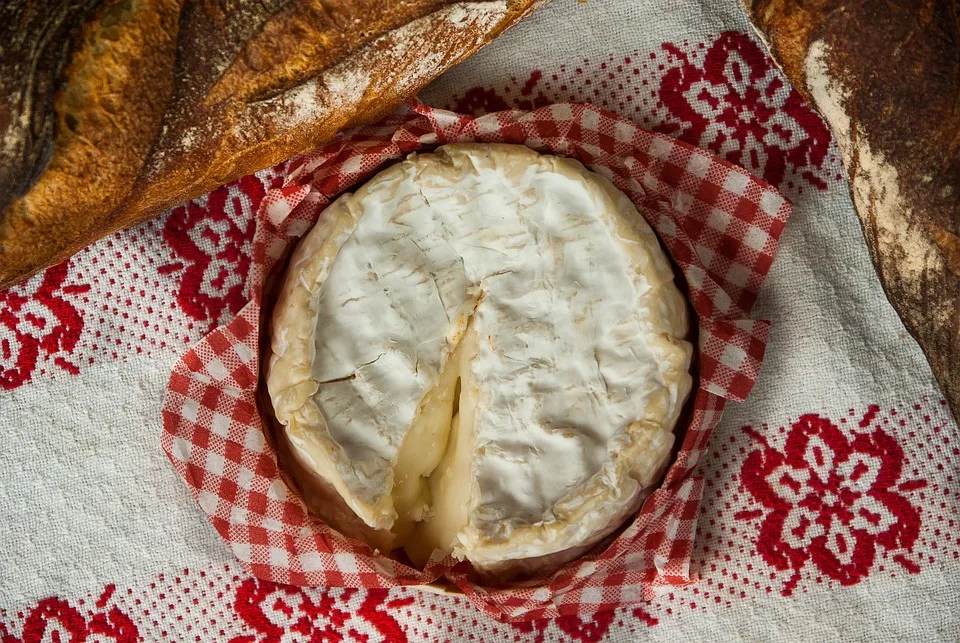
The best substitute for Camembert cheese is Brie, which is in the same bloomy-rind family, melts the same way, and works at a 1:1 ratio in every Camembert application from cheese boards to baked dishes.
I have been asked the Camembert versus Brie question more times than I can count, and I want to give it the real answer it deserves before we even get to the substitute list. They are related but genuinely different cheeses, and knowing which qualities you are trying to replace tells you which substitute to reach for.
This guide covers what Camembert actually is, what it tastes like, the full Camembert versus Brie comparison, the best substitutes mapped to each use, Normandy cheeses, where to find Camembert in the US, and everything else I wish I had found in one place when I started exploring French cheese.
Key Takeaways
- Brie is the closest substitute and works 1:1 in every Camembert application
- Camembert is earthier and mushroomier than Brie; Brie is milder, creamier, and fattier
- Saint-André triple crème is the best substitute when you want something richer and more indulgent than standard Brie
- For baked Camembert specifically, any wheel-format soft cheese that melts inside while holding its shape works: Brie, Port Salut, or Reblochon
- Authentic Camembert de Normandie AOP is made from raw milk and cannot legally be sold in the US; all US-market Camembert is pasteurized
- Normandy produces four AOP cheeses: Camembert, Livarot, Pont-l’Évêque, and Neufchâtel
- Whole Foods, Trader Joe’s, and most specialty cheese shops carry Camembert; it is also available on Amazon
Table of Contents
What Is Camembert Cheese?
Camembert is a soft-ripened cow’s milk cheese from Normandy in northwestern France, traditionally credited to Marie Harel around 1791. The story goes that she sheltered a priest from the Brie region during the French Revolution and learned from him how to make a bloomy-rind cheese using local milk and techniques. It gained national attention in 1863 when a descendant of the Harel family gave Napoleon III a taste during a railway stop, and it became a staple of French military rations in World War I.
The cheese is defined by its white bloomy rind of Penicillium camemberti, which is fully edible. The mold grows into the paste from the outside in, turning the interior from firm and chalky when young into gooey and runny when ripe. Each wheel is roughly 4 inches across, weighs about 9 ounces (250g), and is sold whole in its characteristic round wooden box.
What Does Camembert Taste Like?
Camembert tastes earthy, mushroomy, buttery, and slightly tangy with a savory, umami-forward character that most people find more assertive than Brie. The bloomy rind contributes a deeper, more complex flavor than the paste alone.
The taste changes significantly with ripeness. A young Camembert is firmer, chalky at the center, and milder. A ripe wheel is fully gooey, rich with mushroom and earth notes.
An overripe one has a strong ammonia smell and tastes bitter. Always bring Camembert to room temperature for 30 to 60 minutes before eating so the full flavor opens up.
The difference between Camembert and Brie at the table is real: Camembert tends to be more pungent, earthier, and wilder. Brie is gentler, creamier, and more crowd-pleasing.
Camembert vs Brie: The Real Difference
This question comes up constantly, and both answers (“they are basically the same” and “they are completely different”) are simultaneously a little right. Here is the honest breakdown:
| Feature | Camembert | Brie |
|---|---|---|
| Origin | Normandy, northwest France | Brie region, Seine-et-Marne, near Paris |
| Size and format | Small ~250g round, about 4 inches, sold whole | Large wheel (up to several kg), sold in wedges |
| Fat content | ~45% fat in dry matter | ~60% milk fat (cream often added) |
| Flavor | Earthier, mushroomier, more assertive | Milder, creamier, butterier, subtler |
| Texture | Gooier and runnier when ripe | Holds its structure better when heated |
| Production | Curd hand-ladled in 5 passes | Ladled fewer times, simpler process |
| Minimum age | About 3 weeks | About 5 to 6 weeks |
Can you swap them? Yes, in almost every situation. Both are soft-ripened, bloomy-rind, cow’s-milk cheeses with similar melt behavior and a shared dairy richness.
One cook put it simply: “Brie is not very strong compared to Camembert. Camembert is very earthy tasting.”
If you want Camembert’s earthiness and you use Brie, you get a milder result. That is the main thing to know.
When the swap matters: For baked dishes and pasta, the difference is minimal. For a dedicated cheese board where Camembert’s funk is the point, a riper Brie or a Brie de Meaux-style wheel gets you closer.
Camembert de Normandie AOP
Camembert de Normandie AOP is the only protected variety and represents about 10% of total Camembert production. It earned French AOC status in 1983 and EU AOP/PDO protection in the 1990s.
The rules are strict. Raw (unpasteurized) milk must come from herds that are at least 50% Normande cattle, pasture-fed a minimum of six months per year. The curd must be hand-ladled into molds in at least five passes, each about 40 minutes apart.
Everything from production to packaging must happen within Normandy.
Why you can’t get it in the US: The FDA prohibits the sale of raw-milk cheeses aged less than 60 days. Since authentic Camembert de Normandie AOP is raw-milk and aged only about three weeks, it cannot legally be imported or sold here.
Every Camembert sold at US grocery stores, including the President brand, is pasteurized. It is still excellent, just not the AOP original.
Normandy Cheeses: The Full Picture
Camembert is the most famous, but Normandy has four AOP-protected cheeses worth knowing:
Camembert de Normandie is the bloomy-rind classic, mushroomy and earthy, the cheese that put Normandy on the world food map.
Livarot is a washed-rind cheese nicknamed “the Colonel” for the bands of reed or raffia wrapped around its waist. It is more pungent and assertive than Camembert with an orange-brown rind and a rich, nutty, almost meaty interior.
Pont-l’Évêque is a square, semi-soft washed-rind cheese from the town of the same name. It is one of Normandy’s oldest cheeses, mild-to-pungent depending on age, with a supple paste and a savory depth.
Neufchâtel is the oldest Normandy cheese by some accounts, with records dating to the 11th century. It is most famous for its heart shape, which makes it popular around Valentine’s Day. It has a bloomy rind like Camembert but is saltier and drier with a slightly crumbly texture.
8 Best Camembert Cheese Substitutes
1. Brie
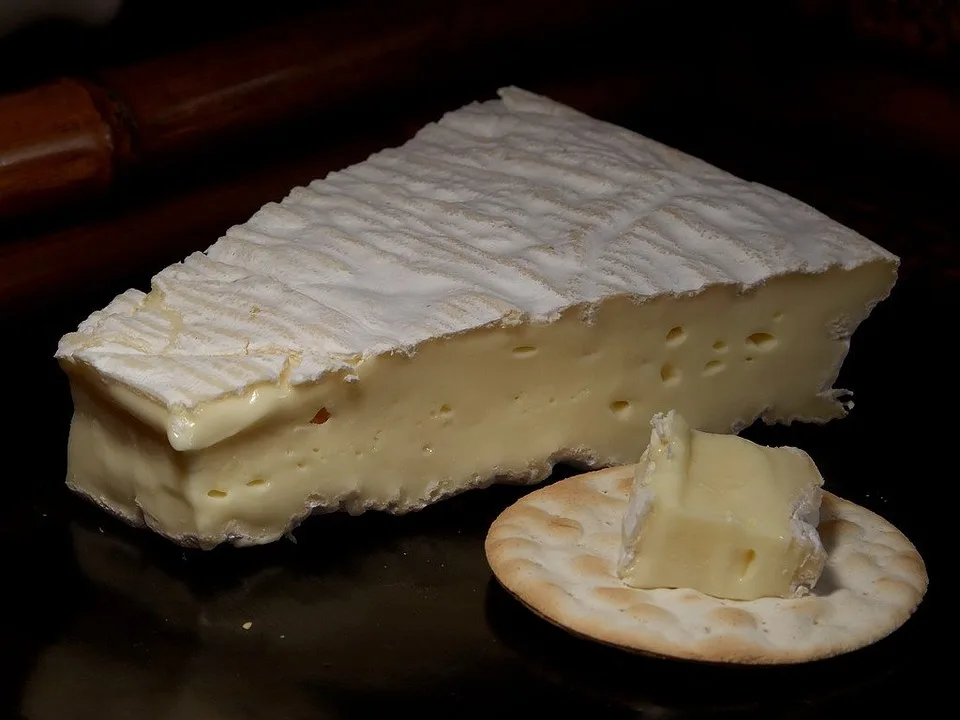
Brie is the obvious substitute and the right answer in almost every situation. It is in the same bloomy-rind, soft-ripened, cow’s-milk family as Camembert. Both melt into gooey puddles in the oven, both work on a board with honey and figs, both go on a baguette with a glass of Burgundy.
The main practical difference is that Brie is milder and creamier.
For most recipes and boards, that distinction simply does not matter. If the recipe specifically relies on Camembert’s earthiness, choose a riper Brie or a Brie de Meaux-style wheel rather than a young, mild commercial one.
President Brie Foil Wrapped Wedge 7oz is reliably stocked and is the easiest entry-point Brie on Amazon. For larger format cooking or boards, the President Brie Plain 60% Wheel 2.2lb is better value and closer to the wheel format Camembert fans love.
Best for: Every Camembert application: boards, baking, sandwiches, cooking
2. Saint-André Triple Crème
Saint-André is a French triple crème from Normandy made with added cream, pushing the fat content to about 75%. It is described as “an intense version of Brie” with a buttery, luxurious, almost cheesecake-like richness that is more indulgent than standard Camembert. The bloomy rind is edible and adds an earthy note.
For a cheese board where you want something that genuinely impresses, Saint-André is my personal favorite move. It is richer than anything most guests have tried, pairs brilliantly with champagne, and arrives at room temperature as a soft, creamy, entirely spreadable cloud.
St Andre Mini Triple Crème 7oz is the accessible portion-sized version confirmed active on Amazon. It is a genuinely special cheese and one of the best upgrades from standard Camembert.
Best for: Cheese boards, crostini, crackers, elegant entertaining
3. Coulommiers
Coulommiers is often called the “ancestor of Brie” and is one of the closest cheese relatives Camembert has. It is larger and thicker than Camembert, but the paste is mushroomy, earthy, and tangy in a way that reads more like Camembert than most Bries do. It is harder to find than Brie but worth asking about at specialty cheese shops.
Use it at a 1:1 ratio in any Camembert application. Its deeper flavor makes it particularly good for pairing with full-bodied red wine.
Best for: Cheese boards, baking, any use where Camembert’s earthy character is important
4. Fromager d’Affinois
Fromager d’Affinois is a French double-crème cheese that is creamier and milder than Camembert. It is made using ultrafiltration, which gives it an extraordinarily silky, almost liquid-soft paste even when young. It pairs beautifully with fruit, honey, and crackers.
The richness and spreadability make it one of the most crowd-pleasing substitutes on a board. It lacks Camembert’s earthy funk, but for gatherings where you want a soft, creamy, approachable cheese that disappears quickly, it is an excellent choice.
Best for: Cheese boards, spreading, entertaining, casual pairing
5. Port Salut
Port Salut is a French semi-soft washed-rind cheese from a Trappist monastery tradition. It is mild and creamy with a slightly savory depth and a distinctive bright orange rind. It does not have Camembert’s earthiness, but it melts beautifully and holds its shape well in baked dishes.
For baked Camembert specifically, Port Salut is one of the most practical alternatives. Score the top, add honey and walnuts or thyme, and bake at 350°F for 15 minutes. It goes gooey inside while holding its shape.
igourmet French Port Salut Cheese 2lb is a 2-pound cut from SAFR, one of the leading French Port Salut producers, confirmed active on Amazon.
Best for: Baked dishes, fondue-style melting, cheese boards, mild cooking applications
6. Reblochon
Reblochon is a soft, washed-rind French cheese from the Savoie Alps with a nutty, fruity, slightly tangy flavor and an excellent melt. It is most famous as the cheese in Tartiflette (the Savoyard potato-and-bacon gratin), which tells you everything about how it behaves when heated.
For baked Camembert, Reblochon is arguably the best non-Brie substitute because the wheel format, the soft paste, and the way it melts inside while the rind holds shape are almost identical to what Camembert does. It has a bit more savory, barnyard depth.
Best for: Baked dishes, Tartiflette, gratin-style cooking, any hot application
7. Taleggio
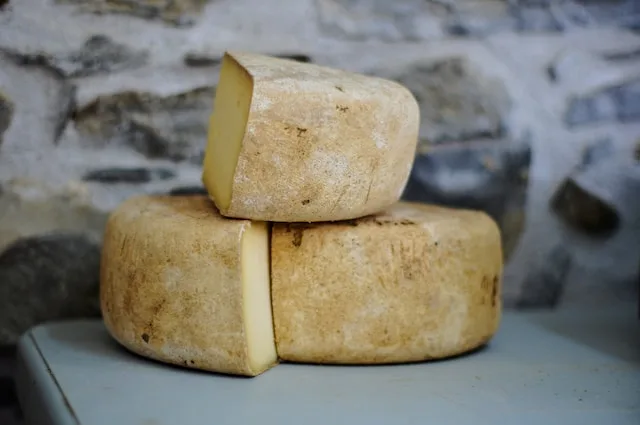
Taleggio is a Northern Italian semi-soft washed-rind cheese with a mild, tangy, slightly yeasty flavor and a very creamy melt. It is in a different tradition from Camembert (Italian rather than French) but the soft interior and the way it goes gooey in the oven make it one of the most reliable baked Camembert alternatives.
Use it in pizza, baked pasta, or directly as a melted cheese dish. On a board it has a stronger, funkier aroma than Camembert, so it is best for guests who already enjoy washed-rind cheeses. For the broader soft cheese family that Taleggio belongs to, the Robiola cheese substitutes guide covers Northern Italian soft cheeses in detail.
Best for: Pizza, baked dishes, pasta, any hot application needing a gooey melt
8. Brillat-Savarin
Brillat-Savarin is a French triple crème associated with Normandy and Île-de-France, made by adding cream to cow’s milk until the fat content exceeds 75%. The result is a white-rinded cheese with a texture that has been compared to ice cream: cold from the fridge it slices cleanly; at room temperature it nearly flows. The flavor has notes of chanterelle mushroom, lemon zest, and fresh cream.
It is more luxurious than Camembert and much fattier, so it pairs better with sparkling wine than red. For a cheese board centerpiece that will genuinely stop conversation, Brillat-Savarin is the move.
Best for: Cheese boards, elegant entertaining, pairing with Champagne or cava
Baked Camembert: What Substitutes Work Best
Baked Camembert (the whole wheel in its wooden box, scored and baked until gooey inside) is one of those dishes where the format matters as much as the flavor. The cheese needs to hold its circular shape while the interior melts completely.
What works: Brie (in a small ramekin if it has no box), Port Salut, Reblochon, Pont-l’Évêque, Taleggio, and Vacherin Mont d’Or (or its US equivalent, Rush Creek Reserve from Uplands Cheese). All of these melt gooey inside while the rind or exterior holds.
What to avoid: Hard alpine cheeses like Gruyère and Emmental do not work for the wheel-baking format. They melt, but they go stringy rather than gooey, and they do not deliver the dramatic spoonable center that makes baked Camembert so compelling.
Where to Buy Camembert Cheese Near Me
Whole Foods carries Camembert in the specialty cheese section, including the President brand and sometimes more artisan options.
Trader Joe’s stocks a house Camembert, and Le Rustique Camembert appears seasonally around the holidays and sells out quickly.
Specialty cheese shops and Italian delis often carry multiple styles including more complex Camembert-style cheeses.
Online: Amazon carries the President Domestic Camembert 8oz, confirmed active listing. The President Domestic Camembert 8oz ships cold and is exactly what you find at the grocery store, in a convenient multi-pack format.
For exploring the broader world of French and European soft cheeses, the igourmet European Cheese Sampler ships expedited in insulated packaging and includes French, English, Italian, and Spanish selections across the full spectrum of soft and semi-soft styles.
Storing Camembert and Its Substitutes
Camembert breathes as it ripens, so plastic wrap is the enemy. Wrapping it airtight stops the gas exchange the rind needs and develops an ammonia off-flavor within hours.
Formaticum cheese storage bags are the professional solution. The breathable French paper maintains the right humidity and lets the cheese continue ripening at its natural pace. Store Camembert in the coldest part of the fridge and pull it out 30 to 60 minutes before serving.
For a proper board, the ChefSofi charcuterie board set includes four steel knives, four ceramic bowls for honey and jam, and a surface large enough to display Camembert alongside Brie, cured meats, and the accompaniments that complete the picture.
FAQ
What is the best substitute for Camembert cheese?
Brie is the best substitute and works at a 1:1 ratio in every Camembert application. Both are French bloomy-rind cow’s-milk cheeses that melt and behave the same way.
If you want something richer, Saint-André triple crème is an excellent upgrade. For baked Camembert specifically, Port Salut and Reblochon hold their shape and go gooey in the oven.
What is the difference between Camembert and Brie?
Camembert is smaller (about 4 inches across, sold as a whole 250g round), earthier, mushroomier, and more assertive. Brie is a larger wheel sold in wedges, milder, creamier, and fattier (about 60% milk fat versus Camembert’s 45%).
Both are bloomy-rind cow’s-milk cheeses and are largely interchangeable in recipes. Brie will produce a milder, less funky result.
What does Camembert cheese taste like?
Camembert tastes earthy, mushroomy, buttery, and slightly tangy, with more assertiveness than Brie. The bloomy white rind contributes an earthy, almost nutty depth.
A ripe wheel is gooey and very rich with pronounced mushroom notes. An underripe wheel is firmer and milder. Always serve it at room temperature for the full flavor.
What is Camembert de Normandie?
Camembert de Normandie is the only AOP-protected variety of Camembert, representing about 10% of total production. It must be made from raw milk from Normande cattle using a traditional hand-ladling technique.
Because US law prohibits raw-milk cheeses aged less than 60 days, authentic Camembert de Normandie AOP cannot be legally sold in the US. All Camembert at US grocery stores is pasteurized.
What are the four cheeses from Normandy?
Normandy has four AOP-protected cheeses: Camembert de Normandie (soft, bloomy rind), Livarot (pungent washed-rind, nicknamed “the Colonel”), Pont-l’Évêque (square, semi-soft washed-rind), and Neufchâtel (often heart-shaped, bloomy rind, the oldest of the four). All four are made from Normandy cow’s milk in the traditional French cheese-making region.

Cynthia Odenu-Odenu is the founder of Cyanne Eats. A registered nurse with a passion for food, she brings the same attention to detail from her professional life into the kitchen. From chain restaurant rankings to grocery finds and easy recipes, Cynthia covers it all and helps everyday food lovers eat better and spend smarter.