
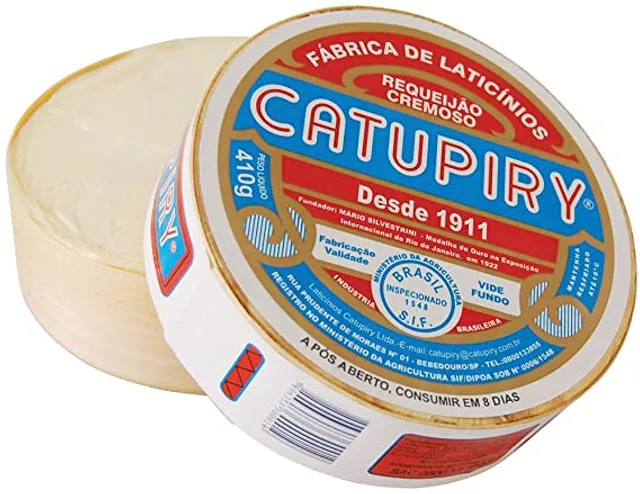
The best Catupiry cheese substitute is mascarpone for cooking and pasta, or a blend of softened cream cheese with heavy cream for pizza and coxinha fillings. Both come closest to Catupiry’s silky, mild, pourable creaminess without the tang and density of plain American cream cheese.
I first tasted Catupiry at a Brazilian friend’s birthday party in Miami, on a pizza with shredded chicken and melted cheese that looked completely different from anything I had seen before. The cheese was piped in creamy white dots all over the top, and when I asked what it was, she just said “Catupiry. It is Brazilian.” I spent two years trying to figure out what that meant and how to get it.
If you are Brazilian living in the US searching for requeijão cremoso, or you tried Catupiry at a Brazilian restaurant and want to recreate it at home, this guide has everything you need.
Key Takeaways
- Catupiry is a Brazilian brand of requeijão cremoso, a soft, mild, pourable cream cheese spread, not American cream cheese
- The real thing is available in the US through Brazilian online grocers and on Amazon; you do not have to go without it
- Mascarpone is the closest single substitute for texture and creaminess in cooking
- A blended cream cheese + heavy cream mixture is the best DIY substitute for pizza and coxinha
- Catupiry pizza (frango com Catupiry) is the most iconic Brazilian pizza. It uses Catupiry piped in dollops, never spread flat
- For pizza specifically, pipe the substitute cold and let it warm in the oven rather than prebaking it into a sauce
- Catupiry is available on Amazon in 200g and 250g sizes shipped with cold packs
Table of Contents
What Is Catupiry? (O Que É Catupiry?)
Catupiry is the most famous brand of requeijão cremoso in Brazil, a soft, mild, pourable cream cheese spread made from pasteurized cow’s milk, cream, salt, and cheese cultures. Italian immigrant Mário Silvestrini founded the brand in 1911 in Lambari, Minas Gerais. The name comes from the Tupi-Guarani word meaning “excellent.”
The brand became so synonymous with the product category that Brazilians use “catupiry” the way Americans say “Kleenex”; it is both the brand name and the generic term. When a pizza menu says “frango com catupiry,” they may be using any brand of requeijão cremoso, but they call it catupiry anyway.
Today Catupiry runs four factories across São Paulo and Minas Gerais and is sold in five countries including the United States. The company crossed R$600 million in annual revenue, a testament to how deeply embedded this cheese is in Brazilian food culture.
Catupiry in English: What Is Requeijão?
Catupiry / requeijão does not have a direct English translation, which is exactly why so many people search for “catupiry in English” without finding a satisfying answer. The closest description is “Brazilian cream cheese spread” or “creamy requeijão,” but neither is quite right.
Requeijão is the product category, a Brazilian creamy cheese spread born in Minas Gerais as a way to use surplus milk. The most popular style, requeijão cremoso, is sold in glass jars and plastic cups with a consistency comparable to condensed milk: silky, pourable, and mild rather than the dense, tangy block of American cream cheese.
The key difference is texture and density. American cream cheese is firm, slightly grainy, and tangy. Requeijão cremoso is lighter, looser, and much milder.
It melts into a luscious sauce when heated rather than turning oily and separated. They are not the same cheese and they do not behave the same way in recipes.
Where to Find Requeijão in the US (Requeijão Nos EUA)
This is the question most Brazilians in the US are actually searching for, and the answer is better than most people realize. You can get the real Catupiry in the US.
On Amazon, this is the easiest option that ships nationwide. The genuine Catupiry is available in multiple formats confirmed active right now:
- Catupiry Creamy Requeijão Cremoso 200g — the traditional version imported from Brazil, ships with cold packs, confirmed by US buyers as authentic
- Catupiry Light 200g — reduced fat version, same creaminess
- Catupiry Brazilian Soft Cheese 250g 2-Pack — the larger format, ships within 4-5 days
Brazilian online grocers ship nationwide: Amigo Foods, Hi Brazil Market, and RememBR all carry Catupiry in both the 200g and 410g sizes. RememBR sells the 200g for around $7.99. These shops also carry other requeijão brands including Tirolez, Itambé, and Président.
Brazilian and Latin grocery stores are the cheapest and freshest option. Florida, Massachusetts, New Jersey, New York, and California have the highest concentration of Brazilian stores. According to the Migration Policy Institute, about half of all Brazilian immigrants in the US live in those three states, so most have a local source.
Walmart and Publix in areas with large Brazilian communities sometimes stock requeijão in the Latin foods aisle, but this is inconsistent.
Whole Foods and Trader Joe’s do not carry Catupiry.
What Is Catupiry Pizza? (Catupiry Nos EUA)
Catupiry pizza (pizza de frango com Catupiry) is arguably Brazil’s most iconic food invention. São Paulo is one of the world’s largest pizza-consuming cities, and the combination of shredded chicken, mozzarella, tomato sauce, and creamy white Catupiry piped in a criss-cross or dots over the top is the pizza that every Brazilian grows up eating.
The technique is specific: Catupiry is never spread flat on the pizza. It goes on cold, piped directly from the tube or spooned in dollops after the mozzarella layer, and bakes at a lower temperature than Neapolitan pizza so it warms into a creamy, barely-melted mass rather than fully liquefying. That textural contrast between the hot crispy pizza and the cool, creamy Catupiry dots is the whole point.
For the stuffed crust version (borda recheada), requeijão cremoso fills the edge of the dough before baking, creating a creamy interior ring around the pizza.
7 Best Catupiry Cheese Substitutes
1. Mascarpone
Mascarpone is the single closest substitute for Catupiry’s texture when cooking. It is an Italian soft cheese made from cream, silky and mild, with a richness and creaminess that behaves similarly to requeijão when heated. It melts smoothly, does not break, and produces the same luxurious sauce quality.
Add a small pinch of salt and a tiny squeeze of lemon juice to mimic Catupiry’s very gentle tang. Use it at a 1:1 ratio in pasta, coxinha fillings, baked dishes, and anywhere Catupiry is stirred into a sauce.
BelGioioso Mascarpone 8oz is the standard US mascarpone, available on Amazon and at Whole Foods. It is the most reliably smooth option for cooking substitution.
Best for: Coxinha fillings, pasta, baked dishes, casseroles, any cooked application
2. Cream Cheese + Heavy Cream Blend
This is the most commonly recommended substitute by Brazilian expats in the US because the blend gets closer to requeijão’s loose, pourable texture than cream cheese alone. Beat 8oz of softened cream cheese with 3-4 tablespoons of heavy cream until smooth and pourable. Taste and add salt if needed.
For Catupiry pizza specifically, load this blend into a piping bag, pipe cold dollops onto the assembled pizza over the mozzarella, and bake. The dollops will warm into that characteristic creamy-but-not-fully-melted texture that makes the pizza so good.
Philadelphia Cream Cheese 8oz is the base. The neutral flavor of Philadelphia makes it the cleanest foundation for this blend.
Best for: Catupiry pizza, coxinha fillings, spreading, any application needing a pourable texture
3. Cream Cheese + Sour Cream Blend
Replacing about one-quarter of the cream cheese with sour cream adds a tanginess closer to requeijão’s lactic character. The sour cream also loosens the texture slightly. This blend works well for cold applications and light cooking, though it can curdle in very high-heat situations.
Do not use sour cream alone as a Catupiry substitute. The tanginess is too sharp and the fat content is too low for cooking. The cream cheese keeps the richness and stability.
Best for: Spreading, dips, light cooking, cold applications
4. Crème Fraîche
Crème fraîche is a French cultured cream with a mild, slightly tangy flavor and a silky consistency that is naturally close to requeijão’s texture. It holds up better to heat than sour cream and has a comparable richness to Catupiry without the density of cream cheese.
For pasta sauces and warm dishes, crème fraîche stirred in off the heat produces a genuinely close result. It will be slightly tangier and slightly thinner than Catupiry but falls in the right ballpark.
Best for: Pasta sauces, warm dishes, spreading on bread
5. Full-Fat Ricotta (Blended)
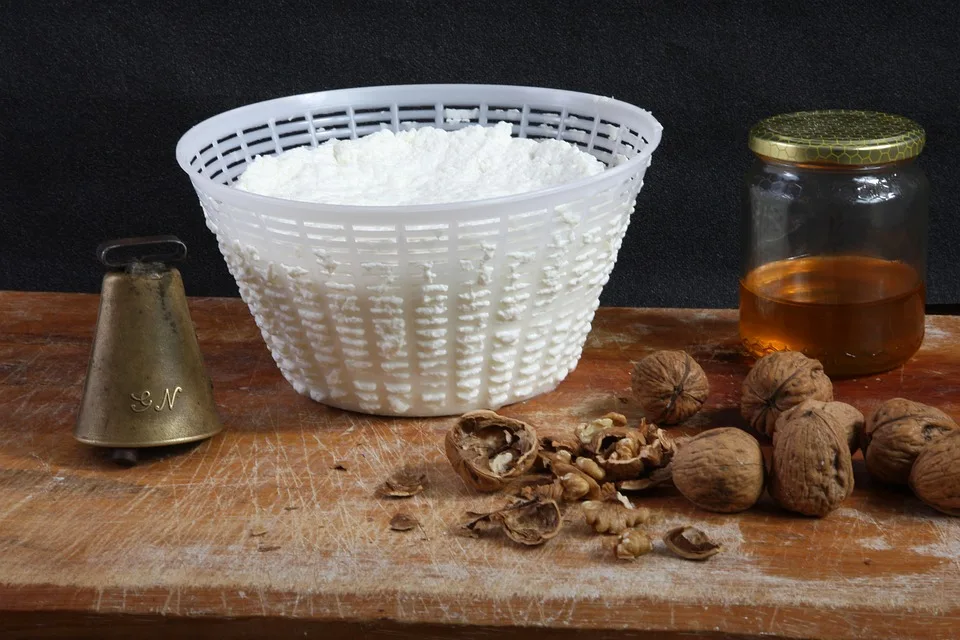
Whole-milk ricotta blended smooth with a tablespoon or two of heavy cream creates a mild, creamy, spreadable consistency that works well in fillings and baked dishes. Ricotta alone is too grainy and too mild, but blending removes the texture issue.
This works particularly well in esfiha and pastel fillings where Catupiry’s role is to add creaminess to a savory stuffing. The flavor is close enough that most people will not notice the difference in a well-seasoned filling.
Galbani Whole Milk Ricotta 15oz is the cleanest ricotta base for this application, with a mild flavor that does not compete with other filling ingredients.
Best for: Pastel, esfiha, and empada fillings, baked casseroles
6. Greek Yogurt (Full-Fat, Strained)
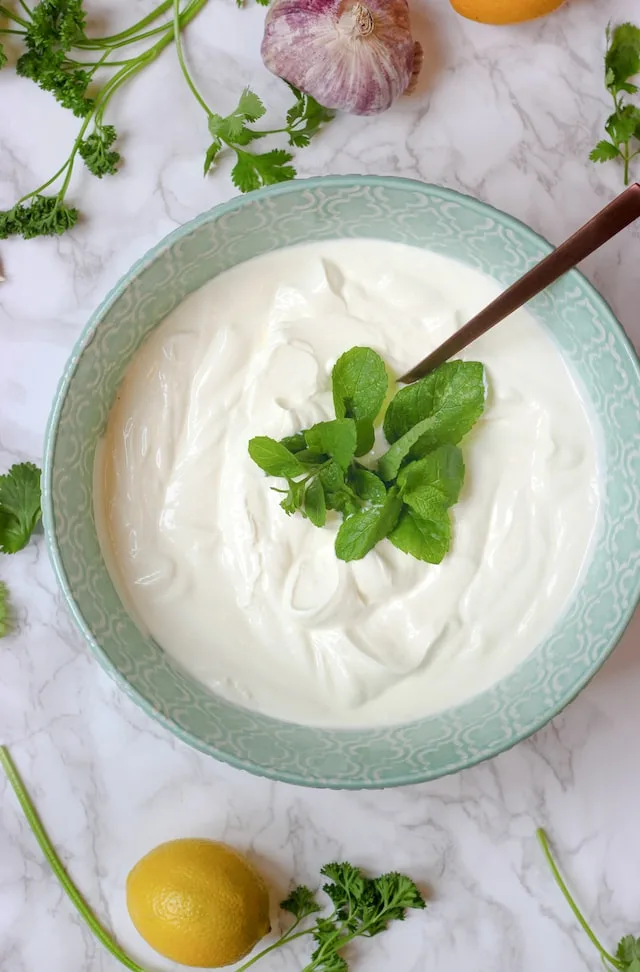
Full-fat Greek yogurt is tangier and thinner than Catupiry but works in a pinch when nothing else is available. It adds creaminess without as much richness and is the lightest option on this list. Use it at room temperature rather than cold, and do not use it in high-heat applications where it will curdle.
For breakfast spreads and light cold applications, full-fat Greek yogurt is actually a reasonable daily-use substitute. For cooking or pizza, use one of the above options instead.
FAGE Total 5% Greek Yogurt 32oz is the full-fat version that comes closest in richness. The 5% fat content is important — low-fat Greek yogurt is too thin and too tangy.
Best for: Spreading on toast, dips, light cold applications only
7. Make It at Home (Requeijão Caseiro)
The most authentic substitute is homemade requeijão, and it takes about 15 minutes in a blender. Combine whole milk, cream, butter, shredded mozzarella, a small amount of Parmesan, and a pinch of salt; heat the dairy first, then blend everything until silky and smooth. Chill for at least an hour before using.
Brazilian food blogger Olivia’s Cuisine published a trusted version of this recipe that has been praised by Brazilian expats as the closest achievable requeijão outside Brazil. The result is genuinely similar to the real thing and far better than any single commercial substitute.
Best for: Any Catupiry application because it is the most accurate overall substitute
Catupiry Recipes: What to Make With It
Once you have real Catupiry or a good substitute, these are the dishes worth making:
Frango com Catupiry pizza is the starting point. Spread a thin layer of tomato sauce, add shredded rotisserie chicken, cover with mozzarella, then pipe Catupiry or the cream cheese blend in a criss-cross or dots. Bake at 425°F until the mozzarella is golden and the Catupiry is just warmed through.
Coxinha is the quintessential Brazilian street food: a teardrop-shaped fried dough filled with shredded chicken and Catupiry, breaded and deep-fried. The Catupiry (or mascarpone substitute) goes into the chicken filling mixed with softened cream cheese and seasoning.
Requeijão no pão is the everyday Brazilian breakfast: warm toast spread with cold Catupiry, eaten with strong coffee. For this, the cream cheese plus heavy cream blend works well if the real thing is unavailable.
For more on processed soft cheese substitutions in the Brazilian and Latin food tradition, the Eden cheese substitutes guide covers the Filipino processed cheese equivalent with the same diaspora-first perspective.
Storing Catupiry in the US
Once opened, Catupiry needs refrigeration and should be consumed within a week or two. The real-product jars are not resealable once broken, so transfer any leftover requeijão to an airtight container.
For the homemade version and for mascarpone-based substitutes, Formaticum cheese storage bags are the professional way to keep soft, high-fat dairy fresh. The breathable paper prevents the off-gas buildup that sealed plastic creates.
For a board with Catupiry, honey, bread, and fruit, the ChefSofi charcuterie board set works well. Catupiry on a board with guava paste (goiabada) and crackers is a classic Brazilian combination called Romeu e Julieta.
FAQs
What is Catupiry cheese in English?
Catupiry is a Brazilian brand of requeijão cremoso, a soft, mild, pourable cream cheese spread made from cow’s milk, cream, and salt. There is no direct English equivalent. The closest description is “Brazilian cream cheese spread,” but it is lighter, silkier, and far less tangy than American cream cheese.
What is the best substitute for Catupiry?
Mascarpone is the best single substitute for cooking and pasta dishes. A blend of softened cream cheese with heavy cream (about 3-4 tablespoons per 8oz of cream cheese) is the best DIY substitute for pizza and coxinha fillings. For the most authentic result, make homemade requeijão from milk, cream, butter, and mozzarella blended smooth.
Where can I buy Catupiry cheese in the US?
Catupiry is available on Amazon in 200g and 250g formats shipped with cold packs. Brazilian online grocers (Amigo Foods, Hi Brazil Market, RememBR) ship it nationwide.
Brazilian and Latin grocery stores in Florida, Massachusetts, New Jersey, New York, and California stock it regularly. Whole Foods and Trader Joe’s do not carry it.
Is Catupiry the same as cream cheese?
No. Catupiry (requeijão cremoso) is lighter, silkier, milder, and more pourable than American cream cheese. Cream cheese is denser, tangier, and turns oily when overheated.
Catupiry melts into a smooth, luscious sauce when warm. They are in the same general dairy category but behave differently in recipes.
What is catupiry pizza?
Catupiry pizza (pizza de frango com Catupiry) is a Brazilian pizza made with shredded chicken, mozzarella, tomato sauce, and creamy Catupiry piped in dollops or a criss-cross pattern over the top. It originated in São Paulo and is one of the most beloved Brazilian foods. The Catupiry is added after the mozzarella and piped cold so it warms during baking rather than fully melting.

Cynthia Odenu-Odenu is the founder of Cyanne Eats. A registered nurse with a passion for food, she brings the same attention to detail from her professional life into the kitchen. From chain restaurant rankings to grocery finds and easy recipes, Cynthia covers it all and helps everyday food lovers eat better and spend smarter.