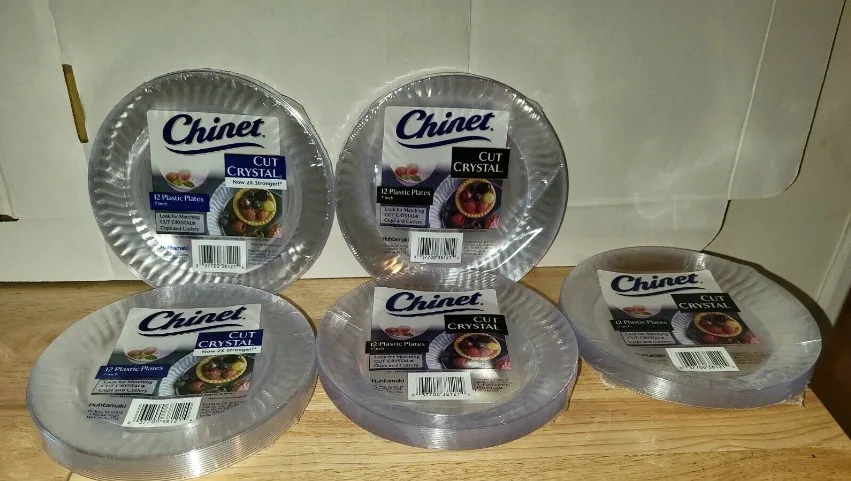
The white Chinet plates most people use for parties and potlucks aren’t actually plastic. They’re molded fiber made mostly from recycled paper, and Chinet markets that line as microwave-safe for short reheating. Chinet’s actual plastic plates, the Cut Crystal line, are a different product entirely, and those are not safe to microwave.
I go through a stack of Chinet plates at basically every cookout or potluck I host, mostly because I don’t want a sink full of dishes at the end of the night. I always called them “plastic plates” without really thinking about it, the same way most people do.
Turns out that’s not quite right, and it explains a lot about how they behave in the microwave. Below I get into what Chinet’s white plates are actually made of, when they’re safe to microwave, and where the real plastic products in the Chinet lineup fit in.
Key Takeaways
- The white plates most people call “Chinet plastic plates” are actually molded fiber, made mostly from recycled paper
- Chinet markets its Classic White line as microwave-safe for short reheating
- Avoid microwaving high-fat or high-sugar foods on them, and never microwave one with a foil or metallic trim
- Chinet’s actual plastic line, Cut Crystal, is not microwave-safe and will warp or melt
- If you want a plate built to go in the microwave over and over, a reusable glass set is still the safer long-term choice
Table of Contents
Can You Microwave Chinet Plastic Plates?
Yes, if you mean the white plates from the Classic line that show up at most parties and potlucks. Those aren’t plastic at all. They’re molded fiber, made mostly from recycled paper, and Chinet markets them as microwave-safe for reheating in short bursts.
If you actually own one of Chinet’s real plastic products, like the Cut Crystal line styled to look like cut glass, that’s a different story. Those are genuine plastic, and they’re not built to go in the microwave.
So the honest answer depends on which Chinet plate is in your hand. The one everyone calls “plastic” almost never actually is.
What Are Chinet’s “Plastic” Plates Actually Made Of?
Chinet’s Classic White plates are molded fiber, pressed from recycled paper pulp into the shape of a plate. Huhtamaki, the company behind Chinet, says the line uses at least 50% recycled material. There’s no plastic resin in there at all.
I get why the mix-up happens. The plates are rigid, they have a slight sheen, and they don’t feel like a flimsy paper plate from the grocery store’s bargain aisle. That texture reads as “plastic” to a lot of people, myself included until I actually looked into it.
Chinet does make genuinely plastic dinnerware too, it’s just a separate product line called Cut Crystal. Those are clear, rigid plates and cups styled to look like cut glass, and they’re made from actual plastic resin, not molded fiber. More on why that matters for the microwave in a minute.
Is It Safe to Microwave Chinet Plates?
For the Classic White fiber plates, yes, with a few common-sense precautions. A short reheat, like warming up a plate of leftovers for a minute or two, is exactly what they’re designed for.
A few things I avoid doing:
- Heating food for a long stretch in one go, rather than shorter bursts
- Microwaving something high in fat or sugar, since those tend to get hot fast and can scorch the plate underneath
- Putting a plate with any metallic trim or foil on it in the microwave at all
If you’re microwaving something greasy or syrupy, I’d just move it to a real dish. It’s not worth risking a scorched plate over a plate of wings.
What Happens When You Microwave Chinet Plates?
Used the way they’re meant to be used, nothing dramatic happens. The plate stays intact and your food comes out warm, the same as any other short microwave reheat.
Push past that, either by microwaving too long or heating something greasy and hot, and the plate can start to warp or soften in spots. I’ve had this happen once with a plate of buffalo wings I left in a beat too long, and the underside got soft enough that I had to eat carefully over the counter.
None of that is a plastic-melting-into-your-food situation, since there’s no plastic there to begin with. It’s more like overcooking a piece of cardboard than melting a container.
How to Microwave Chinet Plates the Right Way
- Check that you’re using a Classic White fiber plate, not a Cut Crystal plastic one.
- Keep the heating time short. Start with 30 to 60 seconds and add more time in small increments if needed.
- Let hot, greasy food cool for a minute before you set it on the plate if you’re worried about scorching.
- Skip the microwave entirely if the plate has any metallic decoration.
- Let the plate sit for a few seconds after microwaving before you pick it up, since fiber holds heat a little differently than glass.
If you’re the one buying the plates for the party, it’s worth grabbing Chinet Classic White fiber plates specifically rather than any plate labeled “Chinet” on the shelf, since that’s the line actually built and marketed for this.
What About Chinet’s Actual Plastic Plates?
Cut Crystal is Chinet’s real plastic line, styled to look like elegant cut glass for nicer parties and holidays. These are genuinely plastic, not fiber, and that changes the microwave answer completely.
Don’t microwave them. They’re built for cold or room-temperature food and serving, not for heat, and they’ll warp under microwave conditions the fiber plates are actually designed to handle.
If a Chinet plate at your table looks like glass rather than plain white, treat it as decorative serveware only. Move anything that needs reheating onto a fiber plate or a real dish instead.
My Take on Microwaving Chinet Plates
I still keep a stack of Chinet Classic White plates around for parties, and I still microwave leftovers on them without thinking twice, as long as I’m not reheating something greasy for five minutes straight.
What changed is that I stopped calling them “plastic.” They’re paper pulp doing a really convincing impression of something sturdier, and once you know that, the microwave rules actually make sense instead of feeling like a guessing game.
If you want dinnerware that’s genuinely built for repeated microwave use rather than the occasional reheat, a set like Corelle’s Vitrelle dinnerware is the more durable long-term option, and it skips this whole question since it’s glass to begin with.
Frequently Asked Questions
Are Chinet plates really plastic?
The white Classic line most people use for parties isn’t plastic at all, it’s molded fiber made mostly from recycled paper. Chinet’s Cut Crystal line is genuinely plastic, but it’s a separate product styled to look like cut glass.
Can you microwave Chinet Classic White plates?
Yes. Chinet markets the Classic White fiber line as microwave-safe for short reheating, as long as you avoid long heating times, greasy or high-sugar food, and any metallic trim.
Can you microwave Chinet Cut Crystal plates?
No. Cut Crystal is Chinet’s actual plastic line, built for cold and room-temperature serving, and it will warp if you put it in the microwave.
Why did my Chinet plate warp in the microwave?
Warping on a Classic White fiber plate usually means it was microwaved too long or loaded with greasy or sugary food that got too hot underneath. If it was a Cut Crystal plate, it warped because that line isn’t microwave-safe at all.
How long can you microwave food on a Chinet plate?
Stick to short bursts, starting around 30 to 60 seconds and adding more time in small increments as needed, rather than one long continuous heat.

Cynthia Odenu-Odenu is the founder of Cyanne Eats. A registered nurse with a passion for food, she brings the same attention to detail from her professional life into the kitchen. From chain restaurant rankings to grocery finds and easy recipes, Cynthia covers it all and helps everyday food lovers eat better and spend smarter.