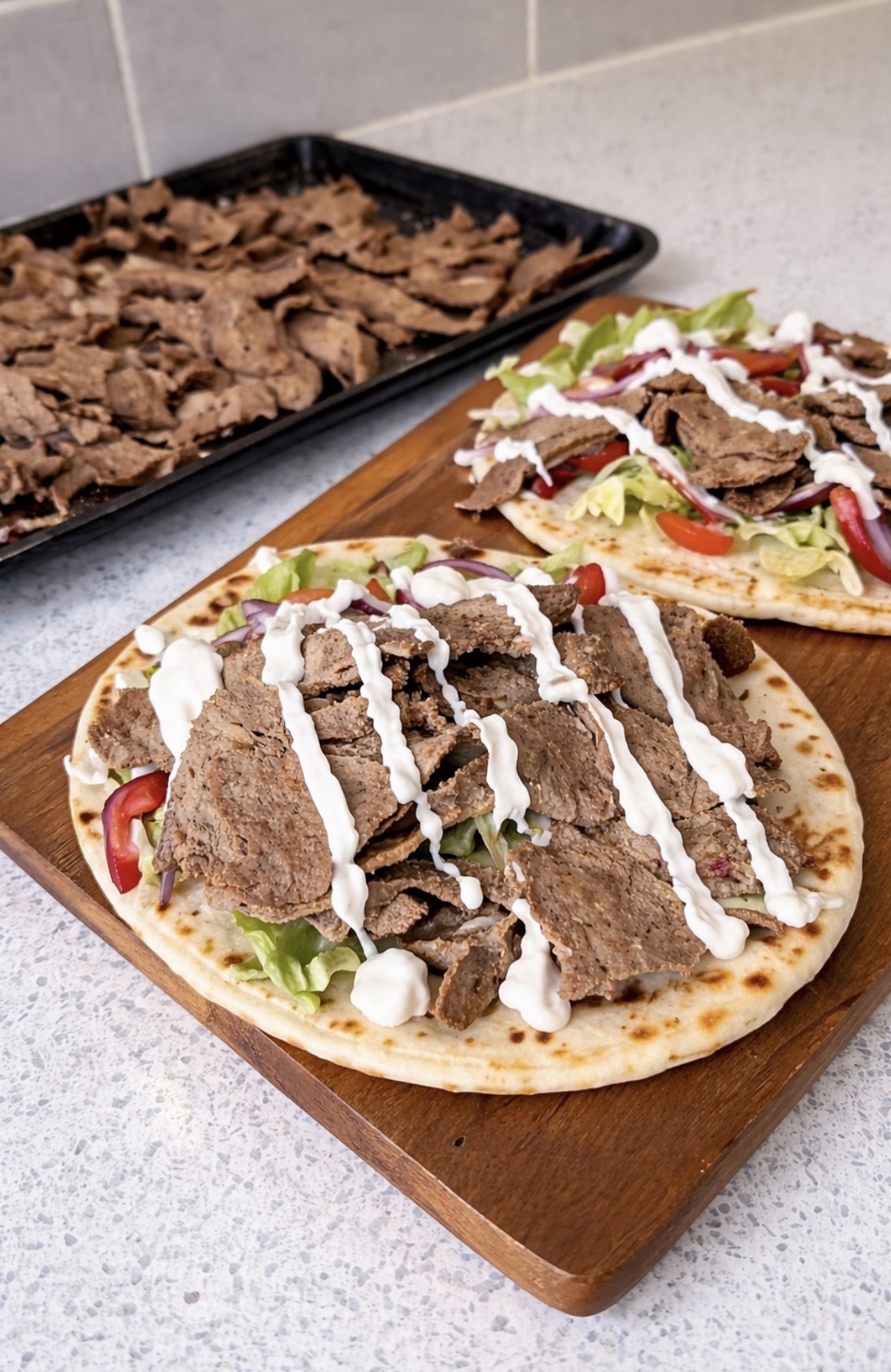
A sheet pan doner kebab is a ground meat mixture seasoned with cumin, paprika, and oregano, rolled thin in parchment paper, baked at 400 degrees, then torn into pieces and broiled until the edges crisp up like real rotisserie-shaved doner.

I did not believe this was going to work. Ground beef on a sheet pan replicating a vertical rotisserie that slow-cooks for hours felt like a stretch. It is not a stretch. The parchment rolling technique creates compressed layers in the meat that, when torn apart, genuinely mimic shaved doner texture. The broiler step at the end gets you the crispy edges.
This recipe went viral for a reason. It is one of the few trending recipes that actually delivers what it promises.
Table of Contents
Key Takeaways
- Fat content is the most important variable. Use 80/20 ground beef at minimum, or a lamb and beef blend. Lean meat will dry out and crumble every time
- Mix the meat longer than feels comfortable. You want it sticky and paste-like, not crumbly like a burger. That texture is what holds the rolls together
- Roll the meat as thin as you can get it, about a quarter inch or less. Thicker rolls steam instead of developing proper texture
- The broil step at the end is what gets you the crispy edges that make this taste like a real kebab shop. Do not skip it
- Internal temperature should hit 165 degrees. Ground meat is not like steak
What Is a Doner Kebab?
Doner kebab is a Turkish dish where seasoned meat is stacked on a vertical rotating spit and slow-roasted for hours. The outer layer crisps as it cooks and is shaved off in thin slices, loaded into lavash or pita with sauce and toppings.
This recipe does not use a rotisserie. It was popularized by Michael Wilkes, who learned the technique from his fiancée’s Cypriot mother Nefise Kansu, who had been making it this way in her home kitchen for years before it ever hit social media. The parchment-rolling method creates thin compressed layers of ground meat that mimic the texture of rotisserie-shaved doner after baking and broiling.
It is not identical to the real thing. It is an inspired shortcut that gets you 80 percent of the way there on a Tuesday night with supermarket ground meat and a sheet pan.
Doner vs. Shawarma vs. Gyros: What Is the Difference?
These three dishes come from different cultures but look similar to many people because all three involve spiced meat served in flatbread.
Doner kebab comes from Turkey. The spice profile is built around cumin, paprika, and oregano. The sauce is yogurt-garlic or a butter-tomato combination. Bread is lavash or pita.
Shawarma comes from the Arab world (Lebanon, Syria, Egypt). The spice profile is more complex with turmeric, cinnamon, cardamom, and allspice. The sauces are tahini, toum (garlic emulsion), or hummus. Bread is markook or pita.
Gyros come from Greece. The spice profile is herbaceous with oregano, thyme, rosemary, and marjoram. The sauce is tzatziki. Bread is thick soft pita.
The sheet pan rolling technique in this recipe is specific to the doner approach. The spice blend is what makes it taste like a kebab shop, not a shawarma place or a Greek restaurant.
The Meat: What to Use and Why It Matters
Fat content is the most critical variable in this recipe. More experienced cooks get this wrong the first time because the instinct is to reach for 90/10 lean beef. Do not do that. You need at least 20 percent fat.
Here is what happens with lean meat: the fat renders out during baking and the proteins shrink and seize, leaving you with dry, crumbly pieces that taste like a bad meatloaf. The fat is what keeps the meat moist and gives it the rich, savory quality that doner is known for.
Your options:
80/20 ground beef is the most accessible choice and produces a very good result. It is what most people use and it works well.
70/30 beef and lamb blend is the most common recommendation from people who make this regularly. Lamb adds a richer, more authentic flavor. A 70/30 or even 50/50 split is worth trying if you have access to ground lamb.
Pure ground lamb is the most authentic and most flavorful option. The texture is a little richer and slightly gamier. If you have never had it, start with the beef-lamb blend.
One more option: RecipeTin Eats adds a small amount of streaky bacon to the mixture for extra fat and salt. It does not make the kebab taste like bacon at all, but it does improve richness significantly. Skip it if you are cooking for dietary restrictions.
Ingredients You Need
For the meat mixture (serves 4):
Ground beef, 2 lbs (900g), 80/20: Or a 50/50 blend of ground beef and ground lamb. Do not use anything leaner than 80/20.
Greek yogurt, 3 tablespoons: Full-fat. Tenderizes the meat and helps it bind. This is not optional.
Large onion, 1: Grated on the large holes of a box grater or pureed in a food processor. Must be grated or pureed, not chopped. Chopped onion creates uneven texture and the pieces fall out.
Garlic, 4 cloves, minced
Ground cumin, 1.5 teaspoons: The single most important spice in this recipe. Do not reduce it.
Paprika, 1 teaspoon: Sweet or smoked. Smoked adds more depth.
Dried oregano, 1 teaspoon
Ground coriander, 1 teaspoon
Red pepper flakes, 1/4 teaspoon: Optional but adds the right kind of background heat.
Salt, 1.5 teaspoons
Black pepper, 1/2 teaspoon
For the garlic yogurt sauce:
- 1 cup full-fat Greek yogurt
- 3 garlic cloves, minced or pressed
- 1 tablespoon lemon juice
- 1 tablespoon olive oil
- Salt to taste
- 2 tablespoons fresh dill or parsley (optional)
For the tomato-butter sauce:
- 2 tablespoons butter
- 2 tablespoons tomato paste
- 3 tablespoons hot water
For serving:
- Lavash or pita bread
- Shredded lettuce or cabbage
- Sliced tomatoes
- Thinly sliced red onion tossed with a pinch of sumac
- Sliced cucumber
- Pickles
The Eastanbul Turkish Sumac Spice is the right product for the sumac onion salad if you do not already have it. If you want to skip buying six individual spices, the Eastanbul Shawarma and Doner Seasoning Blend covers the full spice profile in one bottle.
How to Make It
Step 1: Mix the meat
Add the grated onion to a large bowl. Squeeze out as much liquid as you can by pressing it against the side of the bowl with a spoon, or wrapping it in a clean kitchen towel and squeezing over the sink.
Add the drained onion, garlic, yogurt, and all the spices to the ground meat. Mix thoroughly with your hands for 2 to 3 minutes until the mixture is sticky and cohesive, almost paste-like. It should hold together when pressed. If it still feels loose and crumbly, keep mixing.
If you have a food processor, pulse the onion and garlic first until pureed, add the meat and spices, and process for about 60 to 90 seconds. The food processor method produces a denser, more uniform texture that slices more cleanly. Hand-mixing produces a slightly looser texture that tears more naturally.
Step 2: Shape and roll
Preheat the oven to 400 degrees. Line a rimmed baking sheet with parchment paper.
Divide the meat into 4 equal portions. Take one portion and place it in the center of a sheet of parchment paper roughly 12 by 16 inches. Lay a second sheet of parchment on top and use a rolling pin to flatten the meat into a thin rectangle, roughly a quarter inch thick or slightly thinner. The thinner you can get it, the better the final texture.
Peel off the top sheet of parchment. Starting from the long edge, use the bottom parchment to roll the meat into a tight log, keeping the parchment wrapped around it as you roll. The parchment stays on. Twist the ends to seal like a candy wrapper.
Repeat with all four portions. Place the rolls seam-side down on the prepared baking sheet. If you want roasted vegetables alongside, add halved Roma tomatoes and green peppers to the pan, drizzled with olive oil and seasoned with salt.
A Nordic Ware Natural Aluminum Half Sheet Pan is the right tool here. It conducts heat evenly without warping and is large enough to hold all four rolls plus vegetables.
Step 3: Bake
Bake at 400 degrees for 20 minutes. The rolls will look pale and unimpressive at this point. That is normal.
Use a meat thermometer to confirm the internal temperature has reached 165 degrees. This is a food safety requirement for ground meat that most viral recipes do not mention. A quick-read thermometer makes this fast and reliable.
Let the rolls rest for 5 minutes before unrolling. Resting allows the juices to redistribute and keeps the meat from falling apart when you tear it.
Step 4: Tear and broil
Carefully unroll the parchment on each roll. The meat should fall off naturally in layers. Use your hands or two forks to tear it into rough 2 to 3 inch pieces. Tearing rather than slicing creates the uneven edges that crisp up well under the broiler.
Spread all the pieces in a single layer on the baking sheet. Drizzle any reserved pan drippings back over the meat if you want extra richness.
Switch the oven to broil on high. Place the pan 6 inches from the broiler element and broil for 2 to 3 minutes until the edges are golden and some pieces are lightly crisped. Watch the pan the entire time. The difference between perfect and burnt is about 60 seconds under a broiler.
Making the Sauces
Garlic yogurt sauce: Whisk all ingredients together and taste for seasoning. Make this at least 15 minutes before serving so the garlic has time to mellow slightly. It keeps in the fridge for up to a week.
Tomato-butter sauce: Melt the butter in a small saucepan over medium heat. Add the tomato paste and stir for one minute. Add the hot water and stir until combined and smooth. This is the sauce that makes the Iskender-style platter version taste like a proper Turkish restaurant.
How to Serve It
As a wrap: Warm a sheet of lavash or pita briefly in a dry pan or directly over a gas burner for 30 seconds per side. Spread garlic yogurt sauce down the center. Pile on doner meat, shredded lettuce, sliced tomatoes, sumac-tossed red onion, and cucumber. Roll tightly, slice in half.
As a platter: Tear pita bread into rough pieces and spread across a serving plate. Pile the doner meat on top. Drizzle generously with the tomato-butter sauce, then add a large spoonful of yogurt sauce on the side. Sprinkle with fresh parsley. This is the Iskender-style presentation and it is excellent for a dinner party.
Troubleshooting: Why It Went Wrong
The meat is dry and crumbly. You used too-lean ground meat. The fat renders out during baking and leaves protein behind with no moisture. Switch to 80/20 at minimum. A lamb-beef blend makes an even bigger difference.
The meat has no flavor. The spices were under-measured, or the mixture was under-salted. Season more generously than feels comfortable. The parchment and baking process mutes spice impact compared to cooking on a grill or skillet. The NYT version uses roughly 3 times the amount of cumin and paprika that most recipes call for.
The rolls fell apart when I unrolled them. The meat was not mixed long enough. The mixture needs to be sticky and paste-like before rolling. If it feels like loose ground beef, mix for another 2 minutes.
It tastes like meatloaf, not kebab. Two possible causes: too much onion liquid left in the mixture (making it steam internally), or using insufficient fat. Squeeze the grated onion thoroughly before adding it and make sure your fat percentage is at least 20.
The pieces did not get crispy under the broiler. The pieces were laid on top of each other instead of in a single layer, or the broiler was too far away. Every piece needs direct broiler exposure with space around it, and the pan should be 6 inches from the element.
Tips for the Best Result
Squeeze the grated onion. Excess onion liquid steams the meat from the inside and prevents browning. Press it firmly through a sieve or squeeze it in a kitchen towel before adding it to the meat.
Chill the mixture for 30 minutes if you have time. Cold meat rolls more easily and holds its shape better. Not required but noticeably helpful.
Do not skip resting before unrolling. Five minutes of rest makes the difference between layers that pull apart cleanly and meat that falls apart into crumbles.
Reheat in a skillet. Leftovers reheated in a hot dry skillet over medium-high heat for 2 to 3 minutes per side are arguably better than fresh. The re-crisping develops even more caramelized edges. Microwave reheating works but kills the texture.
Variations
Chicken version: Use ground chicken thigh meat (not breast, which dries out badly). Reduce oven temperature to 375 degrees and check for 165 degrees internal temperature at 18 minutes. The broil time stays the same.
Extra spicy version: Add 1/2 teaspoon Aleppo pepper or cayenne to the spice mixture and use a spicy pepper paste instead of tomato paste in the red sauce.
Iskender platter style: This is the most impressive presentation. Tear pita into rough squares, spread across a shallow bowl or platter, pile doner meat on top, drench everything in hot tomato-butter sauce, add a large spoonful of cold yogurt, and finish with fresh parsley. Butter is sometimes drizzled over the whole thing before serving in Turkish restaurants.
Make-ahead option: Shape and roll all four logs, leave them wrapped in parchment, and refrigerate for up to 24 hours. Bake directly from cold, adding 3 to 4 extra minutes to the bake time.
What to Serve With It
A simple salad of shredded cabbage, sliced cucumber, and fresh tomato dressed with lemon and olive oil is the classic accompaniment. Rice is traditional in Turkey for platter service.
This recipe is also part of my Easy Sheet Pan Dinner Recipes collection and appears in my roundup of Viral TikTok Recipes worth actually making.
How to Store and Reheat
Store cooled doner meat in an airtight container in the fridge for up to 4 days.
Best reheating method: Hot dry skillet over medium-high heat, 2 to 3 minutes, stirring once or twice. Gets you crispy edges again.
Freezer: Spread cooled pieces in a single layer on a baking sheet and freeze until solid, then transfer to a freezer bag. Keeps up to 3 months. Reheat directly from frozen in a skillet over medium heat with a lid on for the first 2 minutes, then remove the lid and crisp.
Leftover ideas: Doner rice bowl over basmati with yogurt sauce and cucumber. Doner loaded fries topped with meat, garlic sauce, and pickled jalapeños. Doner breakfast hash with eggs and peppers.
Conclusion
The sheet pan doner kebab is worth the hype. The key decisions that determine whether it succeeds or fails are all in the setup: choosing fatty enough meat, mixing it long enough to get that sticky paste texture, rolling it thin, and finishing under the broiler. Get those four things right and you have a legitimately great weeknight dinner that tastes nothing like it came from a sheet pan.
FAQ
Does sheet pan doner taste like real doner kebab?
It is not identical, but it is genuinely close. The parchment rolling technique creates layered, tearable meat that has a similar texture to rotisserie-shaved doner. The spice profile is the same. The main difference is the exterior crispness, which you partially recover with the broiler step.
What is the best meat for homemade doner kebab?
80/20 ground beef produces a reliable result. A 50/50 or 70/30 blend of ground beef and ground lamb is better for flavor and authenticity. The fat percentage matters more than the specific meat type.
Can I make this without a food processor?
Yes. Hand-mixing for 2 to 3 minutes until the mixture is sticky and cohesive produces a good result. The food processor produces a denser, more uniform texture, but hand-mixing is fine for most home cooks.
Why is my doner kebab dry?
Almost always caused by using ground meat that is too lean. 90/10 or 93/7 ground beef will produce dry, crumbly doner regardless of technique. Switch to 80/20 minimum.
What internal temperature should doner kebab reach?
165 degrees Fahrenheit. Ground meat must reach 165 for food safety.
Is this the same as shawarma?
No. Doner and shawarma look similar but use different spice profiles and different sauces. Doner is Turkish and built around cumin, paprika, and oregano with a yogurt-garlic sauce. Shawarma comes from the Arab world, uses turmeric, cardamom, and cinnamon, and is served with tahini or toum.
What bread is best for doner kebab?
Lavash is the traditional Turkish choice and makes the best wrap. Pita works very well too. Any flatbread that can be warmed quickly and wrapped will do the job.
Can I freeze doner kebab?
Yes. Freeze cooked pieces in a single layer first, then transfer to a bag. Stores up to 3 months. Reheat from frozen in a skillet.
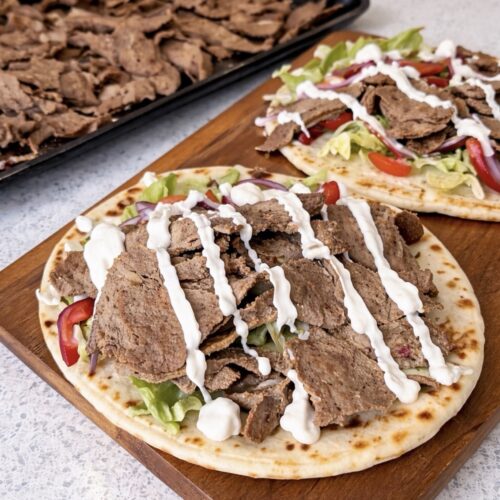
Sheet Pan Doner Kebab Recipe (Viral TikTok Method)
Ingredients
Doner Meat
- 2 lbs (900g) 80/20 ground beef, or a 50/50 blend of beef and lamb
- 1 large onion, grated and squeezed dry
- 4 garlic cloves, minced
- 3 tbsp full-fat Greek yogurt
- 1.5 tsp ground cumin
- 1 tsp paprika (sweet or smoked)
- 1 tsp dried oregano
- 1 tsp ground coriander
- 1.5 tsp salt
- 1/2 tsp black pepper
- 1/4 tsp red pepper flakes (optional)
Garlic yogurt sauce
- 1 cup full-fat Greek yogurt
- 3 garlic cloves, minced
- 1 tbsp lemon juice
- 1 tbsp olive oil
- Salt to taste
Tomato-butter sauce
- 2 tbsp butter
- 2 tbsp tomato paste
- 3 tbsp hot water
For serving
- Lavash or pita bread
- Shredded lettuce, sliced tomatoes, red onion tossed with sumac, cucumber, pickles
Instructions
- Preheat oven to 400°F. Line a rimmed baking sheet with parchment paper.
- Grate onion and squeeze out as much liquid as possible. Combine with garlic, yogurt, all spices, and ground meat in a large bowl. Mix by hand 2 to 3 minutes until the mixture is sticky and paste-like.
- Divide into 4 portions. Place one portion on a sheet of parchment. Cover with a second sheet and use a rolling pin to flatten to about 1/4 inch thickness. Remove top parchment. Roll tightly from the long edge, keeping bottom parchment wrapped around the log. Twist ends to seal. Repeat with remaining portions.
- Place rolls seam-side down on the prepared baking sheet. Bake 20 minutes.
- Check internal temperature (should be 165°F). Let rest 5 minutes. Unroll parchment and tear meat into rough 2 to 3 inch pieces. Spread in a single layer on the baking sheet.
- Broil on high, 6 inches from element, for 2 to 3 minutes until edges are crispy. Watch closely.
- While meat rests, whisk together garlic yogurt sauce ingredients. For tomato-butter sauce, melt butter, stir in tomato paste, add hot water, and stir smooth.
- Serve in lavash or pita with both sauces and toppings.
Notes
Mixing: The meat mixture must be sticky and paste-like before rolling. If it still looks like loose ground beef after 2 minutes of mixing, keep going.
Rolling thickness: A quarter inch or slightly thinner. The thinner the roll, the better the final texture.
Broiler: Watch the pan the entire time. Broilers vary and over-broiling happens fast.
Storage: Refrigerate up to 4 days. Reheat in a hot dry skillet for best texture. Freeze up to 3 months.

Cynthia Odenu-Odenu is the founder of Cyanne Eats. A registered nurse with a passion for food, she brings the same attention to detail from her professional life into the kitchen. From chain restaurant rankings to grocery finds and easy recipes, Cynthia covers it all and helps everyday food lovers eat better and spend smarter.