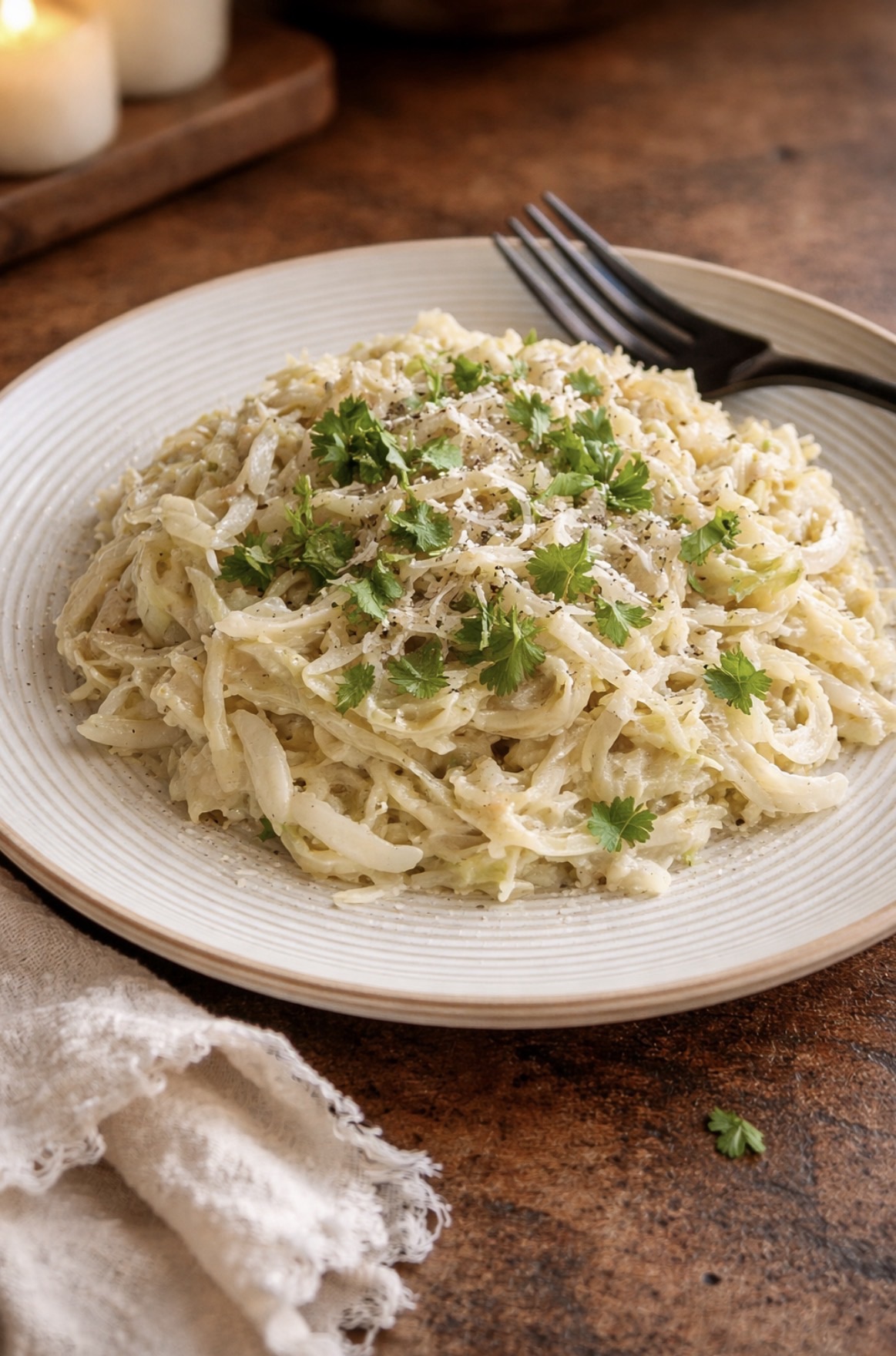
Cabbage alfredo is a low-carb dish made by sauteing thinly sliced green cabbage until tender, then tossing it in a butter, heavy cream, and parmesan sauce that coats every ribbon just like fettuccine.
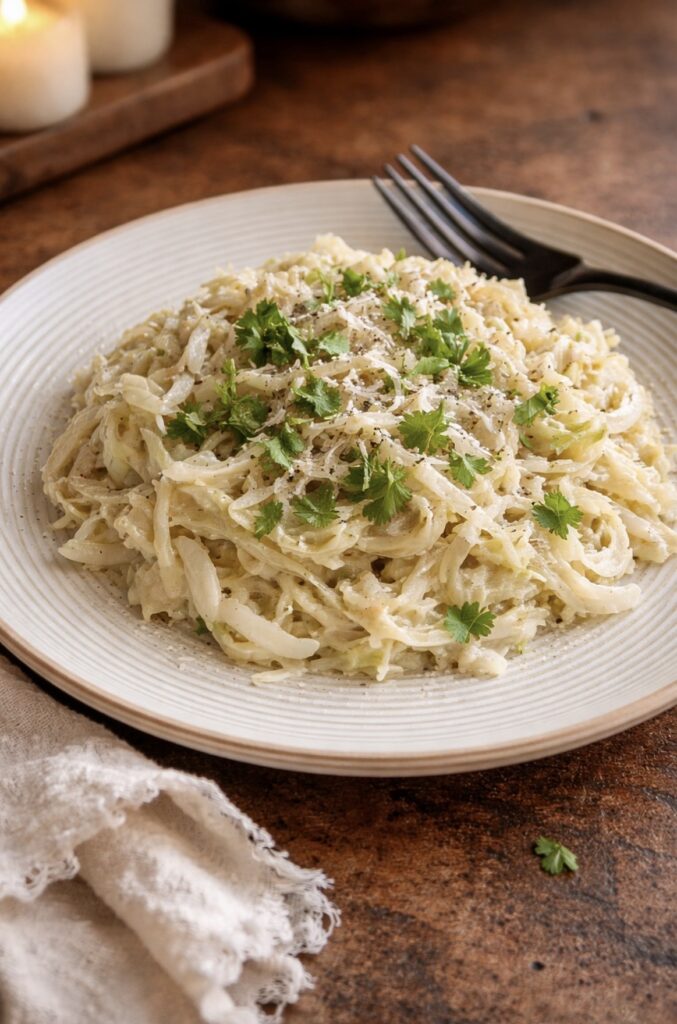
I was skeptical the first time I made this. Cabbage as pasta felt like a stretch. But the texture of properly cooked cabbage ribbons is genuinely close to al dente fettuccine, and the alfredo sauce is exactly the same one you would make for pasta. The result is rich, creamy, and satisfying in all the right ways.
The key is in the technique, not the ingredients. Get the cabbage cut right, cook out the moisture properly, and the sauce will cling the way it should.
Table of Contents
Key Takeaways
- Cut the cabbage into quarter-inch ribbons, not shreds. Thin shreds turn mushy; thick ribbons hold up and mimic fettuccine
- Salting the cabbage and letting it sit for 10 minutes before cooking draws out moisture so the sauce does not get watered down
- Never boil the cream and never add parmesan over high heat. Both break the sauce
- Use freshly grated parmesan only. Pre-shredded parmesan has anti-caking agents that make the sauce grainy
- This dish is genuinely low-carb: about 5 to 10 grams of net carbs per serving compared to 42 grams in a standard pasta alfredo
What Is Cabbage Alfredo?
Cabbage alfredo takes the same sauce you would make for fettuccine alfredo and pours it over sauteed cabbage instead of pasta. The cabbage is sliced into ribbons and cooked until soft but still slightly firm, which gives it a texture that is surprisingly close to noodles.
It is not a perfect replica of pasta. That is not the point. It is a genuinely good dish that delivers the flavor of alfredo with a fraction of the carbs, and it costs about two dollars to make.
One cup of cooked cabbage has roughly 5 grams of net carbs and 22 calories. One cup of cooked fettuccine has about 42 grams of net carbs and 220 calories. The sauce stays identical. The comfort-food satisfaction stays intact. The macros are completely different.
Cabbage Alfredo vs. Haluski: What Is the Difference?
These are two different dishes. Haluski is a Central European dish made with actual egg noodles and cabbage cooked together in butter.
No cream, no parmesan in the traditional version. The noodles are the main event. Cabbage alfredo has no pasta at all.
The cabbage stands in for the noodles entirely, and the sauce is the classic Italian-American cream and cheese variety.
Why Your Cabbage Alfredo Gets Watery (And How to Prevent It)
This is the most common problem with this recipe and it has a simple cause. Cabbage holds a significant amount of water inside its cells. When you cook it, that water releases into the pan. If it ends up in your sauce, you get a watery, diluted mess instead of a creamy coating.
There are three ways to prevent it.
Salt and rest: Slice the cabbage, toss it with a teaspoon of salt in a colander, and let it sit for 10 minutes. The salt draws water out through osmosis. Squeeze the cabbage firmly over the sink before cooking.
High, dry heat: Cook the cabbage in a wide pan over medium-high heat without a lid. The moisture needs somewhere to evaporate. Crowding the pan traps steam. If you have a lot of cabbage, cook it in two batches.
Cook it fully before adding sauce: Undercooked cabbage keeps releasing water after the sauce goes in. The cabbage should be tender and any visible liquid in the pan should have cooked off before you build the sauce.
Ingredients You Need
Green cabbage, 1 small head (about 6 cups sliced): Regular green cannonball cabbage is the right choice. It has a mild flavor, holds its shape well when cooked, and costs almost nothing. Savoy cabbage is a good alternative with a slightly nuttier flavor. Do not use red or purple cabbage. It turns the sauce an unappetizing blue-purple color.
Butter, 3 tablespoons: Divided. Two tablespoons go into the sauce, one for the initial garlic cook.
Garlic, 3 to 4 cloves (minced): Fresh garlic. Garlic powder is not a substitute here.
Heavy cream, 3/4 cup: Do not substitute with milk or half and half. The fat content in heavy cream is what keeps the sauce from breaking. Thinner dairy will produce a watery sauce.
Parmesan, 3/4 cup freshly grated: This is important. Parmesan sold pre-shredded in bags has cellulose powder added to prevent clumping. That cellulose does not melt cleanly and leaves the sauce grainy. Buy a wedge and grate it yourself. A Microplane Premium Zester is the right tool for this and it also works for garlic and nutmeg.
Nutmeg, 1/4 teaspoon: Optional but recommended. It rounds out the cream and parmesan in a way that is hard to identify but noticeable when it is missing. Classic in any cream-based pasta sauce.
Olive oil, 1 tablespoon: For sauteing the cabbage.
Salt and black pepper to taste: Season at the end after the parmesan is in. The cheese is already salty so taste before you add anything.
How to Cut the Cabbage
The cut matters more than most recipes acknowledge. The goal is ribbons about a quarter inch wide, not fine shreds.
Halve the cabbage through the core and remove the core with a diagonal cut. Lay each half flat on your cutting board and slice across into strips. A sharp chef’s knife works fine. If you have a mandoline, it produces more uniform ribbons in much less time. The Benriner Super Slicer is what many recipe developers use for this specifically and it adjusts from very thin to about a third of an inch.
After slicing, toss with a teaspoon of salt in a colander and let sit 10 minutes. Squeeze out excess water and pat dry with paper towels.
How to Make It
Step 1: Saute the cabbage
Heat the olive oil and one tablespoon of butter in a large skillet or saute pan over medium-high heat. Add the cabbage in a single layer, or as close to it as possible. Cook for 8 to 12 minutes, stirring occasionally, until the cabbage is tender, slightly golden at the edges, and any visible liquid in the pan has cooked off. You want soft but not floppy. Set the cabbage aside on a plate.
Step 2: Build the sauce
Reduce heat to medium-low. Add the remaining two tablespoons of butter to the same pan. Once melted, add the garlic and cook for 30 to 45 seconds until fragrant. Do not let it brown.
Pour in the heavy cream and stir to combine. Bring it to a gentle simmer and cook for 3 to 4 minutes until it reduces slightly and coats the back of a spoon. Keep the heat low. The cream should never reach a rolling boil.
Step 3: Add the parmesan
Reduce heat to the lowest setting. Add the grated parmesan in two additions, whisking after each until fully melted and smooth. Add the nutmeg, taste, and season with salt and pepper.
Step 4: Combine and serve
Add the cooked cabbage back to the pan and toss to coat everything in the sauce. If the sauce has thickened too much, add a splash of cream to loosen it. Serve immediately. The sauce continues to thicken as it sits.
Tips for the Best Result
Use a wide pan. A narrow pan traps steam and makes the cabbage soggy instead of sauteed. A 12-inch saute pan with a lid is ideal. The lid is useful if you want to steam the cabbage slightly at the end to soften it without more browning.
Do not rush the cabbage. Cooking it too fast over high heat browns the outside before the inside softens. Medium-high heat with occasional stirring is the right pace. You want golden edges and tender centers.
Add cream cheese for extra body. Stirring two ounces of softened cream cheese into the sauce before the parmesan goes in creates a noticeably thicker, silkier result. This is the most popular community upgrade and it works well.
Finish with a squeeze of lemon. A small squeeze of fresh lemon juice at the very end brightens the cream and balances the richness. Optional but worth trying.
Taste right before serving. The sauce picks up salt from the parmesan as it sits. What tasted right five minutes ago may need a small adjustment by the time it hits the bowl.
Protein Pairings
Chicken: Sear boneless chicken breast or thighs separately and slice on top. Rotisserie chicken folded into the finished dish works on weeknights. Crispy chicken thighs are the most visually striking option.
Italian sausage or kielbasa: Slice and brown the sausage first, set it aside, and cook the cabbage in the rendered fat. Add the sausage back when you toss everything together. This is the most popular TikTok version of the dish.
Bacon or pancetta: Cook until crispy, remove from the pan, and cook the cabbage in the rendered fat. Crumble the bacon over the finished dish as a garnish.
Shrimp: Season and sear quickly in butter, set aside, and fold in at the very end so they do not overcook.
Variations Worth Trying
Cajun sausage version: Add 1 to 2 teaspoons of Cajun seasoning to the cream sauce alongside the garlic and use andouille sausage as the protein. The spice cuts through the richness of the cream and the combination is very good.
Lemon alfredo: Add the zest of half a lemon to the cream sauce and a small squeeze of juice at the end. Brighter and lighter than the classic version.
Cottage cheese high-protein version: Blend one cup of cottage cheese until completely smooth and use it in place of or alongside the heavy cream. This version delivers significantly more protein per serving and is a popular bodybuilding-community adaptation.
Baked casserole version: Layer sliced cabbage in a 9×13 baking dish with butter pats, cubed cream cheese, sour cream, heavy cream, and parmesan. Cover with foil and bake at 375 degrees for 35 to 45 minutes until bubbly and golden. Let it rest 10 minutes before serving. The sauce thickens considerably as it cools.
More Cabbage Recipes
Cabbage is having a genuine moment right now and there are a lot of good ways to cook it. My Golumpki Soup Recipe brings all the flavor of Polish stuffed cabbage rolls into a one-pot soup that is even better the next day. If you are building a full cabbage repertoire, the 15 Best Cabbage Recipes roundup covers the best ones worth making this year.
How to Store and Reheat
Store leftovers in an airtight container in the fridge for up to 3 days. The sauce will solidify as it cools. Reheat on the stovetop over low-medium heat with a splash of heavy cream or milk stirred in to loosen the sauce. The stovetop method produces a much better result than the microwave, which can cause the sauce to separate.
Do not freeze this dish. Cream sauces break when frozen and thawed, and the cabbage softens too much in the process.
Conclusion
Cabbage alfredo works because the technique is right, not because cabbage is a miracle substitute. Salt and drain the cabbage so the sauce does not get watery, cook it at the right heat and thickness, and treat the alfredo sauce with the same care you would for pasta. Do those things and the result is a genuinely satisfying dinner that happens to have a fraction of the carbs.
FAQ
Does cabbage alfredo actually taste like pasta?
Not exactly, but it is closer than you might expect when cut into proper ribbons. The texture is similar to slightly al dente fettuccine. The sauce is identical to a real alfredo. If you are expecting a perfect replica, you will be slightly underwhelmed. If you approach it as its own dish, you will probably love it.
Why is my cabbage alfredo watery?
The cabbage released water into the sauce. Salt the sliced cabbage and let it sit for 10 minutes before cooking, then squeeze out the moisture. Also make sure the pan is wide enough for heat to evaporate liquid rather than trap it, and cook the cabbage fully before adding the sauce.
Can I use pre-shredded coleslaw cabbage?
It works but produces a softer, more mushy result than slicing your own ribbons. The pre-shredded pieces are too fine to hold their shape like fettuccine. If convenience is the priority, it is acceptable. For the best result, slice your own.
Can I use milk instead of heavy cream?
Not recommended. Milk does not have enough fat content to produce a stable, creamy sauce. It will likely break or stay watery. If you need a lighter alternative, a combination of milk and cream cheese works better than milk alone.
Is cabbage alfredo keto-friendly?
Yes. A typical serving has 5 to 10 grams of net carbs, which fits comfortably within standard keto limits. The sauce is already keto-friendly. Swapping pasta for cabbage is the only change needed.
Can I freeze cabbage alfredo?
It is not recommended. Cream-based sauces tend to break when frozen and thawed, and the cabbage becomes too soft after freezing. Make it fresh or refrigerate for up to 3 days.
What protein goes best with cabbage alfredo?
Any protein works. Italian sausage or kielbasa is the most popular TikTok version. Crispy chicken thighs look great plated on top. Bacon adds smokiness without requiring extra cooking if you use the rendered fat for the cabbage.
Cabbage Alfredo Recipe (Creamy Low-Carb Pasta Alternative)
Ingredients
- 1 tsp small head green cabbage, core removed and sliced into 1/4-inch ribbons (about 6 cups)
- 1 tbsp teaspoon salt (for drawing out moisture)
- 1 tbsp olive oil
- 3 tbsp butter, divided
- 3 to 4 cloves garlic, minced
- 3/4 cup heavy cream
- 3/4 cup freshly grated parmesan
- 1/4 tsp nutmeg
- Salt and black pepper to taste
Optional
- 2 oz softened cream cheese (for extra thickness)
- Squeeze of fresh lemon juice (for brightness)
- Fresh parsley, for garnish
Instructions
- Slice cabbage into 1/4-inch ribbons. Toss with 1 teaspoon salt in a colander and let sit 10 minutes. Squeeze out excess moisture and pat dry.
- Heat olive oil and 1 tablespoon butter in a large skillet over medium-high heat. Add cabbage and cook 8 to 12 minutes, stirring occasionally, until tender and slightly golden. Remove to a plate.
- Reduce heat to medium-low. Add remaining 2 tablespoons butter to the pan. Once melted, add garlic and cook 30 to 45 seconds until fragrant.
- Pour in heavy cream and bring to a gentle simmer. Cook 3 to 4 minutes until slightly thickened.Pour in heavy cream and bring to a gentle simmer. Cook 3 to 4 minutes until slightly thickened.
- Reduce heat to low. Stir in cream cheese if using. Add parmesan in two additions, whisking after each until smooth. Add nutmeg, taste, and season with salt and pepper.
- Return cabbage to the pan and toss to coat. Add a splash of cream if the sauce is too thick. Serve immediately.
Notes

Cynthia Odenu-Odenu is the founder of Cyanne Eats. A registered nurse with a passion for food, she brings the same attention to detail from her professional life into the kitchen. From chain restaurant rankings to grocery finds and easy recipes, Cynthia covers it all and helps everyday food lovers eat better and spend smarter.