
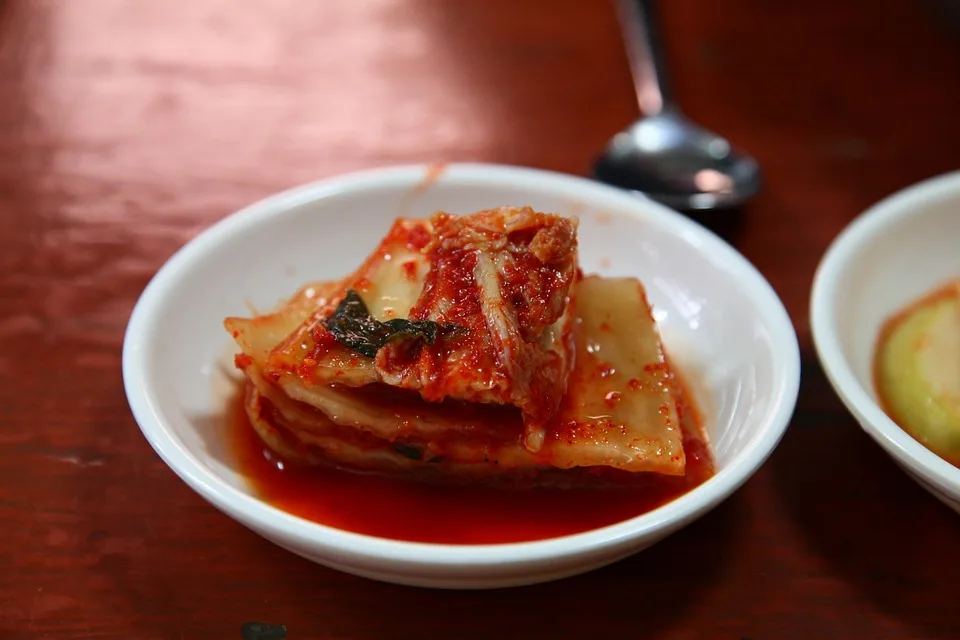
Kimchi smells sour, garlicky, and a little funky, with a sharp tang from fermentation and a kick of chili and ginger underneath. It’s a strong, pungent smell that takes some getting used to, but once you get past the first whiff, the flavor makes it worth it.
I get asked about this a lot, so in this article I’m covering what kimchi actually smells like, why it smells the way it does, whether eating it makes you smell, and how to get rid of the odor if it’s taking over your fridge, your kitchen, or your breath.
Key Takeaways
- Kimchi’s smell comes from lactic acid fermentation plus garlic, ginger, and sulfur compounds like hydrogen sulfide.
- The odor is strongest right when you open the container and fades once the kimchi has been eaten or exposed to air.
- An airtight container plus a box of baking soda or some activated charcoal in the fridge keeps the smell contained.
- Brushing your teeth, drinking water, and chewing sugar-free gum are the quickest ways to get rid of kimchi breath.
Table of Contents
What Does Kimchi Smell Like?
There’s no denying that kimchi requires some getting used to, but regardless of your personal preferences, it’s undeniably a distinctive and fascinating food.
Kimchi is made by fermenting vegetables, usually napa cabbage, with a blend of garlic, ginger, chili peppers, and other seasonings. During fermentation, naturally occurring bacteria break down the vegetables and create a mix of complex flavors and aromas.
One of the most distinctive parts of that aroma is its pungent, spicy edge. I’d describe it as sour and a little funky, with hints of garlic and ginger cutting through. Others find it more spicy and invigorating than sour. Everyone’s nose reads it a bit differently, but for those of us who love kimchi, the smell is just one small part of what makes it so good.
Does Kimchi Make You Smell?

If you’re worried this delicious Korean staple can make you smell, I get it, so let me walk through what’s actually happening.
Kimchi is a napa cabbage-based fermented vegetable dish served as a side in traditional Korean cuisine. It’s known for both its health benefits and its hot, tangy flavor. It’s not the only fermented Korean staple with a strong smell either. Korean soybean pastes like doenjang go through a similar fermentation process and carry an equally pungent, funky aroma.
So, does kimchi make you smell bad? It can, but that’s not necessarily a bad thing.
When vegetables ferment, they produce lactic acid bacteria. Those bacteria give kimchi its characteristic tangy flavor, and they’re also what can cause a slightly sour or pungent odor. That odor usually isn’t very strong, and it’s only really noticeable if you’re close to someone who’s recently eaten a lot of it.
Why Does Kimchi Smell Bad?
Kimchi is enjoyed by people around the world for its unique flavor and health benefits, but it’s also known for a pungent odor that some people find unpleasant.
That smell comes from the fermentation process. Once the vegetables are mixed with the spice blend, salt, and other ingredients, they’re left to ferment for several days or weeks in a cool, dark place. During that time, naturally occurring bacteria on the vegetables break down sugars and produce lactic acid and other compounds, which give kimchi its sour, tangy flavor.
One byproduct of fermentation is hydrogen sulfide, a gas with a strong, unpleasant odor similar to rotten eggs. It forms when bacteria break down sulfur-containing compounds in the vegetables and spices. The longer the kimchi ferments, the more hydrogen sulfide builds up, which intensifies the smell.
Despite the strong odor, kimchi is a staple in Korean cuisine and a genuinely healthy addition to your diet. It’s high in fiber, vitamins, and minerals, and it contains beneficial probiotics that support digestive health. If you’re new to kimchi, it can take some time to get used to the flavor and the smell, but most people end up loving it. That same gochugaru, garlic, and salt combination shows up all over Korean cooking, including in a quick spiced cabbage side I make when I want the flavor without a full batch of kimchi.
How to Get Rid of Kimchi Smell
This section covers how to get rid of kimchi smell in your fridge, storage container, house, and mouth.
How to Get Rid of Kimchi Smell in Fridge

Kimchi has a very strong, distinctive odor that spreads easily to other foods in your fridge. With a little effort, you can get rid of the smell and keep it from coming back.
A few tips to get started:
- Check for spills: Check for any spills or leaks in your fridge first. If you find any, clean them up right away to keep the kimchi smell from spreading.
- Remove any spoiled food: Toss any expired or spoiled food in your fridge. It adds to the overall smell and makes the kimchi odor harder to get rid of.
- Take out the shelves and drawers: Remove all the shelves and drawers and wash them thoroughly with soap and hot water. This removes lingering odors before they spread to other areas of your fridge.
- Clean the inside of your fridge: Wipe down the inside with a mixture of water and vinegar, paying close attention to wherever you stored the kimchi, then rinse with water.
- Air it out: Once you’ve cleaned your fridge, leave it open for a few hours to let air circulate.
- Use activated charcoal: Activated charcoal is a great odor absorber. Place a few small bags in your fridge and let them sit for a few days, and they’ll soak up the smell and leave your fridge smelling clean.
- Baking soda: An open box of baking soda in your fridge absorbs unwanted smells. Replace it every few months to keep it working.
- Coffee grounds: Used coffee grounds are great at absorbing strong odors. Place a bowl of them in your fridge for a few days to help pull out the kimchi smell.
How to Get Rid of Kimchi Smell in Container
A few methods that work well for getting the smell out of a storage container:
- White vinegar method:
- Fill the container with equal parts water and white vinegar.
- Let it sit for a few hours or overnight.
- Scrub the container with a sponge or brush, then rinse thoroughly with water.
- Dry the container completely before using it again.
- Baking soda method:
- Mix baking soda with water to form a paste.
- Spread the paste over the container, covering every inch.
- Let it sit for a few hours or overnight.
- Scrub the container with a sponge or brush, then rinse thoroughly with water.
- Dry the container completely before using it again.
- Lemon juice method:
- Squeeze fresh lemon juice into the container.
- Fill the container with hot water.
- Let it sit for a few hours or overnight.
- Scrub the container with a sponge or brush, then rinse thoroughly with water.
- Dry the container completely before using it again.
- Odor-eliminating sprays and cleaners:
- Look for odor-eliminating sprays or cleaners made for stubborn odors like kimchi.
- Check the label for enzymes, which are especially good at breaking down organic matter and removing odors.
- Apply the product to the container following the label instructions.
- Let it sit for a few minutes, or as instructed on the label.
- Scrub the container with a sponge or brush, then rinse thoroughly with water.
- Dry the container completely before using it again.
How to Get Rid of Kimchi Smell in House

I love kimchi, but that smell can linger in a house for days, even weeks. A few tricks help you get rid of it for good.
- Open the windows:
- Open windows first when trying to get rid of any odor in your house.
- Fresh air circulates and carries away unpleasant odors.
- Use natural deodorizers:
- Baking soda, activated charcoal, and vinegar are great at absorbing and neutralizing odors.
- Sprinkle baking soda on carpets and furniture, leave it overnight, then vacuum it up in the morning.
- Place activated charcoal in a bowl or pouch and leave it in the room to absorb odors.
- Spray vinegar in the air or on surfaces to neutralize odors. Add a few drops of lemon or lavender essential oil to make it smell better.
- Clean surfaces:
- Surfaces in your home absorb and hold onto odors, so clean them regularly.
- Use warm water and mild soap on your floors, countertops, and other surfaces.
- Add a few drops of essential oil to your cleaning solution to freshen the room.
- Wash fabrics:
- Curtains, couch covers, and bedding absorb and hold odors.
- Wash these fabrics regularly, adding a cup of vinegar to the wash to help neutralize odors.
- Hang fabrics outside to dry when you can. Fresh air helps remove lingering odors.
- Use an air purifier:
- An air purifier removes unwanted odors and particles from the air.
- Look for one with a HEPA filter, designed to trap small particles and pollutants.
- Clean or replace the filter regularly for the best results.
How to Get Rid of Kimchi Smell in Mouth

A few effective ways to get rid of kimchi breath:
- Brush your teeth:
- Brush thoroughly, including your tongue and the roof of your mouth.
- Use a good fluoride toothpaste to help kill bacteria and freshen your breath.
- A toothpaste with baking soda or hydrogen peroxide helps neutralize odors.
- Brush after every meal, especially after strong-smelling foods like kimchi.
- Use mouthwash:
- Look for a mouthwash with chlorine dioxide or zinc chloride, which help neutralize odors.
- Skip alcohol-based mouthwashes. They dry out your mouth and can make the odor worse.
- Chew gum:
- Sugar-free gum increases saliva production, which helps wash away odor-causing bacteria.
- Skip gum with sugar. It can actually contribute to bad breath.
- Drink water:
- Plenty of water keeps your mouth hydrated and washes away food particles and bacteria.
- Drink water before and after eating kimchi to help minimize the odor.
- Add lemon or mint to your water for an extra freshness boost.
- Eat other foods:
- Eating other foods afterward helps mask the kimchi smell and freshen your breath.
- High-fiber foods, like fruits and vegetables, help scrub your teeth and tongue.
- Parsley, mint, and cinnamon all work as natural breath fresheners.
My Take
Yes, kimchi has a strong smell, but trust me, once you taste it, you’ll be hooked. The tangy, sour, spicy flavor is irresistible, and it’s no wonder kimchi has become such a beloved staple in Korean cuisine. If the smell worries you, don’t let it stop you. With a little ventilation and some natural deodorizers, you can enjoy kimchi without any lingering aromas. Give it a try and see for yourself why it’s become so popular around the world.
FAQs

Cynthia Odenu-Odenu is the founder of Cyanne Eats. A registered nurse with a passion for food, she brings the same attention to detail from her professional life into the kitchen. From chain restaurant rankings to grocery finds and easy recipes, Cynthia covers it all and helps everyday food lovers eat better and spend smarter.