
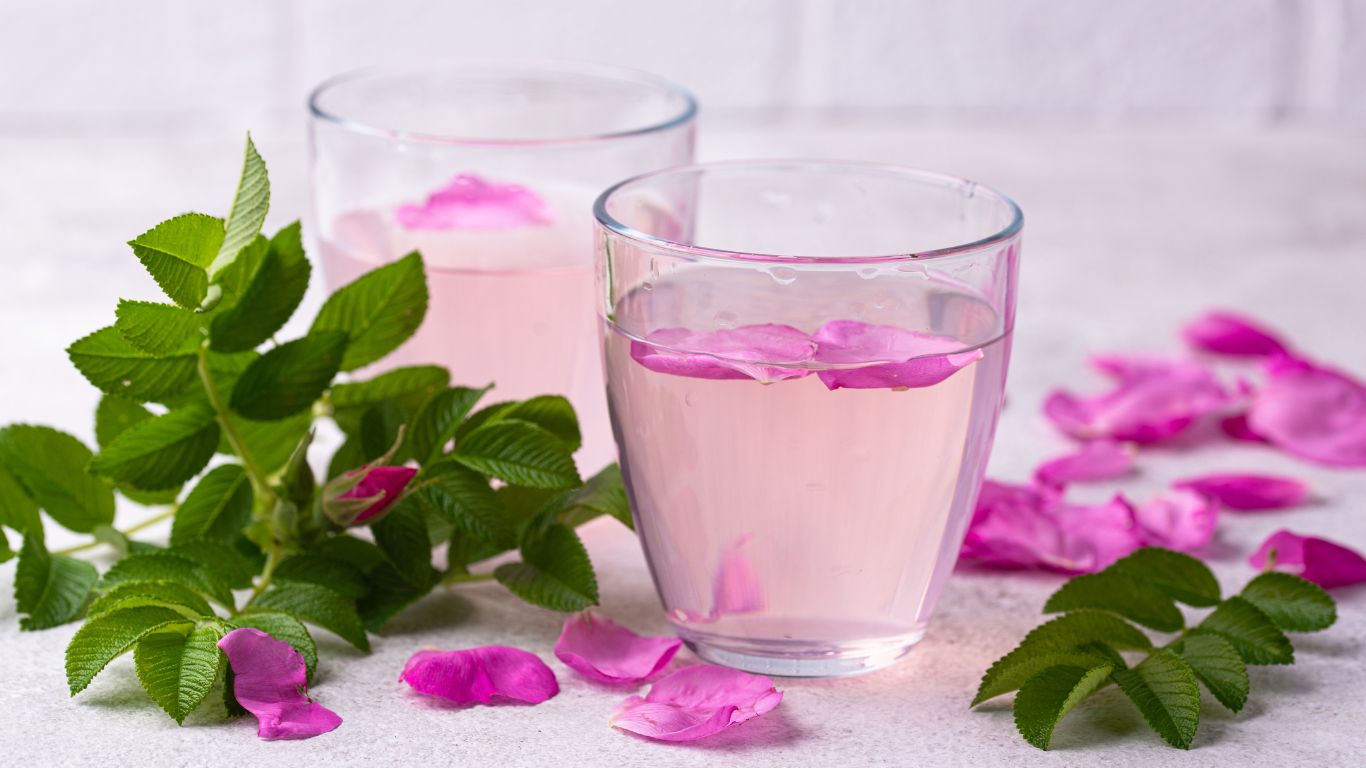
Orange water, hibiscus water, and rose essence are the closest substitutes for rose water, since they’re all floral distillations with a similar delicate character. Vanilla extract, lavender, and almond extract work too, with a bit more flavor adjustment.
I keep orange water on hand specifically for the times I’ve run out of rose water mid-recipe. This is the full rundown of what works, how much to use, and what to expect from each one.
Key Takeaways
- Orange water and hibiscus water are the closest 1:1 substitutes since they’re both floral distillations, not extracts.
- Rose essence is concentrated, so use about a quarter of the amount you’d use of rose water.
- Vanilla and almond extract work in sweet baking but aren’t a good match for savory dishes.
- You can make real rose water at home with just fresh roses and distilled water if you’d rather skip substitutes entirely.
Table of Contents
What Is Rosewater?
Rose water is made by distilling rose petals, and it shows up often in Middle Eastern, French, and Mediterranean cooking.
Added to a dish, it brings a delicate, fruity, floral note without overpowering everything else. That’s part of why it works in both sweet and savory recipes.
Best Substitute For Rose Water
Which substitute works best depends on your recipe and how strong you want the floral note to be.
1. Orange Water
Orange water comes from crushed orange flowers steeped in distilled water, and it has more of a fruity character than a floral one. Swap it in 1:1 for rose water, and add half a teaspoon of sugar to balance the citrus note.
2. Vanilla Extract
Vanilla extract is a pantry staple that works in sweet baked goods, though it won’t bring the floral note. Use about half the amount, since it’s more concentrated in flavor than rose water. Skip it for savory dishes.
3. Hibiscus Water
Hibiscus water is the closest match in intensity, so it substitutes 1:1. It carries a similar light, floral character with a bit of a tart, almost Caribbean edge, and works in both sweet and savory dishes.
4. Almond Extract
Almond extract brings a sweet, nutty flavor that’s common in Middle Eastern desserts. It’s potent, so start with about a quarter of the amount of rose water called for and adjust to taste.
5. Rose Essence
Rose essence is rose water with the liquid evaporated down, so it’s much more concentrated. Use about a quarter of the amount, for example half a teaspoon in place of two teaspoons of rose water.
6. Lemon Juice
Lemon juice won’t replicate the floral note, but it adds its own fresh, tart brightness. Add a bit of sugar to balance the tartness, and taste as you go since lemon flavor comes through more assertively than rose water does.
7. Cinnamon
Cinnamon brings warmth and sweetness instead of floral notes. Use about half a teaspoon in place of a teaspoon of rose water, and go easy since it’s stronger and can oversweeten a dessert that already has milk and sugar in it.
8. Lavender
Lavender has a sweet, floral flavor that’s a reasonable stand-in, though it leans more earthy than rose. Start small since it’s potent, and it works especially well in dairy-based desserts.
9. Cardamom
Cardamom doesn’t taste like rose water, but its aromatic quality can round out a dish in a similar way, especially in meat or chicken recipes alongside other spices. A few pods is usually enough since its flavor is soft rather than overpowering.
10. Pandan
Pandan has a vanilla-like scent with a musky undertone. It’s milder than rose water, so use a bit more, and it works well in desserts where you want a distinctive aroma.
Can I Make Rose Water Myself?
Yes. You just need fresh, preferably organic roses, distilled water, and a large pot. Remove the petals from the roses and add distilled water to the pot until it covers them.
Boil for about 30 minutes on medium heat, stirring occasionally, then reduce heat and simmer another 10 minutes. Let it cool, strain out the petals, and pour the liquid into a clean, airtight container.
Homemade rose water works for cooking, as a skin toner, face mist, or hair rinse. Making your own also means you control exactly what’s in it.
Can I Use Lavender Essence Instead of Rose Water?
Sometimes. They’re not fully interchangeable since lavender essence and rose water have different scent profiles and typical uses.
Lavender essence leans more toward calming, aromatherapy-style products like bath salts and lotions, though it can work as a rose water substitute in skin care. It’s stronger than rose water, so use less.
In cooking and baking specifically, lavender essence is less common than rose water and may not deliver the same delicate floral note. Save rose water for cooking and skin care, and lean on lavender essence for relaxation-focused products.
What Are Some Uses For Rose Water?
Rose water is genuinely dual-purpose: a skin care staple and a cooking ingredient.
As a skin toner, it hydrates and balances skin, and works well for sensitive skin types either on its own or mixed into a moisturizer or face mask. As a face mist, it’s a quick way to refresh your skin during hot weather, and it doubles as a hair rinse for a subtle floral scent.
In the kitchen, rose water is common in Middle Eastern and Indian dishes like baklava and rice pudding, and it works in drinks like lemonade or tea for a floral touch.
Homemade Rose Water Recipe
If you have access to fresh rose petals, making your own is simple. Cold-pressing is the traditional method, but hot-infusing works fine without special equipment.
Ingredients:
- 10 stems of medium-sized fresh organic roses
- 2 liters of distilled water
- 2 air-tight bottles/jars
Instructions:
- Gently pluck the petals from the roses and transfer them to a large strainer.
- Rinse the petals under lukewarm water to remove any dirt or chemicals.
- Place the rinsed petals in a large pot and add enough distilled water to cover them.
- Bring to a boil over medium heat. Once boiling, reduce the heat and let it simmer, covered, for 30 minutes.
- Remove from heat and strain the mixture to separate the petals from the water. Discard the petals.
- Let it cool to room temperature, then pour it into an airtight bottle or jar and store it in a cool, dark place.
- Wait 2 weeks before using it. The fragrance and flavor improve as it sits.
My Take
The right substitute really depends on whether you’re baking something sweet or cooking something savory, and how strong you want the floral note to come through.
Don’t let a missing bottle of rose water stall your recipe. Grab whatever’s closest on this list and adjust the amount as you taste.
FAQs
Can I use rose water substitutes in savory dishes?
Hibiscus water and orange water work best in savory dishes since they’re floral distillations rather than sweet extracts. Vanilla and almond extract are better saved for baking, since their sweetness doesn’t fit most savory recipes.
How much substitute should I use for rose water?
Most substitutes swap in 1:1, but concentrated options like rose essence or almond extract need much less, around a quarter of the amount, since they’re stronger than rose water.
Does rose water go bad?
Yes, both store-bought and homemade rose water lose potency over time. Homemade rose water keeps for a few months in the fridge in an airtight container, while commercial bottles typically list a shelf life on the label.

Cynthia Odenu-Odenu is the founder of Cyanne Eats. A registered nurse with a passion for food, she brings the same attention to detail from her professional life into the kitchen. From chain restaurant rankings to grocery finds and easy recipes, Cynthia covers it all and helps everyday food lovers eat better and spend smarter.