
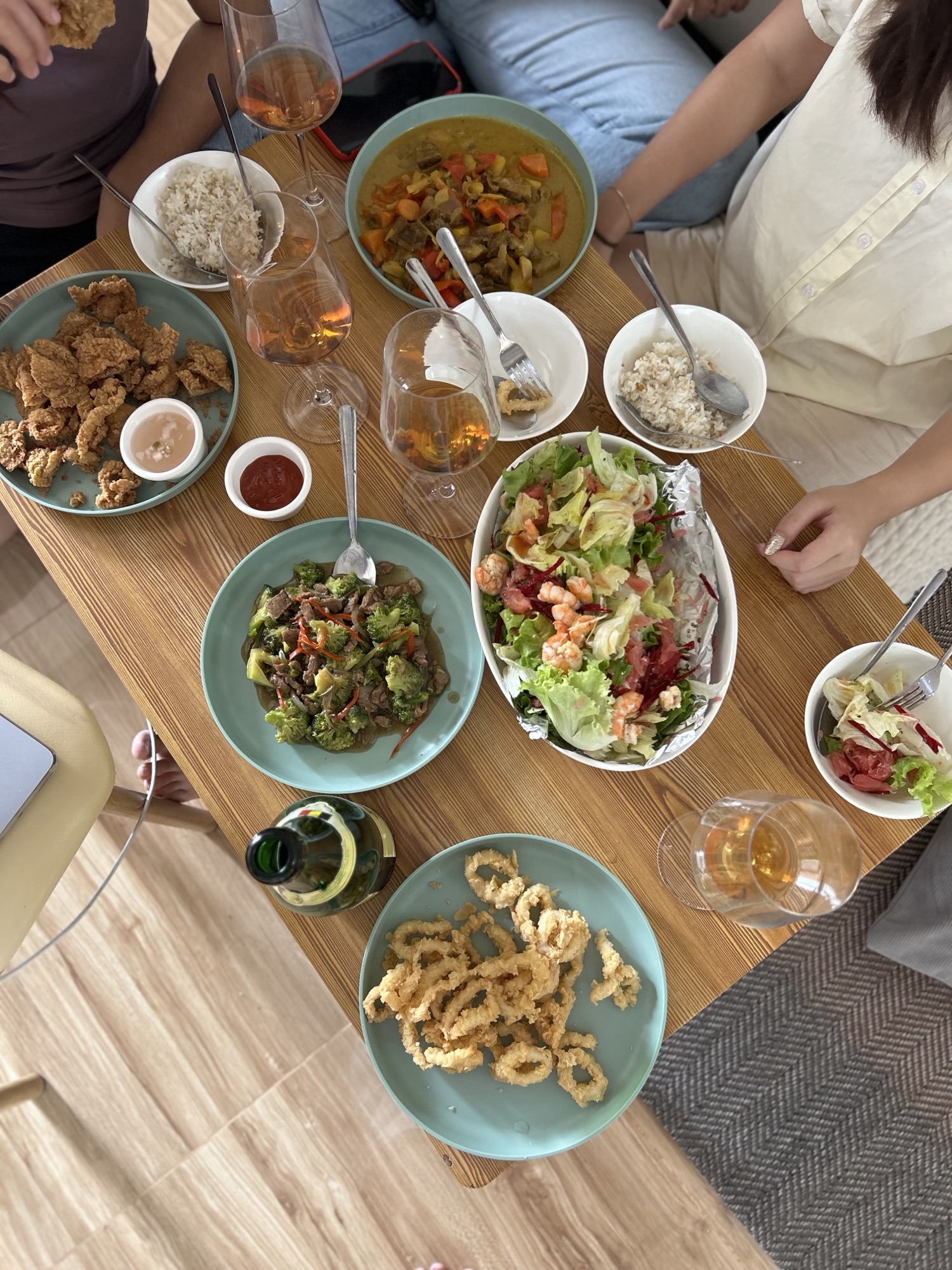
A realistic grocery budget for family of 4 in 2026 runs between $1,000 and $1,365 per month depending on how you shop. Most families are quietly losing $200 or more each month to budget leaks they cannot see.
I started paying close attention to what our grocery budget was actually doing a while back, and the first thing I noticed was that the number I thought we were spending was not the number we were actually spending. Not even close.
Groceries have gone up about 27 to 28 percent since 2020. Ground beef alone is up roughly 72 percent over that same period. So if your bill keeps climbing and you cannot figure out why, you are not imagining it. The prices genuinely moved.
What I found when I actually dug into the numbers is that most families are not over budget because they are buying the wrong things. They are over budget because a few specific patterns keep showing up every single month, and most people have no idea those patterns are there until they start tracking.
Table of Contents
Key Takeaways
- The USDA Thrifty Food Plan for a family of four came in at $1,000 per month in January 2026. That is the government’s baseline for a nutritionally complete grocery budget with no extras
- The USDA Moderate plan for the same family runs around $1,365 per month. That is the realistic middle target for most households
- Most American families are spending close to or just above the Thrifty plan level, which means the budget is tighter than most people realize
- Food waste costs the average family of four roughly $254 per month. That is money spent on groceries that never gets eaten
- 76 percent of grocery purchase decisions happen in the store, not at home. That is where most budgets actually break
- Beef prices are up about 72 percent since 2020 and still climbing, making protein the single biggest budget pressure for most families right now
- Switching to Aldi or a discount store as your primary stop can save $200 to $400 per month on its own
What the USDA Says a Family of 4 Should Spend
The USDA puts out monthly food cost benchmarks that give you a real reference point for what a family of your size should actually be spending. These are based on real grocery prices across the country, not estimates.
The reference family used for these numbers is two adults between 20 and 50, one child between 6 and 8, and one child between 9 and 11.
| Plan | Monthly Cost | Weekly Cost |
|---|---|---|
| Thrifty | $1,000 | $231 |
| Low-Cost | ~$1,106 | ~$255 |
| Moderate | ~$1,365 | ~$315 |
| Liberal | ~$1,649 | ~$381 |
The Thrifty plan is the same level used for SNAP. It works, but it requires scratch cooking most nights, near-zero food waste, and shopping at discount stores consistently. The Moderate plan is where most families with some flexibility actually land when they are being intentional about it.
Where Your Family Might Land
Your real number depends on who is in your household. The USDA breaks this down by age and gender and the differences are significant.
Teen boys are the most expensive household members to feed. On the Moderate plan, a male between 14 and 18 costs about $395 per month, which is more than an adult man at $392, so if you have two teen boys instead of two younger kids, your Moderate plan budget jumps to roughly $1,520 to $1,580 per month. That is a real gap and most people never account for it.
Here are the Thrifty plan weekly costs by family member so you can calculate your specific household:
- Child 6 to 8: $47 per week
- Child 9 to 11: $55 per week
- Teen male 14 to 19: $74 per week
- Adult female 20 to 50: $57 per week
- Adult male 20 to 50: $72 per week
Add those up and you have a personalized baseline built on real data, not a guess.
What Most Families Are Actually Spending
Here is something that stopped me when I looked into it: the average US household spends about $519 per month on groceries. Scaled to a family of four, that comes out to roughly $982 to $1,050 per month in 2026.
That is right at the Thrifty plan level. Most people assume they are somewhere in the middle range. The data says the average American family of four is essentially eating at the SNAP benchmark floor, which means if you feel like your budget is tight even when you are trying, you are not doing anything wrong. The baseline just does not have a lot of cushion built into it.
The 6 Places Most Families Go Over
1. Decisions Made In the Store Without a Plan
I used to do this all the time. You go in for specific things and somehow the cart fills up with things that were not on the list. Seventy-six percent of grocery purchase decisions happen in the store, not at home. Ninety-three percent of shoppers make at least one completely unplanned purchase per trip. The average shopper misjudges their total spend by 35 percent.
This is where most budgets actually fall apart. Not at home, not in the planning stage. In aisle four.
2. Beef and Protein Prices
I started noticing my meat spending going up before I understood why. Ground beef hit about $6.70 per pound in March 2026, which is up roughly 72 percent since 2020. The US cattle herd is at a 75-year low and prices are not expected to drop meaningfully until at least 2028.
Household spending on meat, poultry, fish, and eggs jumped over 21 percent in a single year from 2023 to 2024. For most families, protein is now the biggest single line item in the grocery budget and it is still climbing. If your bill has gone up but your habits have not changed, this is probably the main reason.
3. Food Waste
This one is the most expensive leak and the hardest to see because it does not feel like spending. ReFED’s 2026 Food Waste Report found the average family of four throws away about $3,000 worth of food per year, which works out to roughly $254 per month spent on groceries that never get eaten.
Produce is the top wasted category, followed by dairy and meat. Most of it gets tossed because it was bought without a specific plan for using it, or because people misread best-by dates. Up to 80 percent of Americans throw food away early based on dates that are about peak quality, not safety.
When I started planning meals before shopping instead of after, the waste dropped significantly. It is not a discipline thing. It is a system thing.
4. Convenience Markups
Pre-cut produce typically costs about 40 percent more than buying whole. Pre-marinated meats can run 60 percent more. A whole chicken costs around $1.30 to $1.50 per pound. Boneless skinless chicken breast runs $3.49 to $5.99 per pound. One whole bird gives you two full family meals plus broth if you use it right.
I started buying whole chickens for most of our chicken meals and the protein budget shifted noticeably. The convenience version is not wrong, but it is worth knowing what you are actually paying for.
5. Too Many Store Trips
More trips mean more spending, almost without exception. Research shows households that shop more frequently spend 23 to 32 percent more annually than households that consolidate their trips, even when individual trip totals look smaller. The average American household now makes about 5.2 grocery trips per week.
That quick milk run almost never costs just the milk.
6. Defaulting to Name Brand on Everything
Store brands save an average of 25 percent over name-brand equivalents across most categories, with some items running 40 to 60 percent cheaper. I have switched to store brand on most pantry staples and dairy and I genuinely cannot tell the difference on the majority of them. US store-brand sales hit a record $282.8 billion in 2025, which tells you a lot of people already figured this out.
There are categories where the name brand matters to you personally. But defaulting to it on everything adds up fast without feeling like it.
What $150, $200, and $250 Per Week Actually Gets You
$150 per week ($600 per month)
This is below the USDA Thrifty plan and requires real discipline. It works at Aldi or Walmart with scratch cooking most nights and near-zero waste. Proteins are whole chickens, bone-in thighs and legs, ground beef bought on sale in family packs, eggs, peanut butter, dried beans and lentils, and canned tuna. Pre-cut meat and boneless skinless breast are not in this budget.
A realistic week looks like oatmeal and eggs for breakfast, leftovers and sandwiches for lunch, and dinners built around one Sunday roast chicken that becomes Monday soup, then bean burritos, lentil stew, baked potato bar, and pasta with meat sauce stretched with lentils.
$200 per week ($800 per month)
Still below Thrifty but more comfortable. You can add sale-priced boneless chicken breast, pork chops, ground turkey, frozen fish fillets, more cheese and yogurt, and deli meat for sandwiches. Limited organic is possible, like organic milk and eggs or a few Simply Nature items from Aldi.
This budget works well with Aldi or Walmart as your primary store and a meal plan going into each shop.
$250 per week ($1,000 per month)
This lands right at the USDA Thrifty plan for a family of four. You can now include boneless skinless chicken breast regularly, 85/15 ground beef, pork tenderloin, salmon once or twice a month, shrimp, rotisserie chicken, quality deli meat, and bacon. Selective organic on higher-pesticide produce is feasible here.
A typical week at this level includes smoothies and overnight oats, sandwich and salad lunches, and dinners like salmon with roasted vegetables, chicken parmesan, beef stir-fry, taco night, pork tenderloin, homemade pizza, and a soup-and-bread night.
Strategies That Actually Move the Number
Here is what actually makes a difference, ranked by real dollar impact:
- Switch to Aldi or a discount store as your primary stop: $200 to $400 per month. Nothing else on this list comes close to that kind of savings
- Cut food waste in half: roughly $125 per month. Plan meals before you shop, not after
- Swap 50 percent of your cart to store brand: $50 to $100 per month
- Meal plan and shop once per week with a list: $80 to $150 per month reduction in unplanned spending
- Use loyalty programs and digital coupons consistently: $30 to $80 per month
- Buy whole proteins instead of pre-cut: $30 to $50 per month
- Use cash-back receipt apps: $10 to $30 per month for moderate use
Combined, these can realistically cut a $1,400 monthly grocery bill to $900 or below, which is a 35 to 40 percent reduction without changing what your family eats in any dramatic way.
The Best Stores for a Family Budget in 2026
- Aldi: Cheapest option for most staple categories. Over 80 percent of items were lowest-priced at Aldi in a recent 41-item comparison, and Aldi typically runs 14 to 25 percent below Walmart on store-brand items
- Walmart: Most accessible with over 4,600 US stores. Best for name brands, bulk sizes, and one-stop shopping
- Costco: Best for larger families with freezer space. The membership pays off when you use it consistently on proteins, paper goods, and pantry staples
- H-E-B: Ranked the top US grocery store for value five times in nine years. Only available in Texas
- Lidl: Running 8 to 10 percent below Walmart on most items with solid private-label quality. Mostly East Coast
Kroger runs roughly 19 to 25 percent more than Aldi for an equivalent store-brand basket. If you are shopping there out of habit and not comparing, that gap is worth paying attention to.
Track What You Are Actually Spending First
Here is what I learned the hard way: you cannot fix a budget you have never actually measured. I thought I had a rough idea of what we were spending. My tracking tab told a different story.
I use the Cozy Grocery Planner to log every trip: the item, the price, the store. The dashboard shows my running monthly total and category breakdown automatically. Once I could actually see where the money was going each month, the decisions about what to change became obvious. It was never a willpower problem. It was always a visibility problem.
Start With Your Real Number
The USDA benchmarks give you something to compare against. But your number is the one that matters, and you will not know it until you track it.
If you are consistently over the Moderate plan, food waste and protein spending are the first two places to look. If you are near Thrifty but still feeling squeezed, switching stores and meal planning together are the two moves with the biggest combined impact.
The goal is not eating less or making things harder. It is stopping the leaks, and most of them are invisible until you have something that makes them visible.
Frequently Asked Questions
How much should a family of 4 spend on groceries in 2026?
The USDA Thrifty Food Plan puts the baseline at $1,000 per month for a family of four as of January 2026. The Moderate plan, which is more realistic for most households, runs around $1,365 per month.
Is $200 a week enough for a family of 4?
It is possible, especially if you shop at Aldi or Walmart and plan your meals before you shop. $200 per week puts you at $800 per month, which is below the USDA Thrifty plan but workable with scratch cooking and minimal food waste.
Why is my grocery bill so high in 2026?
Grocery prices are up about 27 to 28 percent since 2020. Ground beef is up roughly 72 percent over that same period and beef prices hit record highs in early 2026. Coffee is also up 18 percent year over year. The category actually getting cheaper right now is eggs, which dropped significantly after the 2025 price spike.
What foods are getting more expensive in 2026?
Ground beef, steak, coffee, orange juice, and sugar-based products are seeing the biggest increases. The USDA projects beef to rise another 10 percent through the end of the year, and the cattle supply issue driving it is not expected to resolve before 2028.
How do I lower my grocery bill without eating less?
The biggest moves are switching your primary store to Aldi or another discount grocer, cutting food waste by planning meals before you shop, and swapping name brands for store brands on items where it does not matter to you personally. Combined, those three changes alone can save $400 or more per month.
How much does food waste cost the average family?
ReFED’s 2026 Food Waste Report puts it at roughly $3,000 per year for the average family of four, which is about $254 per month spent on food that gets thrown away before it gets eaten.

Cynthia Odenu-Odenu is the founder of Cyanne Eats. A registered nurse with a passion for food, she brings the same attention to detail from her professional life into the kitchen. From chain restaurant rankings to grocery finds and easy recipes, Cynthia covers it all and helps everyday food lovers eat better and spend smarter.