
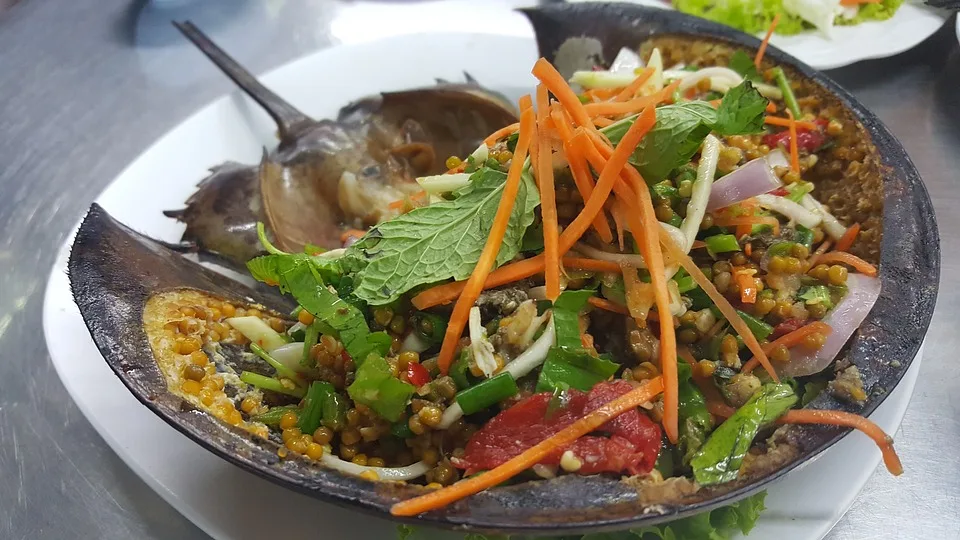
Horseshoe crabs aren’t really a food item in most of the world, including the US, where harvesting them for eating is restricted or illegal in many states. Where they are eaten, mostly the roe in parts of Southeast Asia, people describe the taste as mild and not particularly memorable.
I’ll be upfront that this isn’t a “here’s how to cook one” article. Horseshoe crabs matter a lot more for what they do for the ecosystem than for what they taste like. This is what’s actually verifiable about eating them, and why most people never will.
Key Takeaways
- Horseshoe crabs are protected or regulated in many places, and harvesting them for food is illegal or restricted across much of the US.
- Their blue blood is used in medical testing, not something that makes the meat itself dangerous to touch.
- Their eggs are a critical food source for migratory shorebirds, which is a big part of why populations are so closely monitored.
- Where horseshoe crab is eaten, it’s typically the roe, prepared in specific traditional dishes, not the body meat as a standalone food.
Table of Contents
Why Horseshoe Crab Blood Gets Called Poisonous

Horseshoe crab blood contains a substance called Limulus amebocyte lysate, or LAL, which is genuinely valuable. It’s used in medical labs to detect bacterial contamination in vaccines and medical equipment, since it reacts to even tiny amounts of harmful bacteria.
That’s a lab use, not evidence that horseshoe crabs are poisonous to eat or dangerous to handle. Some people do have shellfish-related allergic reactions from handling them, so I’d still use gloves and be careful of the spines on their legs and tail, but that’s a different issue from the blood being toxic.
Why You Won’t Find It on Menus

In the US, horseshoe crab populations are closely monitored, and harvesting or possessing them is restricted or outright illegal in many coastal states. That alone rules out eating them for the vast majority of people.
Even where it’s legal, horseshoe crab isn’t a mainstream food. As a bottom-dwelling scavenger, it carries the same general food-safety concerns as other scavenging seafood, meaning it needs to be properly sourced and prepared, and that’s part of why it never became a staple outside a handful of traditional dishes.
What It Actually Tastes Like
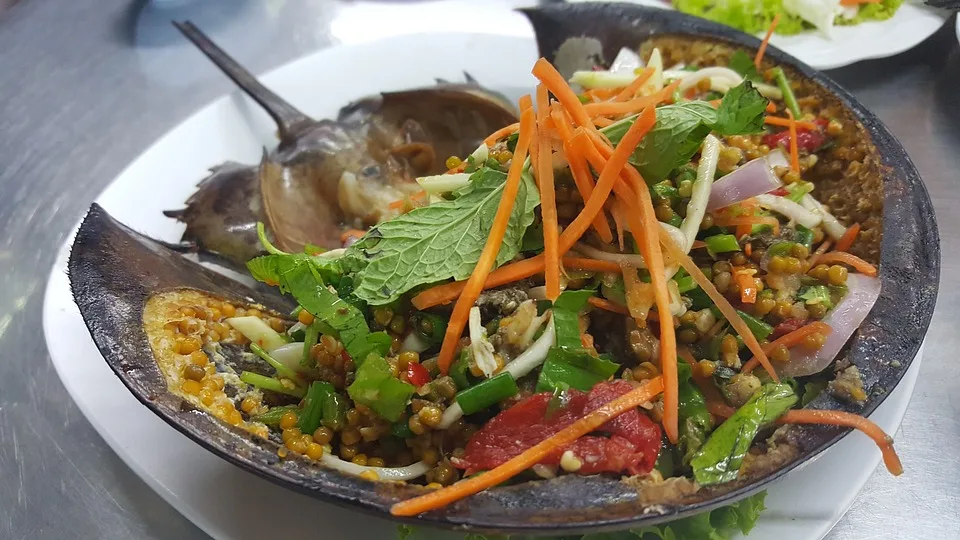
Where horseshoe crab is eaten, it’s mostly the roe, not the body meat, prepared in specific regional dishes rather than as a general-purpose seafood. Descriptions of the roe range from mild to slightly briny, nothing that stands out the way crab or shrimp does.
The body meat, on the rare occasions people describe it, tends to get called chewy and not especially flavorful. It’s not a dish built around the meat being delicious. It’s more of a niche, regional food than a hidden delicacy.
Why They’re Worth Protecting
Horseshoe crab eggs are a critical food source for migratory shorebirds, some of which time their entire migration around horseshoe crab spawning season. That ecological role is a big part of why their populations are tracked so carefully, separate from any use in medicine or food.
Given all of that, leaving horseshoe crabs alone does more good than trying to eat one ever would.
My Take
If you’re curious about horseshoe crabs, I’d point you toward their role in medicine and the shorebird migrations they support rather than their taste. There isn’t much of a food story here, and in most of the US, trying to find out for yourself isn’t even legal.
Stick to more traditional seafood if you’re after something genuinely tasty, and let horseshoe crabs keep doing what they’ve been doing for millions of years.
FAQs
Are horseshoe crabs poisonous?
No, not in the way that phrase usually implies. Their blood contains a substance used in medical testing, but that’s a lab application, not evidence the meat is toxic to eat.
Can you legally eat a horseshoe crab in the US?
In most coastal states, no, or only under strict regulation. Horseshoe crab populations are closely monitored and harvesting is heavily restricted.
What part of the horseshoe crab do people eat?
Mostly the roe, in specific regional dishes in parts of Southeast Asia, rather than the body meat as a general food.
Why are horseshoe crabs important to protect?
Their eggs are a critical food source for migratory shorebirds, and their blood is used in medical testing to detect bacterial contamination in vaccines and equipment.

Cynthia Odenu-Odenu is the founder of Cyanne Eats. A registered nurse with a passion for food, she brings the same attention to detail from her professional life into the kitchen. From chain restaurant rankings to grocery finds and easy recipes, Cynthia covers it all and helps everyday food lovers eat better and spend smarter.