
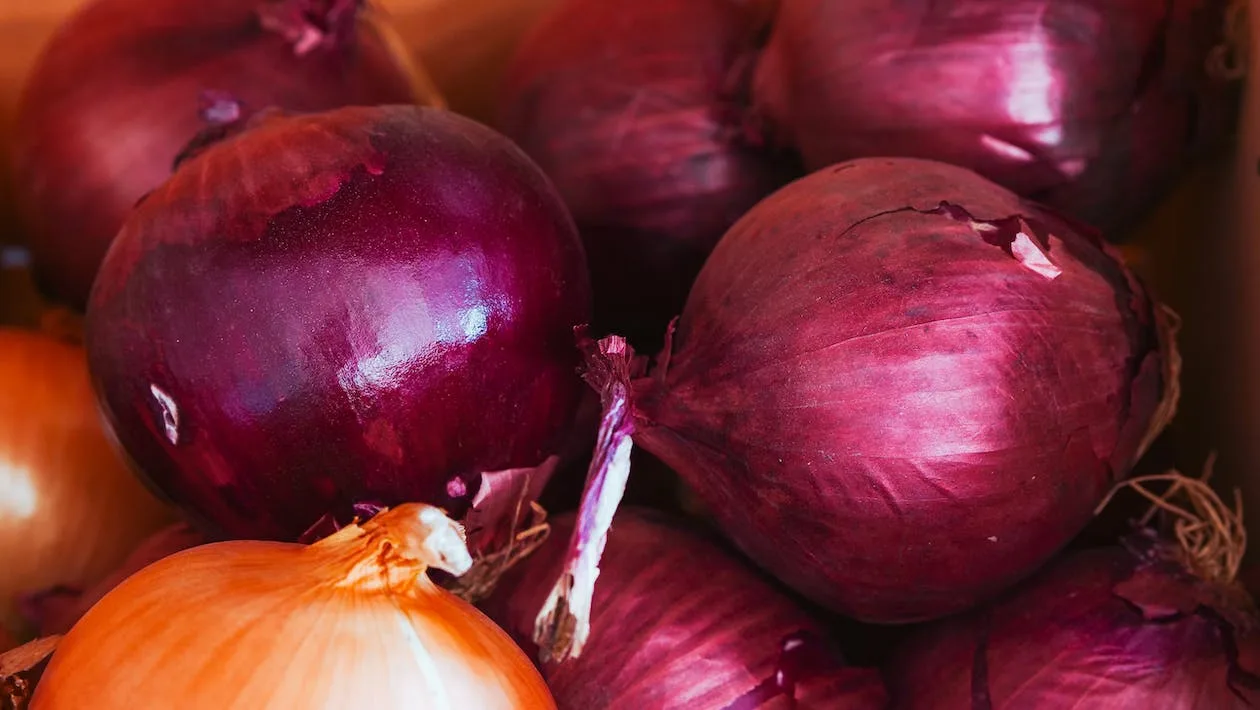
A Spanish onion is actually a type of yellow onion, just a larger, milder variety with lower sulfur content. Every Spanish onion is a yellow onion, but not every yellow onion is a Spanish onion.
I used to think Spanish and yellow onions were two totally separate categories on the produce shelf. They’re not, and once that clicked for me, picking between them got a lot simpler. This is how they actually relate and when to reach for each one.
Key Takeaways
- Spanish onion is a large, mild subtype of yellow onion, not a separate category.
- Lower sulfur content makes Spanish onions milder and sweeter, especially raw.
- You can swap them 1:1 in most recipes. Standard yellow onion gets sharper and more robust the longer it cooks, which Spanish onion doesn’t do quite as much.
- Spanish onions don’t keep as long as standard yellow onions, generally 2 to 3 weeks versus 4 to 6, because of their higher water and sugar content.
Table of Contents
What Makes an Onion a Spanish Onion
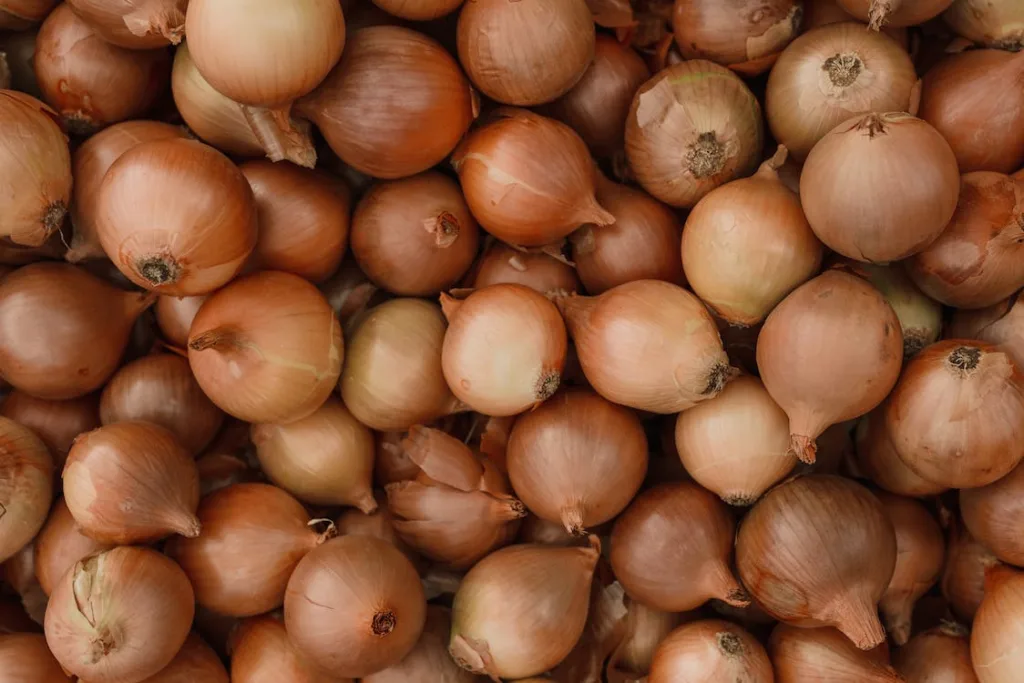
Spanish onion is a specific large, pale golden-skinned variety within the yellow onion family. What sets it apart is lower sulfur content compared to standard yellow onions, which is the actual reason it tastes milder and sweeter.
In grocery stores, “Spanish onion” sometimes gets used loosely for any large yellow onion, which is where a lot of the confusion between the two comes from. If you want a true Spanish onion, look for the flatter, wider shape and the noticeably milder smell when you cut into it.
Flavor and Texture Differences

Standard yellow onion has a sharper, more pungent bite, especially raw, which is exactly why it holds up so well in long-cooked dishes like soups, stews, and caramelized onions. The flavor deepens and gets richer the longer it cooks.
Spanish onion stays milder throughout. It doesn’t build the same intensity when cooked low and slow, but that’s exactly what makes it good raw, since it won’t overpower whatever it’s sitting next to.
Which One Works Better Where
Spanish onion is genuinely good raw, not a compromise you settle for. Its low sulfur content means no harsh, eye-watering bite, which makes it a strong choice for salads, sandwiches, salsa, or anywhere raw onion needs to stay in the background.
Standard yellow onion is the better call for French onion soup, braises, stews, and anything where you want the onion flavor to build and deepen over time. It caramelizes beautifully and holds its own against long cooking times.
For everyday cooking where you’re not chasing a specific effect, they’re interchangeable 1:1. The difference matters most at the extremes: fully raw or fully caramelized.
How to Store Them
Both keep best in a cool, dry, well-ventilated spot, like a pantry or basement, in a breathable bag rather than sealed plastic. That’s where they part ways though: Spanish onions run higher in water and sugar, so they don’t last as long. Expect 2 to 3 weeks for Spanish onion versus 4 to 6 weeks for a standard storage yellow onion.
Look for firm onions with dry, papery skin and no soft spots when buying either type, and use the Spanish ones a bit sooner.
My Take
Once I stopped treating these as two competing onions and started thinking of Spanish onion as just the mild, raw-friendly member of the yellow onion family, my shopping got a lot easier. I grab Spanish onion for anything raw and a regular yellow onion for anything that’s going to simmer for a while.
Either one works fine in a pinch for most recipes. Just use the Spanish onion a little sooner since it won’t keep as long in the pantry.
FAQs
Is a Spanish onion the same as a yellow onion?
Spanish onion is a large, mild subtype of yellow onion, not a separate category. Every Spanish onion is a yellow onion, but not every yellow onion is a Spanish onion.
Can you substitute a yellow onion for a Spanish onion?
Yes, they can be swapped 1:1 in most recipes. Standard yellow onion has a sharper bite and holds up better in long-cooked dishes, while Spanish onion is milder and better suited to raw use.
Is Spanish onion good to eat raw?
Yes. Its lower sulfur content gives it a mild flavor without the harsh bite of a standard yellow onion, making it well suited to salads, sandwiches, and salsa.
How long does a Spanish onion last?
About 2 to 3 weeks in a cool, dry, ventilated spot, shorter than a standard yellow onion’s 4 to 6 weeks, because of its higher water and sugar content.

Cynthia Odenu-Odenu is the founder of Cyanne Eats. A registered nurse with a passion for food, she brings the same attention to detail from her professional life into the kitchen. From chain restaurant rankings to grocery finds and easy recipes, Cynthia covers it all and helps everyday food lovers eat better and spend smarter.