
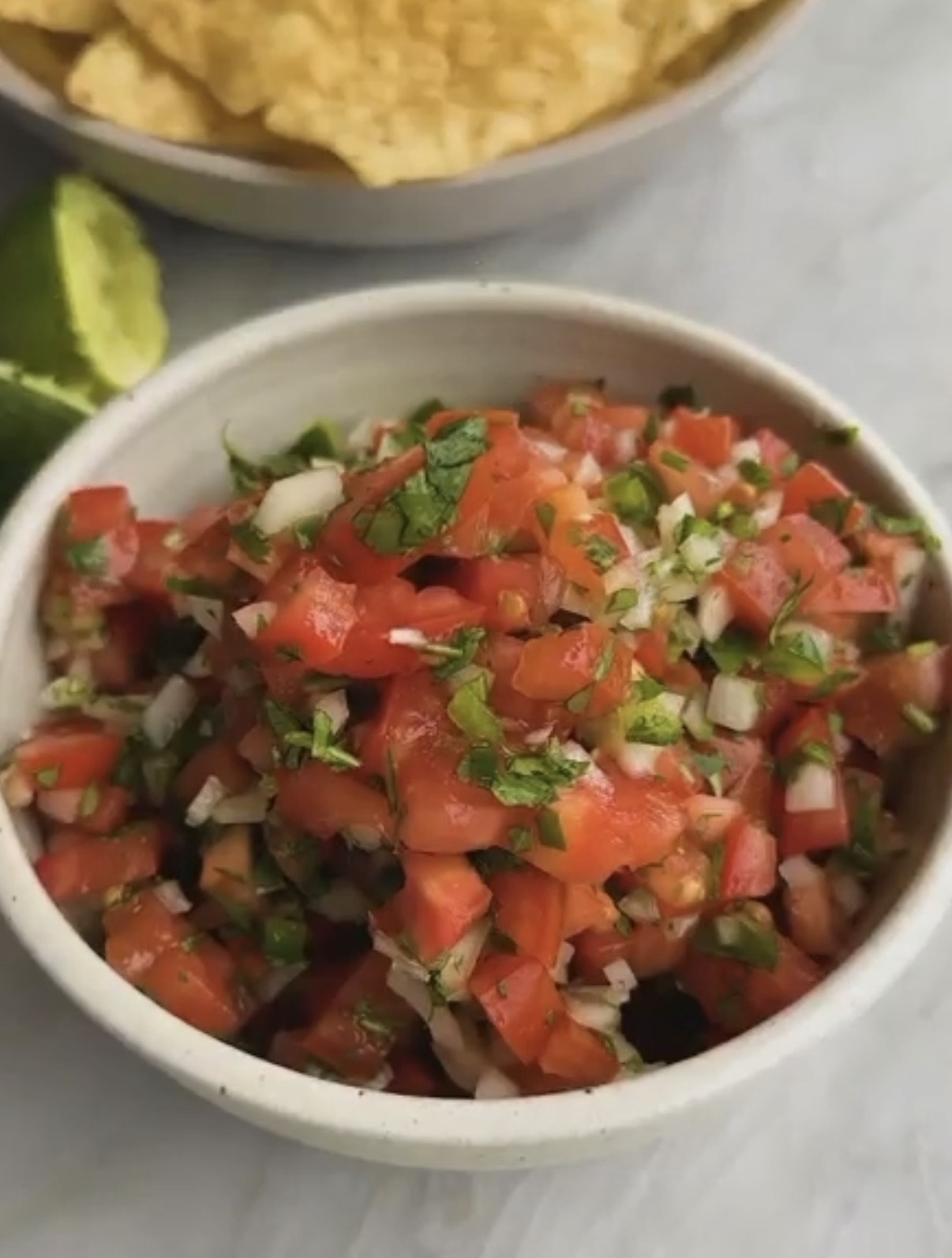
Authentic pico de gallo is a raw, hand-chopped Mexican salsa made with Roma tomatoes, white onion, serrano pepper, fresh cilantro, lime juice, and salt. No cooking, no blender, and no shortcuts required.

I’ve eaten a lot of pico de gallo. At taquerias, at chain restaurants, and out of plastic tubs from the grocery store. None of it compares to the version you make at home when you know what you’re doing.
Most homemade pico ends up watery, flat, or just kind of boring. There are three things restaurants do that most recipes never tell you about, and once you know them, your pico will be the one people ask you to bring to every cookout.
Table of Contents
Key Takeaways
- Roma tomatoes are the right choice: firm, less watery, and they hold their shape after dicing
- Serrano pepper is the traditional choice; jalapeño works fine but is milder
- Salting and draining the tomatoes first is the single biggest upgrade you can make
- Fresh lime juice only; bottled lime juice kills the flavor
- Let it rest at least 30 minutes before serving; the flavor gets noticeably better
What Is Pico de Gallo?
Pico de gallo is a fresh Mexican salsa made entirely from raw, hand-chopped vegetables. No heat, no blending. Just knife work and good produce.
In Mexico, it’s often called “salsa mexicana” or “salsa bandera” because the red, white, and green ingredients mirror the colors of the Mexican flag. The name “pico de gallo” literally means “rooster’s beak,” and there are a few competing theories about why: some say it’s the pinching motion used to eat it, others say the serrano pepper resembles a beak in shape.
What everyone agrees on is that the key is freshness. This is not a sauce you can phone in with sad supermarket tomatoes.
Pico de Gallo vs. Salsa: What Is the Difference?
Pico de gallo is technically a type of salsa. Specifically, it falls into the category called “salsa fresca” or “salsa cruda,” meaning fresh and raw.
The main difference comes down to texture and method. Pico is always chunky, always raw, and always hand-chopped. Standard salsa is usually smoother, saucier, and often involves roasting or blending the ingredients.
Pico works best as a topping. Salsa works better as a dip. If you blend your pico, it becomes salsa.
Ingredients You Need
Roma tomatoes (6 medium, about 4 cups diced): Roma tomatoes are firmer and less watery than regular slicing tomatoes, which is exactly what you want. One important note: ripeness matters more than variety. A ripe Roma is great; an unripe Roma will make your pico taste like nothing. In winter, cherry or grape tomatoes are often more flavorful than off-season Romas. Remove the seeds before dicing.
White onion (1 small, about 1/2 to 1 cup diced): White onion is the traditional choice. It has a clean, sharp crunch that cuts through the tomato without leaving a heavy aftertaste. Red onion works as a substitute but it’s not authentic.
Serrano pepper (1 to 2 peppers): Serrano is the traditional pepper used in Mexico. It’s sharper and hotter than a jalapeño, and it has a cleaner, more citrusy heat. If you want milder pico, use one jalapeño instead. Either way, remove the seeds and white ribs for less heat or leave them in for more.
Fresh cilantro (1/3 to 1/2 cup, chopped): Use both the leaves and the tender stems. The stems carry concentrated flavor that most people throw away by mistake.
Fresh lime juice (juice of 1 to 2 limes): Fresh only. Bottled lime juice tastes flat and slightly metallic and it will make the whole batch taste off. A good citrus press makes this quick. I switched to the Zulay Stainless Steel Lime Squeezer and it gets every drop without any seeds.
Salt (1/2 to 1 teaspoon sea salt or kosher salt): This is one place where people consistently under-season. Salt and lime together are what make the whole thing pop. Add it gradually and taste as you go.
The 3 Restaurant Secrets
Most pico de gallo recipes skip these steps. Restaurants don’t.
Secret 1: Salt and drain your tomatoes
After you dice the tomatoes, put them in a colander, toss them with about half a teaspoon of salt, and let them drain for 20 to 30 minutes. This draws out excess water before it can water down your pico. It is the single most impactful technique in this recipe. Don’t skip it. As a bonus, save the drained tomato liquid for cooking rice or adding to soups.
Secret 2: Rinse the onion
After you dice the onion, put it in a fine mesh strainer and run cold water over it for about 10 seconds. This removes the harsh, sulfurous bite that raw onion can leave without dulling the flavor. Alternatively, toss the diced onion with a tablespoon of lime juice and let it sit for 5 minutes before adding everything else.
Secret 3: Let it rest
This step costs nothing and it makes a significant difference. After mixing everything together, cover the bowl and refrigerate for at least 30 minutes. The lime juice and salt slowly pull the juices out of the vegetables and the flavors merge in a way that just-mixed pico never achieves. The sweet spot is 30 minutes to a few hours. Overnight is even better.
How to Make It
Step 1: Dice and drain the tomatoes
Cut the tomatoes in half and scoop out the seeds and watery pulp with a spoon. Dice the tomatoes into roughly 1/4-inch pieces. Put them in a colander, toss with 1/4 teaspoon of salt, and let them drain over the sink or a bowl for 20 to 30 minutes.
Step 2: Prep the remaining ingredients
While the tomatoes drain, dice the onion and rinse it under cold water. Finely mince the serrano pepper (or jalapeño). Chop the cilantro, leaves and tender stems together.
Step 3: Combine
Add the drained tomatoes, onion, pepper, and cilantro to a mixing bowl. Squeeze in the lime juice. Add the remaining salt. Stir gently to combine.
Step 4: Taste and adjust
Taste before you rest it. If it tastes flat, add more lime. If it needs more kick, add more pepper. If it tastes one-dimensional, add more salt. The flavors will deepen as it rests, so err on the side of slightly under-seasoned at this point.
Step 5: Rest before serving
Cover and refrigerate for at least 30 minutes. Serve cool, not ice cold. Cold temperatures mute the flavor.
Tips for the Best Pico
Use a sharp knife. A dull knife crushes tomatoes instead of cutting them cleanly and releases extra juice that makes your pico wet. If you are dicing a lot of onions, a Fullstar Pro Vegetable Chopper makes quick work of the onion and pepper. Use the knife for tomatoes since they need more care.
Invest in a molcajete for serving. A traditional Mexican molcajete made from volcanic rock makes a beautiful presentation for pico at parties and keeps it cool at the table. It also doubles as a mortar for guacamole and salsas.
Sprinkle Tajin on top. A light dusting of Tajin Clasico over the finished pico adds extra chile-lime flavor and looks great on the table. Especially good for Cinco de Mayo spreads.
Don’t serve it ice cold. Pull the pico out of the fridge 10 minutes before serving. Very cold temperatures flatten the flavors.
Variations Worth Trying
Mango pico de gallo: Add 1 cup of diced ripe mango. The sweetness plays well against the serrano heat. Great with grilled fish or shrimp tacos.
Cucumber pico de gallo: Add 1 cup of diced seedless cucumber. This is actually a variation found in parts of Mexico and it adds extra crunch and keeps the pico from getting too juicy.
Peach pico de gallo: Swap half the tomatoes for diced ripe peaches. Works especially well in summer when peaches are at their best.
X’nipek (Yucatan-style pico): Swap the serrano for habanero pepper and replace lime juice with sour orange juice (or a mix of orange juice and lime). This is the traditional version from the Yucatan and it is significantly spicier.
Garlic pico de gallo: Add one small garlic clove, finely minced. Not traditional, but a lot of people love it. Keep it to one clove; more than that overpowers everything else.
How Long Does Pico de Gallo Last?
Pico de gallo is best within the first 2 to 3 days. After that, the tomatoes break down and it gets progressively more watery and less vibrant. Store it in an airtight container in the main body of the fridge, not the door. Drain off any accumulated liquid before serving leftovers.
Do not freeze pico de gallo. Tomatoes become mushy and watery when thawed. If you have leftover pico that’s past its prime as a fresh topping, stir it into scrambled eggs, add it to rice while it cooks, or use it as a base for a quick soup.
What to Serve With It
Pico de gallo goes with almost everything. The obvious pairings are tortilla chips and tacos, but it also works on grilled chicken, burgers, scrambled eggs, and grain bowls.
If you are building a Cinco de Mayo spread, check out my guide on the best Cinco de Mayo food deals at chain restaurants. A lot of chains run specials on May 5th and knowing what to order makes the day easier to plan around.
If you are a Chipotle regular, you already know their pico is one of the best fast-casual versions out there. My complete guide to the best Chipotle order breaks down exactly how to get the most out of their fresh salsa options.
Chamoy Margarita Recipe pairs perfectly with this pico for a full Cinco de Mayo spread at home.
Conclusion
Good pico de gallo comes down to three things: ripe tomatoes, proper draining, and enough resting time. The recipe itself is simple. It’s the technique that separates restaurant-quality pico from the watery, flat versions most people are used to. Salt your tomatoes before you mix everything together, rinse your onion, and give it at least 30 minutes in the fridge before you serve it. That’s really the whole secret.
Make it once this way and you’ll never go back to store-bought.
FAQ
What is the difference between pico de gallo and salsa?
Pico de gallo is always raw and hand-chopped, while salsa is usually smoother, sometimes cooked, and often blended. If you put pico in a blender, it becomes salsa.
Can I use jalapeño instead of serrano?
Yes. Jalapeño is milder and more widely available. Serrano is the traditional choice and gives a sharper, more citrusy heat. Use one jalapeño in place of one to two serrano peppers.
Why is my pico de gallo watery?
The most common cause is skipping the tomato-draining step. Salt your diced tomatoes and let them sit in a colander for 20 to 30 minutes before mixing everything together. Also make sure to remove the seeds and watery pulp from the tomatoes before dicing.
How long does homemade pico de gallo last in the fridge?
Pico is best within 2 to 3 days. It is safe to eat for up to 5 days but the texture and flavor decline after day 3 as the tomatoes break down.
Can I make pico de gallo ahead of time?
Yes, and it is actually better after resting. Make it up to one day ahead and refrigerate in an airtight container. The flavors deepen significantly overnight.
Is pico de gallo healthy?
It is one of the most nutritious condiments you can make: low in calories, high in vitamin C from the tomatoes and lime juice, and completely free of added sugars or preservatives when made at home.
What tomatoes are best for pico de gallo?
Roma tomatoes are the standard for their firm texture and low water content. In winter, cherry or grape tomatoes are often more flavorful than off-season Romas. Avoid mealy or unripe tomatoes; they will make the pico taste flat regardless of technique.

Authentic Pico de Gallo Recipe
Ingredients
- 6 medium Roma tomatoes (about 4 cups diced)
- 1 small white onion (about 1/2 to 1 cup diced)
- 1 to 2 serrano peppers (or 1 jalapeño)
- 1/3 to 1/2 cup fresh cilantro, leaves and tender stems chopped
- 2 to 4 tbsp Juice of 1 to 2 limes
- 1/2 to 1 tsp teaspoon sea salt or kosher salt, divided
Instructions
- Cut tomatoes in half and scoop out the seeds and watery pulp. Dice into 1/4-inch pieces. Place in a colander, toss with 1/4 teaspoon of salt, and drain over the sink for 20 to 30 minutes.
- While tomatoes drain, dice the onion into 1/4-inch pieces. Place in a fine mesh strainer and rinse under cold water for 10 seconds. Set aside.
- Finely mince the serrano or jalapeño pepper. Remove seeds and white ribs for milder heat, leave them for more.
- Chop cilantro, including the tender stems.
- Combine drained tomatoes, rinsed onion, minced pepper, and cilantro in a bowl. Add lime juice and remaining salt. Stir gently.
- Taste and adjust: more lime if flat, more pepper if it needs heat, more salt if it tastes dull.
- Cover and refrigerate for at least 30 minutes before serving. Serve cool, not ice cold.
Notes

Cynthia Odenu-Odenu is the founder of Cyanne Eats. She is an avid baker and cook of delicious delicacies. She uses this blog to share her love for different cuisines.
Learn More